


Fiji and the wider Pacific are increasingly being targeted by international drug syndicates, with multi-billion-dollar criminal networks exploiting the region as a transit hub and expanding local drug markets, a leading security expert has warned.
Associate Professor Jose Santos from the Pacific Regional Security Hub sounded the warning during the National Pastoral Response to Drugs workshop in Suva Monday, saying traffickers were taking advantage of the Pacific’s geographic isolation, limited maritime surveillance and weak local oversight.
“What we are dealing with is not a small issue, it’s a multi-billion-dollar business,” Professor Santos said.
“A kilogramme of cocaine costing US$50,000 in New York can sell for US$350,000 in Australia. That enormous profit margin is driving traffickers to use the Pacific as a route and now, increasingly, as a base to establish local markets.”
Professor Santos said the consequences were already being felt in Fijian communities, including rising intravenous drug use and the impact on children.
“I have seen 11- and 12-year-olds injecting drugs on the streets. Families, villages, and churches are being directly affected. Every month we wait, the problem becomes harder to control.”
He warned that drug syndicates were highly organised and profit-driven, often paying local facilitators in drugs rather than cash, allowing local drug markets to take root and grow.
“These are business operations. They are smart, connected, and one step ahead. Our response must be equally strategic and coordinated,” he said.
Minister for Policing and Communications Ioane Naivalurua said Fiji was strengthening both enforcement and community-based responses to the growing threat.
“We are combining intelligence, arrests, and border security with strong community engagement to prevent drug use and protect families,” he said.
The warnings come as Fiji continues to record increasing seizures of methamphetamine and other illicit drugs.
United Nations data shows methamphetamine remains the primary drug threat in the Pacific, with rising rates of injecting drug use contributing to serious public health challenges, including the spread of HIV.
Churches, traditional leaders, non-government organisations and local communities are now being urged to play a stronger role in prevention, early intervention and education efforts.
Professor Santos stressed that urgent action was needed.
“If we delay, we risk losing a generation. This is not just a crime issue, it’s a threat to the social, moral, and economic future of our region.”
Meanwhile, Drug cartels deploying million-dollar narco-submarines can afford to corrupt Fiji’s law enforcement with what amounts to “pocket change”, a logistics expert has warned.
MSG Logistics chief executive Amit Chand made the comments during a counter-narcotics consultation hosted by the Ministry of Policing in Suva on Monday.
Chand said the biggest threat to Fiji’s counter-drug efforts was placing the wrong people in sensitive positions within the proposed Counter Narcotics Bureau.
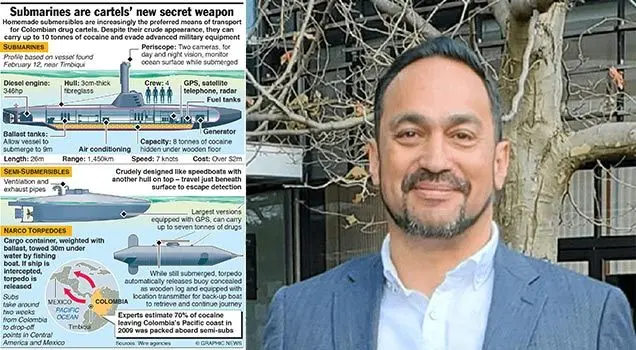
“A small country like Fiji, where the cartels are deploying narco-subs that require millions of dollars to launch, corrupting a few key individuals in right places, which is pocket change for them,” Chand said.
He warned that a single compromised officer with access to intelligence could dismantle entire operations.
“When the first domino falls, it triggers a chain of reality. Operations fail, public trust collapses, honest officers’ work is neutralised, and cartels gain near impunity,” he said.
Chand, who has worked with intelligence agencies, called for mandatory random polygraph testing for all Counter Narcotics Bureau officers.
Other recommendations raised at the forum included lifestyle audits for intelligence officers to detect corruption, joint operations involving Customs, the Navy and military intelligence, reforms to make serious drug offences non-bailable, stronger international partnerships focused on anti-corruption capacity building, and independent oversight of narcotics operations.
“Unless the domino effect is prevented at source, no bills, no law is adequate enough to do what this country is facing,” Chand said.
The consultation continues today in Nausori.
Minister for Policing Ioane Naivalurua said the counter-narcotics bill is expected to be presented to Cabinet by March.