A push to mine waters around American Samoa without consent, a board appointed by the president dictating government decisions in Puerto Rico, and the removal of immigration controls from the Commonwealth of the Northern Mariana Islands were all issues highlighted by a panel on U.S territories Friday.
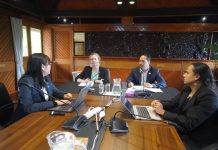
Nonprofit group Right to Democracy organised the virtual discussion, titled, “Everything Greenland Should Know about U.S Territories.”
The panel was organised in response to recent public comments by President Donald Trump suggesting Greenland could become a future U.S territory.
Panelists spoke about various issues that have resulted from their respective homes’ status as a territory of the U.S.
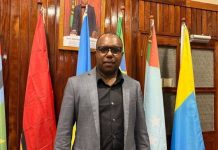
Charles Ala’ilima, an attorney from American Samoa, pointed to recent federal interest in mining 33 million acres of the sea floor near the islands.
Despite strong opposition from American Samoans, plans are moving forward, Ala’ilima said.
The situation is making it clearer to residents what protections they don’t have, Ala’ilima said, with the secretary of the interior holding plenary, or near-absolute, power over American Samoa’s government.
“The federal government doesn’t have to listen to what you say. They may have to take your comments, but they don’t have to listen to those comments,” he said.
The interior secretary had the power to tell them, “We don’t care what you think,” Ala’ilima added.
Despite tens of thousands of comments in opposition to deep-sea mining, the U.S is even closer to issuing deep-sea mining leases for the seafloor near American Samoa than Guam and the CNMI.
The National Oceanic and Atmospheric Administration late last month announced it will proceed with a survey of 30,000 square nautical miles of waters off American Samoa. A lease would come afterwards.
Ala’ilima said unequal constitutional protections of American Samoans, who are U.S nationals, not citizens, has been thought to be protective of customs and culture on the island. But it has also led to abuses, he said.
“Fundamental rights are not being enforced down in American Samoa because of the idea that somehow we’re separate, we can pick and choose what parts of the United States Constitution apply to us,” he said.
The CNMI has long felt “special and unique” compared to other U.S territories, said Sheila Babauta, former CNMI territorial representative with group Friends of the Marianas Trench.
Babauta said that feeling was because unlike other territories, the CNMI had a covenant agreement with the U.S, and its own constitution.
However, the federal government has imposed decisions on the CNMI whenever the islands assert their rights, she said.
“Our immigration rights were taken away in 2009. The minimum wage laws in 2007 were imposed upon us. We have cockfighting that was banned here, as well as other territories in 2018 and that was a big industry here,” she said.
Deep-sea mining was the latest event where the U.S. has been taking “unilateral” action on issues affecting the CNMI, according to Babauta. The CNMI has been learning from the example in American Samoa.
“The federal government responded to American Samoa’s opposition in a way that was so disrespectful in our eyes, and just discarded the community’s response,” she said.
She said there have been many conversations about how the CNMI’s covenant and constitution should be protecting the island.
“The reality is different,” she said.
Examples in American Samoa and the CNMI underscored “historical delusions” that the Pacific territories had about their relationship with the U.S., said Robert Underwood, chairman of Guam-based think tank Pacific Centre for Island Security.
Underwood, Guam’s former delegate to Congress, said he’s heard many times from American Samoa and CNMI officials about how their territories were unique, and had special protections.
“And then in Guam, people believe that the granting of U.S citizenship somehow insulated them from all the abuses that they are now experiencing,” he said.
He said the territories had to come together and discuss how their issues are related.
“Other than that, many of us will continue to advocate and articulate from our own particular history, instead of understanding that this, these historical delusions, really empower federal officials,” Underwood said.
Over on the other side of the world, some Puerto Ricans also thought of themselves as special because of their commonwealth status, said Eva Prados of Comisión Ciudadana para la Auditoría Integral del Crédito Público.
“But what has happened to Puerto Rico the last 10 years with the Puerto Rico Financial Management and Oversight Board put a big question,” Prados said.
The board, called “la junta” was created by Congress in 2016 to oversee Puerto Rico’s public debt crisis, and eventual US$120 billion bankruptcy.
“This oversight board … for us, is not an oversight at all. It’s a control board,” Prados said. “I think that every important governmental decision right now is taken by the board.”
Members are appointed by the U.S president, she said, creating a huge issue because the people of Puerto Rico can’t decide who is making major decisions for their government.
La junta had the power to approve the Puerto Rican government’s budget, and to approve legislation that did not have anything to do with fiscal decisions, Prados said.
Prados said President Donald Trump recently fired a majority of the board members, saying it was too expensive.
“The reality is that behind the scenes, there are a very powerful bond holders that are pushing different board membership,” she said, in order to get bigger debt repayments out of Puerto Rico.
More recently, the board has started pushing to increase power rates for the country, to cover old debt payments.
“And that has a huge impact in our economy,” she said.