

A motion of no confidence against the Vanuatu Prime Minister Jotham Napat was defeated on Friday.
The motion was voted down by 36 votes against and 12 votes in favour.
MPs were directed to come out of recess and sit in parliament after the Vanuatu Court of Appeal ruled that the Speaker’s earlier move not to allow the opposition’s motion to proceed was unconstitutional.
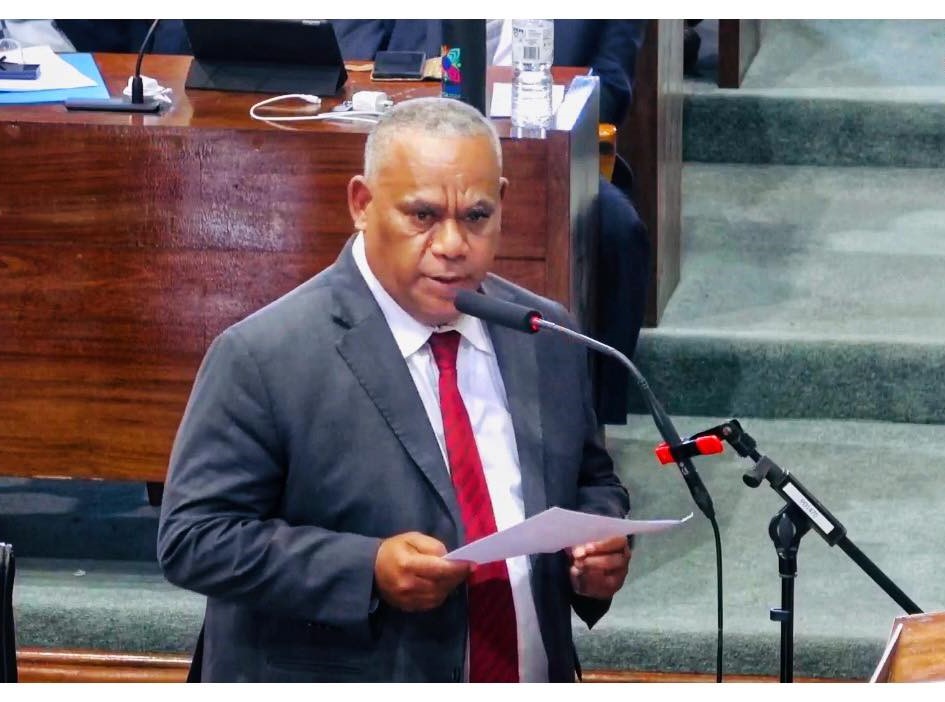
The motion was finally presented in parliament last Friday, with opposition leader Ishmael Kalsakau speaking to the reasons for bringing it to the House.
Opposition leader Ishmael Kalsakau then withdrew a motion of no confidence against the Speaker after it became clear it did not have the numbers.
Three MPs from the government coalition were absent.
Parliament has now adjourned again until 26 January 2026.
Meanwhile, the withdrawal of the motion of no confidence against Prime Minister Jotham Napat Friday, due to the Opposition’s inability to secure the required number of Members of Parliament (MPs), indicates that the current coalition government is likely to complete its four-year mandate.
Political analysts noted that the same parties that contributed to MP Charlot Salwai leaving office as PM from 2016 to 2020 are part of the government today.
These parties include the Vanua’aku Party (VP), Leaders Party of Vanuatu (LPV), Graon mo Jastis Pati (GJP), and Reunification Movement for Change (RMC).
Analysts said the reason PM Napat is likely to finish his term is the solidarity that exists among LPV, GJP, and RMC.
During Salwai’s government, the National United Party (NUP) was also part of the coalition, while in the current government, the Iauko Group (IG) has joined the bloc.
After the 2020 general elections, Bob Loughman of VP became PM without the support of the three parties. Loughman faced a motion of no confidence within a year, prompting President Nikenike Vurobaravu to dissolve parliament.
Following the snap elections in 2020, Vanuatu experienced three prime ministers. The President dissolved parliament again in 2024, leading to a snap election in early 2025.
Analysts say that as long as VP, LPV, RMC, and GJP remain in government, passing a motion of no confidence will be difficult due to the trust between their leaders. During Salwai’s tenure, six motions of no confidence were presented in parliament but were defeated. Over four other motions did not even reach the Speaker’s office due to a lack of the required 27 MPs.
They say Friday’s motion tested Opposition leader Kalsakau but failed to secure support from the government side.
Political observers said this mirrors the situation during Salwai’s government, with the main difference being that Salwai is no longer PM. Kalsakau, who served as Opposition Leader during Salwai’s tenure, continues to lead the Opposition in the 14th Legislature.
Analysts predict that Napat will complete his term as PM, while Kalsakau will remain Opposition leader.
The stability of the government also reflects a give-and-take arrangement among the four main parties. RMC previously held power for four years with the support of VP, LPV, and GJP. GJP has not yet held the position of PM. The solidarity among the three parties has strengthened further with the support of the 17A and 17B legislation.
The inclusion of IG, which has more than five MPs compared to four NUP MPs during Salwai’s government, has further reinforced government cohesion.
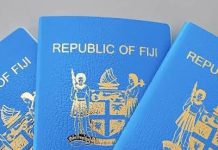
Analysts noted that while challenges and serious allegations were raised in parliament yesterday as reasons for the motion of no confidence, the key takeaway is government stability. Other matters, such as allegations of illegal sale of diplomatic passports, should be addressed by the police for investigation.