

By Pita Ligaiula in Manila, Philippines
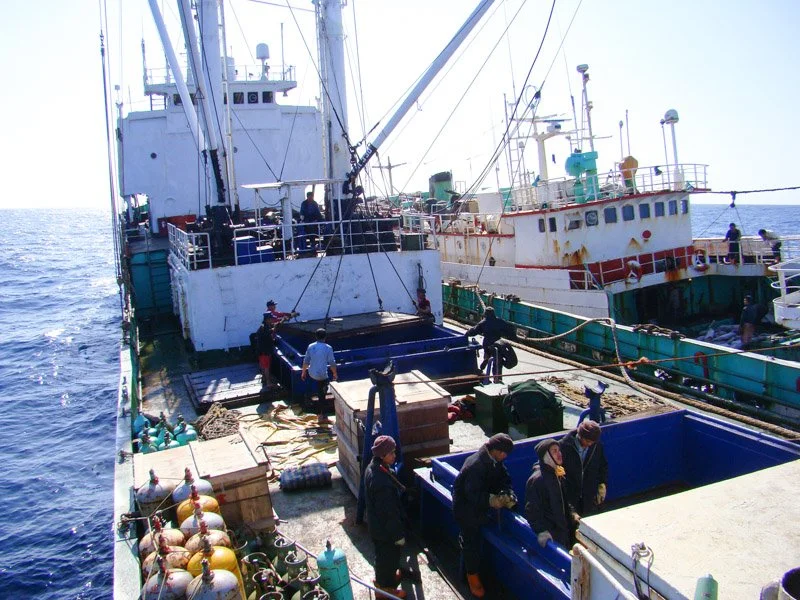
The Republic of Korea has called on the Western and Central Pacific Fisheries Commission (WCPFC22) to treat at-sea transshipment as a legitimate practice under strict oversight, warning that a blanket ban would threaten longline fleets and sustainable tuna operations.
“Separate legitimate, well-monitored at-sea transshipment from IUU fishing,” Korea’s delegation said, stressing the need to “focus on controls, data and accountability – not on banning logistics.”
Korea argued that “at-sea transshipment is a legitimate, globally recognised practice when properly monitored,” noting that longline fleets “depend on at-sea transshipment due to dispersed operations and long trips” and that “longline operations are often in the red, and complete ban will force them out of business.”
The delegation added that “risk comes from non-compliance and weak oversight, not from the practice itself,” and that its proposal aligns WCPFC standards with FAO Voluntary Guidelines and other tuna RFMOs.
Korea’s proposal introduces four safeguards, including continuous VMS tracking on carrier vessels, prior flag-State authorisation for each high seas’ transshipment, a 24/7 national Fisheries Monitoring Centre for offloading vessels, and access to transshipment data for HSBI inspectors.
The transshipment declaration deadline would also be shortened from 15 to 10 days for timely verification.
Korea highlighted its own monitoring, control and surveillance (MCS) practices, noting that its national FMC operates 24/7, integrating VMS and electronic reporting.
“For transshipment, prior authorisation and post-reporting required,” the delegation said, adding that “use of port inspections as a supplementary tool… at-sea transshipment is visible, traceable, verifiable in Korea’s system.”
The delegation emphasised equity, saying the proposal would impose “no change to development opportunities or coastal access for SIDS and PTs” and is “designed to address verification gaps without disrupting compliant operations.”
Key takeaways, Korea said, are to “affirm at-sea transshipment as a legitimate practice under strong oversight,” “tighten high-seas monitoring with four practical safeguards and faster reporting,” and “avoid unnecessary disruption to compliant fleets while closing real compliance gaps.”
Korea said stronger oversight – not blanket prohibition – becomes the WCPFC path for transshipment management. Verification done cross-checking VMS records, e-logbooks and other available data.