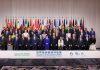



By Pita Ligaiula in Manila, Philippines
The Western and Central Pacific Fisheries Commission (WCPFC) enters 2025 with nearly a third of its agreed member contributions still unpaid, raising concerns about how the organisation will sustain critical fisheries monitoring, science and compliance work across the region.
According to the Commission’s 2025 annual report, members approved a US$9.78 million budget for the year — but US$3.29 million of those contributions had not been collected at the time of reporting, including arrears from previous years.
The Commission said the budget underpins essential work, from scientific stock assessments to vessel monitoring and support for Small Island Developing States (SIDS).
“The budget ensures that the Commission can effectively carry out its conservation and management responsibilities across the region,” the report notes.
Total expenditure for 2025 is estimated at US$8.99 million, and there have been no advances from the Working Capital Fund so far.
The report also highlights the growing role of voluntary contributions, which WCPFC describes as “an important role in supplementing the WCPFC’s annual budget.”
In 2025, members provided US$487,910 in voluntary support for scientific, compliance and capacity-building projects — not including Canada’s US$233,124, allocated in 2020 but applied this year.
These voluntary funds covered a wide mix of priorities:
*Japan contributed US$156,566 to the Japanese Trust Fund.
*Korea provided US$135,805 for the Pacific Tuna Tagging Project.
*Canada added US$60,539 for digital tools to help members track reporting gaps, plus its previously allocated annual-meeting support.
*The United States contributed US$30,000 to the Special Requirements Fund, US$20,000 for Vessel Monitoring
System (VMS) manual reporting, and US$50,000 for a bigeye tuna stock assessment workshop.
*China added US$30,000 to the Special Requirements Fund.
*FSM contributed US$5,000 to support 21st Regular Session of the Technical and Compliance Committee (TCC21).
The Commission says such contributions continue to be critical for SIDS, which rely heavily on targeted assistance to meet reporting requirements, strengthen compliance, and participate in WCPFC processes.
But the report makes clear that voluntary funding cannot replace core contributions and the Commission will struggle to meet its responsibilities if members continue to fall behind on payments.