


By Pita Ligaiula in Manila, Philippines
The Western and Central Pacific Fisheries Commission (WCPFC) has declared that “human rights are non-negotiable” as it enters 2026 with sweeping reforms, including the first-ever
binding labour standards for fishing crews and major steps toward long-term harvest strategies for the world’s biggest tuna fishery.
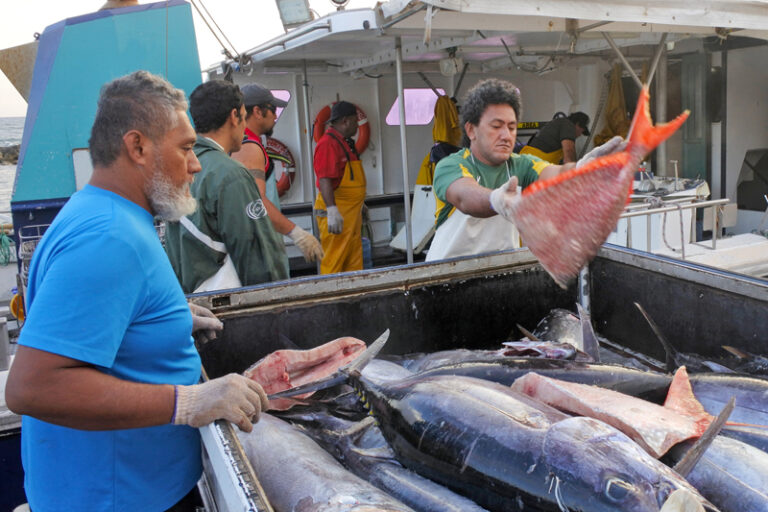
In its Twenty-Second Regular Session Annual Report, the Commission says 2024 and 2025 marked a turning point for the organisation from crew protections and bycatch rules to advanced monitoring systems and new conservation measures backed by Pacific science.
“The measure will take effect in 2028, and its adoption sets in motion the process for members to set forth the required legal framework at the national level to prepare for full implementation,” the report notes, calling the labour standard a landmark moment that signals “in the WCPFC, human rights are non-negotiable.”
The report makes clear that WCPFC members spent 2025 tightening data collection, refining monitoring tools and pushing toward fully tested management procedures for key tuna stocks.
Intersessional work, it says, “reflected a mature international organisation, with a deepening focus on refining its foundations in data collection and monitoring, two key pillars of effective conservation and management.”
The Commission also highlighted the increasing global scrutiny on tuna markets.
“Fishing industry stakeholders underscored the value of these programmes in enhancing market access,” the report says, referring to Marine Stewardship Council (MSC) and Seafood Watch certifications that depend on reliable reporting, bycatch limits and strong harvest strategies.
The report confirms that Western and Central Pacific tuna stocks remain biologically healthy, with skipjack, yellowfin and bigeye all meeting or exceeding interim objectives under existing measures.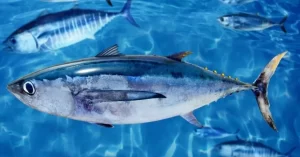
But scientists warned that warning signs are emerging. At the Scientific Committee’s 2025 session in Tonga, experts flagged weak indicators for bigeye tuna.
“Catch is at a ~30-year low and Catch Per Unit Effort(CPUE) remains well below historic levels,” Scientific Committee (SC21) reported, raising concern about a recent spike in small bigeye in one region that “could lead to overfishing” if the data is correct.
 On skipjack, scientists said the stock remains near its target reference point but stressed the need to keep monitoring recruitment variability and purse-seine behaviour.
They recommended a one-time extension of the Management Procedure (MP) cycle “to align the next MP run in 2026-2027 with wider MP activities.”
A long-awaited management procedure for South Pacific albacore is on track for adoption at WCPFC22 after years of work.
SC21 said all candidate procedures “performed well, with a low risk of breaching the limit reference point,” but asked for three more options to ensure “a comprehensive assessment” before ministers meet in December.
The first South Pacific Albacore Management Workshop in September confirmed broad alignment on targets and data needs, while leaving tough decisions on harvest control rules and spatial coverage for a final virtual meeting in November.
The Northern Committee (NC)reported ongoing recovery of Pacific bluefin tuna, which reached its second rebuilding target in 2021.
NC21 endorsed a structured plan to complete the species’ first long-term harvest strategy by 2026, stressing that
“priority should be given to ensuring the Pacific Bluefin Tuna (PBF) stock never becomes heavily depleted again.”
Members also committed to adopt a Catch Documentation Scheme next year and tighten monitoring and surveillance in 2027.
Despite progress, the Commission says long-standing gaps in independent data continue to “challenge the integrity” of sustainability outcomes.
It warns that climate pressures, technology and global market expectations will require WCPFC to “think and act more globally” while keeping the ecosystem front and centre.
“The Commission’s work must reflect a clear understanding that healthy fish stocks are but one component of a healthy ocean,” the report says.
With stocks stable and harvest strategies advancing, WCPFC says the next step is closing data gaps, strengthening verification, and keeping compliance tight.
Its bottom line is better monitoring, better science and a broader ecosystem view will define the next decade of Pacific fisheries governance.