

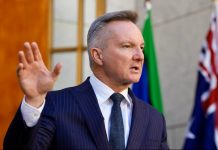

Palau’s Minister of Agriculture, Fisheries, and Environment, Steven Victor, raised the alarm at COP30 in Belém, Brazil, urging world leaders to meet climate targets and deliver climate finance for the world’s most vulnerable nations.
Victor said COP30 had become the “COP of Truth” for small island states, echoing the urgency expressed by Brazilian President Luiz Inácio Lula da Silva and reinforcing the stark realities facing frontline communities.
“So here in Belém, the clock is ticking down on the final moments for the COP of truth. For our vulnerable countries who are suffering the unjust, disproportionate, escalating impact of climate change, these final moments mean everything,” Victor said.
“I’ve come from the other edge of the Pacific, the Western Pacific, to the Eastern Pacific. It took us about two days to get here. But we did come. Because the discussions and the negotiations that we’re engaging in could mean that the future of my grandchildren can be secured, or that our islands could disappear,” he added.
“This is not something that we come to every year just because we have to. We have a moral obligation to ensure that we keep Palau above water and our reefs in good health, so future generations can continue what past Palauans have enjoyed.”
Victor warned that small island states are dangerously close to overshooting the 1.5°C global warming threshold.
“The truth is that we are dangerously close to 1.5 global warming overshoot, driven by actions of weaker countries. And unless we choose the path of course correction, right here and now, at this very moment of COP30, leaders are dooming our world to disaster,” he said.
He stressed that unfulfilled Paris Agreement commitments continue to expose vulnerable nations to escalating climate impacts.
“The truth is that countries agreed on the Paris Agreement text in clear terms, yet commitments have not been kept. The truth is that right now, our people are losing their lives and livelihoods from storms of unprecedented strength, which are being powered by warming seas. The truth is that our coral reefs, the lifeblood of our nation’s food systems, culture, and economies, are at a tipping point in dieback at 1.5 degrees Celsius. Forest ecosystems are at a tipping point. The window to protect lives and economies is closing.”
Highlighting the role of the Alliance of Small Island States (AOSIS), Victor emphasised the need to uphold the 1.5°C goal.
“Yet in our negotiating rooms, AOSIS is being challenged and pushed to get us back on 1.5 degrees Celsius. The truth is that the 1.5 degrees Celsius goal was agreed on by all our countries in the Paris Agreement. Countries are duly bound to enact the most stringent ambition to achieve this goal. Why are countries content to lag behind on this commitment that is so crucial to the sustainability of our world?”
Victor praised the Brazilian presidency’s leadership and reaffirmed AOSIS commitment to achieving tangible outcomes under the Mutirão Decision, which seeks to anchor climate action in the best available science.
“Under Mutirão, AOSIS notes that the best available science must anchor outcomes. AOSIS has consistently reinforced the critical importance of this in all negotiating spaces. We ask the presidency to thus reflect IPCC evidence,” he said.
Climate finance remained a central concern, with Victor stating that vulnerable countries have been repeatedly shortchanged.
“An inconvenient truth is that we have been shortchanged on the US$100 billion goal. The biennial transparency report clearly reflects this. We are forced to mobilise an ever greater share of our domestic resources for adaptation at home. This is exacerbating our debt burdens and diverting funds from other critical priorities. This is why we continually call for grant-based finance,” he said.
He stressed that adaptation funding must increase urgently.
“We need a significant increase of public and grant-based resources of at least US$120 billion per year by 2030. Developing countries need to spend around US$350 billion a year on adaptation by 2035. We need to leave here in Belém with real commitments on finance. We need partners to uphold their commitments.”
Victor also called on developed nations to honour their legal obligations under Article 9.1 of the Paris Agreement.
“Broadened conversations from parties will not do. We require focused, substantive discussion on finance to implement our ambitious climate plans and advance our climate actions. This is our last chance to create better truth here in Belém and speak it to power.”
Victor framed climate action as both a moral and existential imperative.
“Our leadership today must demonstrate the necessity of multilateralism with transformative action to get back in line with 1.5°C goal and safeguard humanity,” he said.