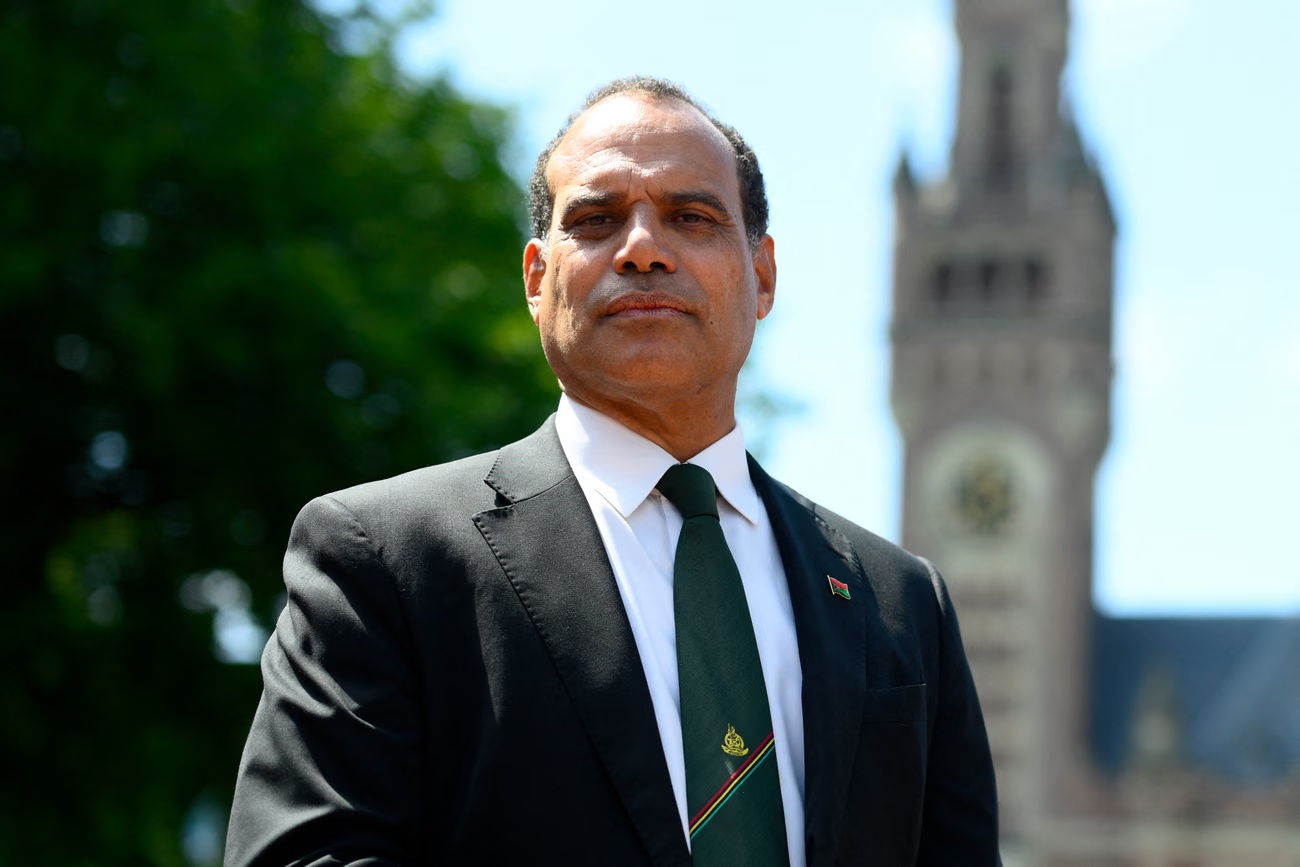
Vanuatu has set out its top priorities for COP30, calling for stronger climate finance commitments and a clear, actionable roadmap for transitioning away from fossil fuels.
Speaking to the media online from Belém, Vanuatu’s Minister for Climate Change, Ralph Regenvanu, said the country is pushing for tangible outcomes.
“A negotiated outcome that has good climate finance outcomes — better than we’ve come into COP with — and of course this roadmap we’re talking about,” Regenvanu said.
“Those are the two things that I would like to see that we can achieve here. That would be a good outcome for me.”
A major development on Monday was a high-profile press conference.
“Something significant today was a press conference led by Ambassador Tina Stege from the Marshall Islands, supported by 18 to 20 countries, including Vanuatu, Fiji, and other Pacific nations,” Regenvanu said.
He added: “On the front table were Kenya, the UK, Marshall Islands, Germany, Sierra Leone, and Colombia, saying they want this roadmap for a just and equitable transition away from fossil fuels. People who had been in Paris said it was reminiscent of when a group of countries came together and declared their position. For me, that is very encouraging.”
He said the coalition reflects rising support for a globally coordinated transition away from fossil fuels.
“We need this roadmap… as actionable as possible, as real as possible, as a measure that is going to be able to be legally binding as possible,” he said.
Vanuatu is also advancing the push for an International Court of Justice (ICJ) advisory opinion on states’ obligations to address climate change. But progress remains difficult inside negotiating rooms.
Regenvanu said many Small Island Developing States (SIDS) are referencing the initiative in their statements, but some negotiating blocs are resisting its inclusion.
“In the negotiating rooms, a lot of blocs of countries don’t want it mentioned, so I think in the final negotiated text, it’s not going to be prominent,” he said.
For Vanuatu, the focus is on the UN General Assembly resolution rather than pushing for prominence at COP30.
“We aren’t really pushing it that hard here. We are just trying to make sure that when it goes back to the General Assembly next month, we just want to see it go through,” Regenvanu explained.
The country has formed a core group of supportive nations representing different regions to negotiate the resolution’s text.
“We formed a core group of countries… who are with us on that text, and that is our focus.
We’re not so much thinking that this COP is going to be a place where it features prominently, because there are divergent views, and there are countries that don’t want it mentioned. We are not going to push the issue in the hope of having our resolution at the General Assembly pass,” he said.