Pacific countries are ready, and will actively engage with other parties of the UN Framework Convention on Climate Change (UNFCCC), to achieve the 1.5 degree goal of the Paris Agreement, to ensure the protection of lives of the vulnerable people of the Pacific.
Such was the overwhelming sense following the first Pacific Small Island States (PSIDS) coordination meeting held at the Pacific Delegation Office at the 30th Conference of the Parties to the UNFCCC, underway in Belem Brazil.
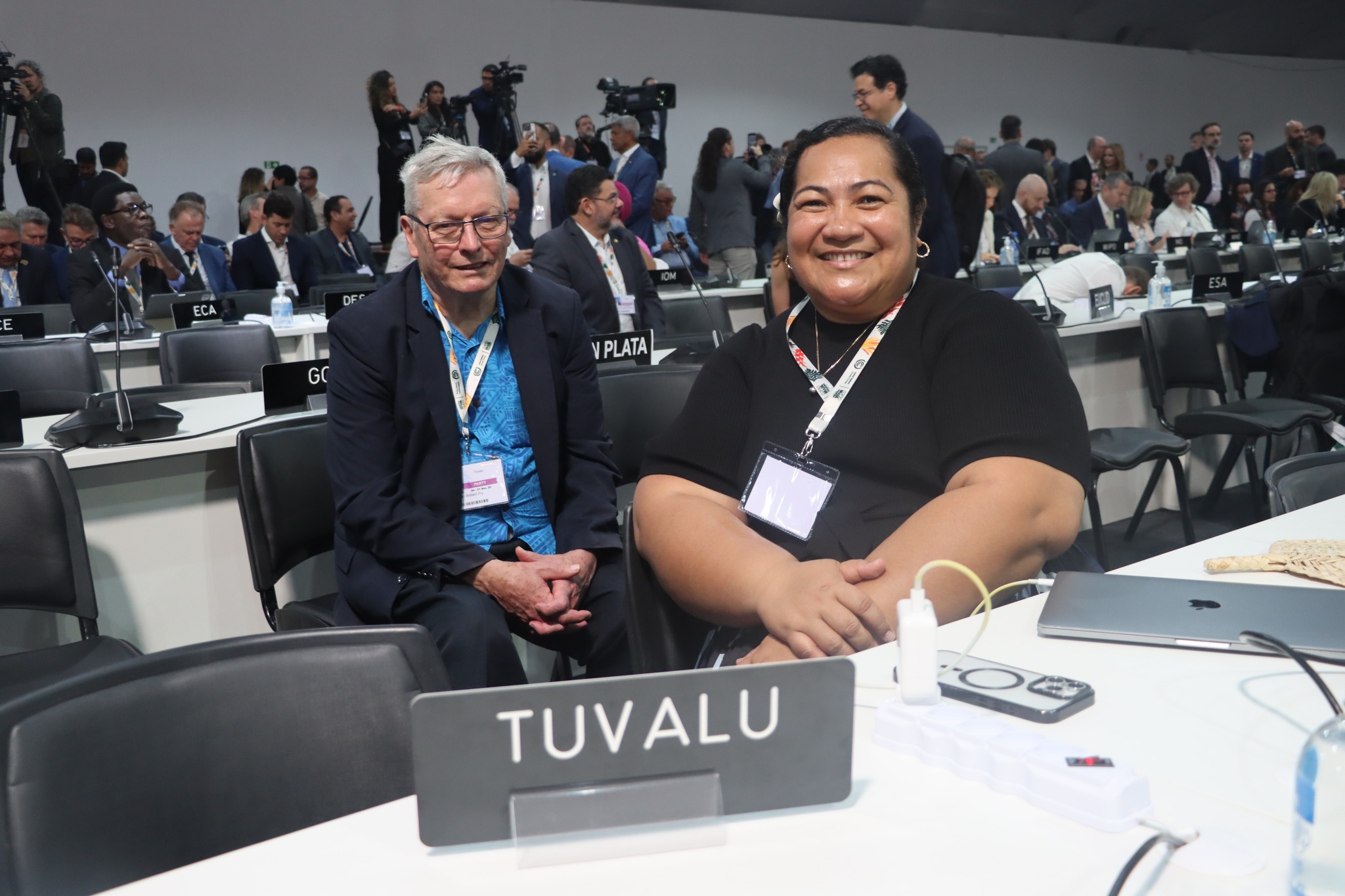
“The Pacific comes ready, they are here to engage and advocate for the survival of our communities,” said Pepetua Latasi, Secretary, Ministry of Home Affairs, Climate Change, and Environment, Tuvalu.
“We didn’t just come all this way to make up the numbers, our voice matters, and we want an outcome of this COP to reflect the needs of our communities.”
The Pacific coordination meetings at COP30 are facilitated by the Government of Tuvalu as Chair of PSIDS. It is an important part of the Pacific’s work at COP, as negotiators comb through the text of different thematic priorities that will go under the microscope for the next two weeks.
“The coordination to bring the one Pacific voice together is crucial in this space,” said Latasi. “While Climate change is impacting everyone around the global communities, for us in the Pacific, this is a crisis. Having a united one Pacific voice is very important and crucial at the COP.”
In 2015, Pacific countries were amongst the governments that adopted the Paris Agreement on climate change and committed to limit the rise in the global average temperature to “well below” 2°C above pre-industrial levels, pursuing efforts to limit it to 1.5°C.
However, progress toward this goal is off track and COP30 in Belem will need to focus on keeping this goal within reach.
A key expectation for this year’s COP is to reach agreement on indicators for measuring progress towards the Global Goal on Adaptation (GGA) established in the Paris Agreement. This would be the culmination of a process meant to narrow down a set of 100 indicators that match the 11 targets of the 2023 GGA Framework.
In particular, the indicators relating to means of implementation remain a subject of much debate, leading the relevant experts to outline options for political decisions makers to sort out.
Another key focus will be the latest round of nationally determined contributions (NDCs) under the Paris Agreement. Parties were originally supposed to submit their NDCs by February 2025, but a number of them, including many big emitters, have yet to do so.
These priorities and more will give delegates and negotiators plenty to do in the next two weeks.
“Apart from long days and long nights, the negotiations of agenda items will be intense,” added Latasi.
“We heard today that there are nine additional agenda items proposed, which shows what delegations view as important matters to be looked at.
“It is a good indication of the scope of work we are here to do. So, I anticipate some long days up ahead, but this work is important for us and our families, and we are here to ensure they are protected.”
The Pacific Delegation Office is a Pacific partnership with the New Zealand Government managed by the Secretariat of the Pacific Regional Environment Programme (SPREP).
It plays a vital part for the one Pacific Voice advocating regional and national positions on different thematic priorities at the climate change negotiations.
“At our PSIDS coordination today, we had a full room,” said Latasi. “The delegations came prepared, they are eager to engage. It was very encouraging to see Pacific delegations come ready to engage and with prepared positions they are ready to push through at this COP.”
The 30th Conference of the Parties to the UN Framework Convention on Climate Change (UNFCCC) is taking place from 10-21 November 2025 in Belem, Brazil.