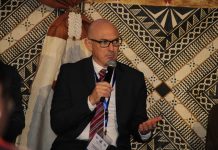



UN Climate Change Executive Secretary Simon Stiell has welcomed the launch of the Baku to Belém Roadmap to US$1.3 trillion, describing it as a practical plan to turn climate finance commitments into real-world results that protect lives and strengthen economies.
“The Baku to Belém Roadmap to US$1.3 trillion is a plan for action, building on COP29’s finance milestone agreement, and carrying momentum into COP30,” Stiell said in a statement.
At its core, he said, the roadmap is about “turning commitments into practical, inclusive climate finance action that’s effective in delivering real-world outcomes that protect lives and strengthen economies.”
For the first time, more than 200 governments, banks, businesses, and communities have joined forces to outline workable solutions to mobilise climate finance and scale up funding towards USD$1.3 trillion a year by 2035 to help developing countries meet their climate goals.
“This can bring tremendous benefits for the global economy – generating jobs, protecting communities, and driving innovation,” Stiell said.
He noted that while the goal is ambitious, it is achievable: “The tools exist; what’s been missing is coordination and shared commitment. This Roadmap provides a guide to both, aligning public and private finance behind a common direction, and building confidence that 1.3 trillion is within reach.”
Stiell said times are tough for many governments facing scarce resources, but positive signs are emerging with rapid declines in the cost of clean energy and innovations across economic sectors once thought to be slow to decarbonize.
He called for a shift in mindset about climate finance.
“Treating climate finance purely as cost, or as charity, is misguided and self-defeating, and has held back the progress we need,” he said.
“Make no mistake: scaling up climate finance hugely benefits every nation. It’s a vital investment in resilient global supply chains, supporting low-inflation growth, food security, and a stronger, more productive global economy that underpins peace and prosperity.”
Stiell emphasised that getting finance flowing means expanding access to grant finance, unlocking low-interest capital, managing debt pressures, and de-risking investment. He pointed to innovative tools such as debt swaps and private capital reinvestment as key to directing funds into clean energy and resilience efforts.
“Recent climate shocks show what’s at stake, as climate disasters like Hurricane Melissa rip through communities and economies. So, every early dollar deployed now helps avoid far greater costs later for all nations. There’s no time to waste,” Stiell said.
He acknowledged progress under the Paris Agreement but warned that it remains too slow. “
By scaling climate finance to match the scope of the climate crisis, we can turn ambition into momentum, making climate action a driver of economic growth, stability, and shared prosperity.”
“This new era will be about bringing our formal process closer to the real economy, accelerating implementation, and delivering benefits to billions more people. Bigger and better climate finance solutions will be a crucial part of that shift,” he added.
“From Baku to Belém, we are moving from agreement to action, focusing on solutions and alignment for people, prosperity, and the planet,” he said.