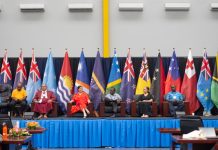



While major polluters continue to fall short on climate commitments, notably the United States, blocs of small nations such as the Alliance of Small Island States (Aosis) will arrive at the 30th United Nations Climate Change Conference (COP30) demanding urgent action.
“It is essential that the voices of Small Island Developing States are not only present, but central to the decisions that will determine our future,” warned Aosis in a letter addressed to COP30 president André Corrêa do Lago in June this year.
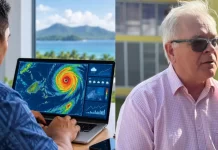
Composed of 39 nations, Aosis brings together countries such as Cuba, the Bahamas, Maldives, and Tuvalu. These low-lying island states are among the most exposed to sea level rise and extreme events such as hurricanes and typhoons. “They are the countries most affected [by the climate crisis] and always deliver powerful messages,” says Stela Herschmann, Climate Policy specialist at the Climate Observatory, a network of environmental organisations in Brazil.
Alongside small island states, the Independent Association of Latin America and the Caribbean (Ailac), both representing the Global South, are expected to play a significant role at COP30, especially in pushing for solutions on climate mitigation.
“Their priorities vary, but finance will be a common demand, alongside adaptation,” explains Kiryssa Kasprzyk, Director of Climate Policy at Conservation International, which has worked on biodiversity protection since the 1990s.
Tuvalu’s Appeal
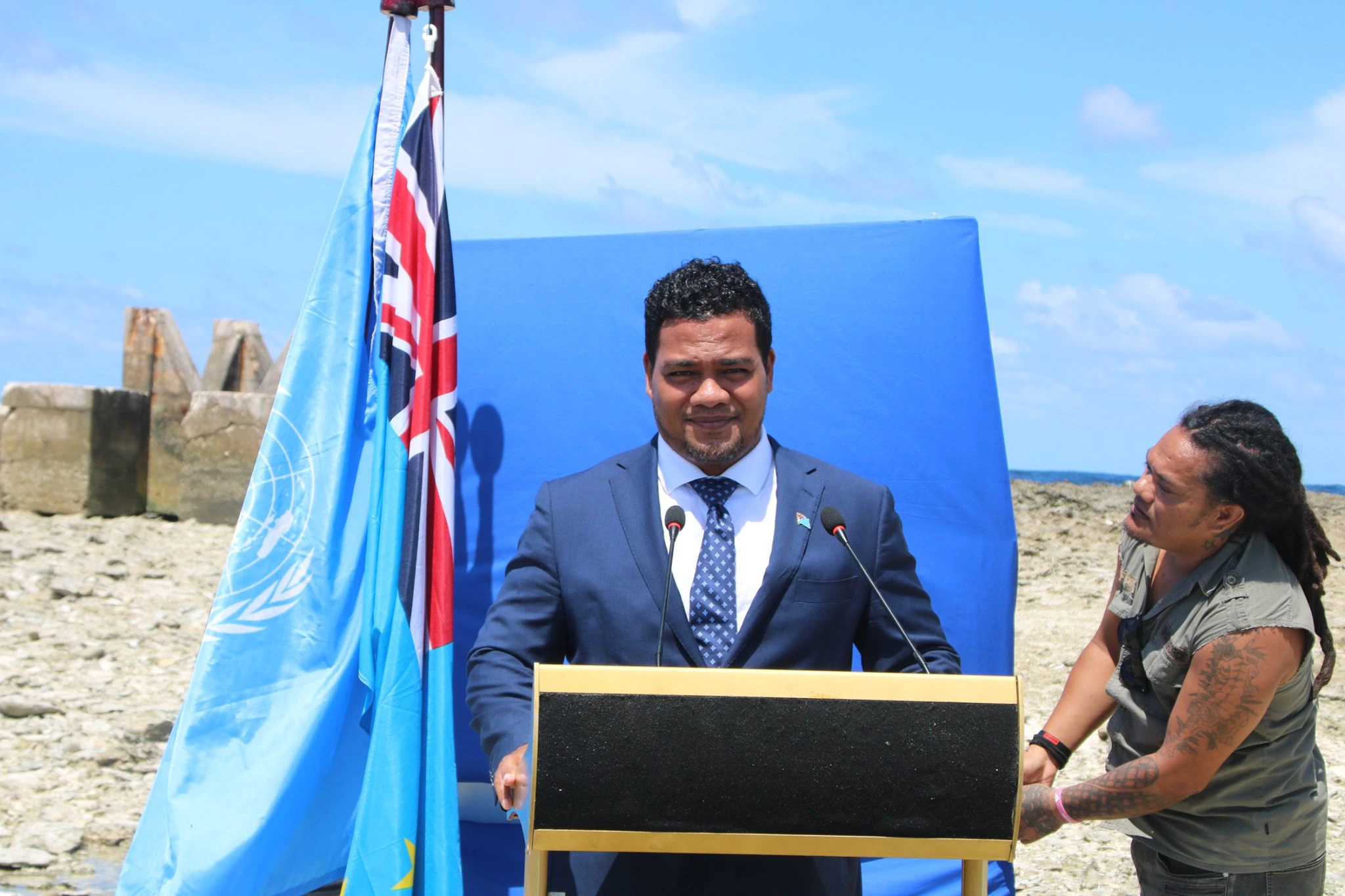
In 2021, wearing a suit and standing knee-deep in the ocean, Tuvalu’s then-Minister of Justice, Communication and Foreign Affairs, Simon Kofe, delivered a video address to COP26. “We are living the reality of climate change and sea-level rise. We cannot wait for speeches while the sea is rising,” he said.
The message was a plea for developed nations, also the world’s largest greenhouse gas emitters, to take urgent action to curb global warming.
Four years later, the threats have only intensified. Home to around 11,000 people, Tuvalu faces severe climate impacts, including Pacific Ocean encroachment on its land.
In 2025, residents began a planned migration process, with documents being issued allowing them to relocate to Australia.
If climate change is not stopped or reversed, Tuvalu may become the first country to disappear entirely, losing not only its territory, but also history and culture.
Given the urgency, Tuvalu and other island nations are using global climate negotiations to raise their voices strongly, as they did in their letter to COP30 and are expected to do again this November, when the summit begins in Belém, Pará.
“Aosis will not be part of any consensus at COP30 that makes us co-signatories to our own destruction,” they warned.
Neglect from Major Polluters
While the most impacted nations plead for action, some of the world’s top greenhouse gas emitters are sidestepping the debate on humanity’s future. This includes the United States, the world’s second-largest emitter, which so far has not confirmed participation at COP30.
The absence of U.S negotiators is expected and, according to Herschmann, might even be beneficial. “In every climate and environmental discussion this year, either they didn’t participate or actively undermined progress,” she says.
India, one of the world’s top ten emitters, has also taken a rigid stance in negotiations. Along with China and Saudi Arabia, the country is expected to wield great influence at COP30.
“Developed countries and blocs such as the European Union will also be central actors, especially as providers of finance and support to developing countries,” Kasprzyk notes.
Europe, however, has not yet presented its 2035 climate targets, Herschmann points out. “Europe owes the world, it still hasn’t presented its climate goals for 2035 and can no longer be considered a climate leader,” she says.
China, the United States, the European Union, India, Russia, Japan, Iran, Indonesia, South Korea and Brazil make up the world’s top ten emitters, according to 2022 data from Climate Watch (WRI).
Contradictions of the Host Country
In Brazil, deforestation remains the main source of carbon dioxide (CO2) emissions, the leading cause of global warming. “As host and COP presidency, Brazil will naturally take on a leadership role throughout the negotiations,” says Kasprzyk.
Recent declines in Amazon and Cerrado deforestation mean Brazil will arrive with positive results to present. The country must end illegal deforestation by 2030 to meet its Paris Agreement targets.
However, in one of the most critical fronts of climate action, phasing out fossil fuels, Brazil is moving in the opposite direction, especially after approving offshore oil drilling in the mouth of the Amazon River. “It undermines COP30 itself, whose most important outcome must be the implementation of a fossil fuel phaseout,” said Suely Araújo, Public Policy Coordinator at the Climate Observatory, in a statement to the press after the environmental agency (Ibama) issued a license for oil drilling in Block 59, in the Foz do Amazonas Basin, 175 km off the coast of Amapá.
What is COP?
COP stands for Conference of the Parties, the United Nations Climate Change Conference, an annual summit held since 1995 that brings together global leaders from UN member states and the European Union. Delegations, including blocs such as Ailac and Aosis, present and negotiate proposals aimed at halting global warming and adapting to unavoidable climate impacts.
Today, COP targets are guided by the Paris Agreement, which requires countries to reduce fossil fuel use, invest in clean energy, and end deforestation.
The 30th edition, COP30, will take place from November 10–21, 2025, in Belém (Brazil).