
Fiji’s Ocean of Peace Vision is now supported by China, the world’s largest economy by Purchasing Power Parity (PPP).
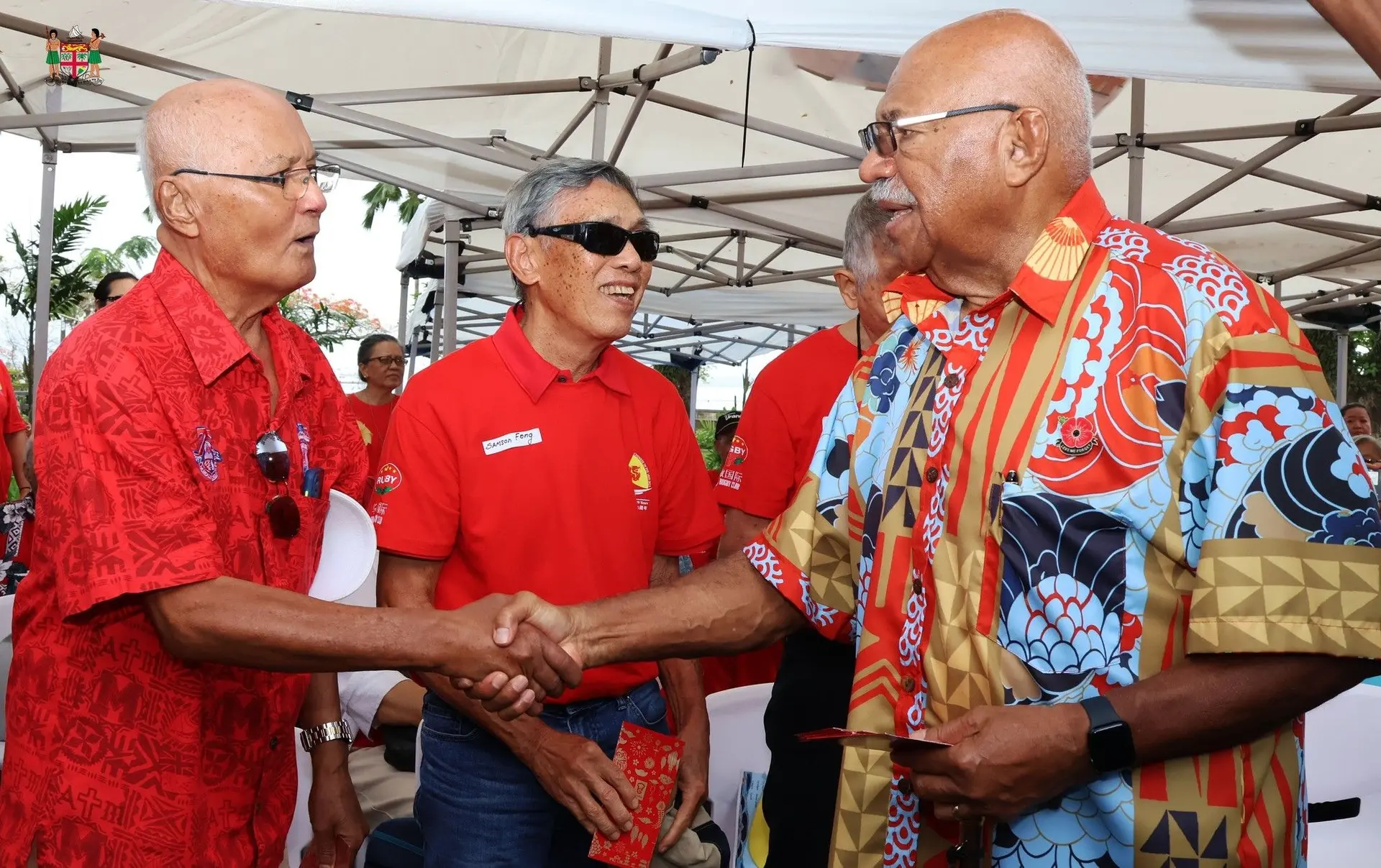
This was confirmed last Saturday to Prime Minister Sitiveni Rabuka during the celebration of the Chinese community’s 170 years settlement in Fiji, and 50 years of diplomatic relations between Fiji and China.
The Chinese Embassy in Fiji Chargé d’Affaires, Wang Yuan confirmed the assistance by saying that Global Governance Initiative proposed by Chinese President Xi Jinping “aligned closely” with Rabuka’s Ocean of Peace concept.
“This lays the foundation for deepened strategic co-operation and achieved common development between the two countries,” Wang said.
He said China’s support laid the foundation for deeper strategic co-operation between the two nations.
The Ocean of Peace vision, championed by Rabuka, seeks to maintain the Pacific region as a zone free from militarisation and great power rivalry, focusing instead on climate action, sustainable development, and regional co-operation.
Wang’s comments followed Rabuka’s visit to China last year, where both countries’ leaders charted the course for future relations and created what he described as a “grand blueprint” for co-operation.
“The Chinese community now faces a broad future,” Mr Wang said, noting that the 20th Central Committee of the Communist Party of China had recently set a five-year plan for economic and social development.
He encouraged the Chinese community in Fiji to “board the fast train of Chinese modernisation” and contribute to building a “China-Fiji community with a shared future.”
Rabuka said Fiji and China remained committed to strengthen their co-operation in trade, investment, and climate resilience.
“Our enduring friendship continues to promote shared prosperity, sustainable progress, and mutual understanding,” he said.
Rabuka expressed confidence that the partnership would grow stronger as both countries confront challenges including climate change, disaster resilience, poverty alleviation, and sustainable growth.
Meanwhile, Prime Minister Sitiveni Rabuka traced back the Chinese Community in Fiji’s roots to 1855, acknowledging the arrival the first Chinese settler to Fiji, Moy B Ling.
The Chinese settler came to Fiji as a trader in beche-de-mer and sandalwood.
His descendants were present at the 170 years anniversary since the first Chinese settler arrived in Fiji.
During the double celebrations, Prime Minister Sitiveni Rabuka thanked the Chinese community in Fiji for being the “mainstay” of the nation’s economy and society.
“You have been the mainstay of our society, particularly in the business side of things,” Rabuka said.
“Your families have been part of Fiji’s story for generations, building businesses, creating livelihoods, and contributing to our economy, to our culture, and to our community.”
The double celebration drew families, descendants of the Chinese Community in Fiji to Sukuna Park, in what Rabuka described as a “vibrant sea of red.”
Rabuka acknowledged prominent Chinese Fijian families including the Hong Lees, the Ham Nams of Wahleys Butchery, the Yees of Leylands butchery, and the Seetos.
He noted their contributions across education, health, business, and culture spanning seven generations.
Chinese Association of Fiji President Jenny Seeto led the organising committee for the event, which featured lion and dragon dances, cultural performances, and speeches from government officials.
Chargé d’Affaires of the Chinese Embassy, Wang Yuan, praised the community’s spirit of “hard work, unity and mutual assistance, dedication and contribution to society.”
The celebration follows a year of commemorative events including Chinese New Year fairs, photo exhibitions, and cultural competitions marking the milestone anniversaries.
Rabuka highlighted how China has become one of Fiji’s major trading partners, with cooperation under the Belt and Road Initiative bringing infrastructure development and agricultural advancements.