China will double down on efforts to expand its influence across the Pacific after Australia and Papua New Guinea agreed to ink a comprehensive defence treaty, foreign policy experts have warned.
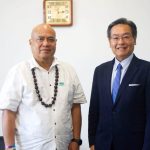
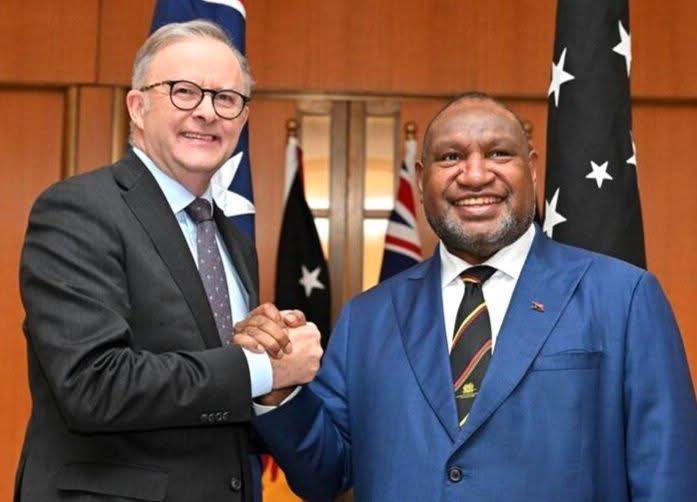
Papua New Guinea Prime Minister James Marape confirmed last Thursday that his cabinet had approved the Pukpuk Treaty – named after the pidgin word for crocodile – making it Australia’s third formal alliance after the United States and New Zealand, and the first it has entered into in almost 75 years.
Prime Minister Anthony Albanese and Marape are expected to sign the treaty on Monday, one day after the pair attend the NRL grand final in Sydney.
The treaty commits Australia and Papua New Guinea to defend each other if attacked, giving the Australian Defence Force access to PNG when there is a security threat. The treaty will also allow up to 10,000 Papua New Guineans to serve in the ADF, while Australia helps Port Moresby expand its air force and create a new special forces unit.
Jennifer Parker, a maritime security expert linked to the National Security College, said the realists within the Chinese government would understand that Australia would be concerned about the Pacific, but nevertheless, China will be critical of the Pukpuk Treaty.
“We have seen China be critical of Australian agreements in the Pacific, including the Falepili Union. We’ve seen China be critical of Australia’s use of alliances and relationships. China is incredibly critical of AUKUS [and] of the Quad,” Parker told AFR Weekend.
The Chinese embassy in Papua New Guinea has already voiced its concerns with the Pukpuk treaty, saying in September that while it respected the Pacific country’s right to sign bilateral treaties, they should not come at the expense of China’s presence there.
“Such a treaty should not be exclusive in nature, nor should it restrict or prevent a sovereign country from co-operating with a third party for any reason,” the embassy spokesman said in a statement on Facebook.
“It should also refrain from targeting any third party or undermining its legitimate rights and interests. We hope that the PNG side will continue to uphold independence and self-reliance, properly handle issues bearing on its sovereignty and long-term interests, and work with China to maintain the sound development of China-PNG relations and mutually beneficial co-operation.”
The treaty was originally supposed to be signed when Albanese visited Papua New Guinea last month to celebrate the country’s 50th anniversary, but the prime minister left empty-handed after it emerged that Marape’s cabinet had not signed off on the deal.
The ratification of the Pukpuk Treaty will come as a relief for Albanese. But the government still faces an uphill battle in convincing Vanuatu to sign a separate security deal, the Nakamal Agreement, which some local politicians fear would restrict their ability to negotiate with China.
Parker said China will intensify its influence activities, including efforts to sign security deals and policing partnerships across the Pacific.
“I think more focus on that from China in the region may well be a response to not only the PNG treaty, but the other security agreements we’ve been discussing with a number of Pacific Islands,” Parker said.
The Albanese government has tried to strengthen Australia’s ties with the Pacific after the Solomon Islands stunned the region in 2022 when it struck a secretive security pact with Beijing.
To counter China’s influence, the Albanese government has signed far-reaching deals with Tuvalu and Nauru, giving Canberra a final say over any other security agreements the two nations might want to strike with other countries.
The government has also unveiled a $200 million(US$131 million) deal to train thousands of new police officers in Papua New Guinea, and announced a $190 million(US$125 million) fund to set up a training centre for the Royal Solomon Islands Police Force as part of its efforts to curb China’s security presence.
Lowy Institute research fellow Oliver Nobetau agreed it was possible that the treaty could embolden China to bolster its efforts to build influence in the Pacific, but said it was not clear what that would look like.
“Over the past couple of years, Australia has done well to really spread itself thin, but also touch in so many factors where it hasn’t traditionally been involved in,” Nobetau said.
These include infrastructure development, negotiating Commonwealth Bank’s entry to Nauru to block a deal with the Bank of China, and funding a new NRL team in Papua New Guinea.
“So Australia itself is testing new waters, but it’s covering a lot of ground. So the question now, which remains, is, what is left there for China to double down on?” Nobetau said.
Parker said the Albanese government had successfully stabilised the economic and diplomatic aspects of the bilateral relationship with China, but the security dimension was not stable.
“We see that through China’s operations in the Pacific. We see that through the unsafe and unprofessional activities that China’s military undertakes against ours,” Parker said.
Australian military officials lodged a formal protest through embassies in Canberra and Beijing in February after an Australian surveillance plane had a near miss in the South China Sea when a Chinese fighter jet released flares that came within 30 metres of the aircraft.
Defence Minister Richard Marles said the Pukpuk Treaty showed that Papua New Guinea viewed Australia as its natural security partner of choice.
“History, geography, affinity all make that manifestly plain. I mean, there is no world in which we would see any kind of attack on PNG as doing anything other than engaging our national interest,” he said.