
Fiji is making headway in talks with Pacific neighbours to ensure steady tuna supply for the Pacific Fishing Company (PAFCO) in Levuka, Fisheries Minister Alitia Bainivalu told Parliament.
Responding to an oral question from Opposition MP Faiyaz Koya, Bainivalu confirmed that Fiji has begun negotiations with Kiribati and Tuvalu, two key members of the Parties to the Nauru Agreement (PNA), which controls around 60 percent of the western and central Pacific tuna supply.
“I want to confirm that there has been significant progress in addressing this issue with PAFCO through the bilateral talks with our Pacific Island neighbours on supplying fish to PAFCO for processing and working with the Pacific Island Forum Fisheries Agency (FFA) to implement the regional strategy for maximising the economic and social benefits of the region’s tuna fisheries,” Bainivalu said.
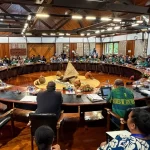
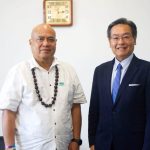
She said bilateral meetings were held with Kiribati’s Minister of Fisheries and Ocean Resources in Niue in July and Tuvalu’s Head of Fisheries in Suva in August. These discussions, she said, focused on access agreements for Fiji-flagged vessels and formalising arrangements for landing fish for processing in Levuka.
“The discussions aim to secure favourable access agreements for Fiji-flagged vessels to fish within their EEZ, utilising their preferential Vessel Day Scheme (VDS) fees and fishing access into their fishing areas. In addition, to formalise arrangements for landing fish from their respective EEZs for processing at the PAFCO processing plant in Levuka,” she said.
Bainivalu said Fiji is also working on strengthening its global tuna position by engaging with two other regional fisheries management organisations (RFMOs) – the Convention on the Conservation and Management of Southern Bluefin Tuna (CCSBT) and the Inter-American Tropical Tuna Commission (IATTC).
“The rationale of being a member of these additional RFMOs is to allow for our national long line fleets to access these fishing grounds, as scientific assessments predict that by 2050, there will be a progressive redistribution of tuna biomass from the equatorial waters to the Eastern Pacific and to some extent, Northwards to higher latitudes,” she said.
On the regional front, Fiji is working with the Forum Fisheries Agency (FFA) to establish a Tuna Processing Hub and Spoke Model that positions Fiji as a regional processing hub, ensuring Pacific catch is processed locally rather than shipped to foreign plants.
“Implementing this model will most definitely require the support structures of the PAFCO facility, as well as a more efficient freight system and improved port facilities,” Bainivalu told MPs.
Fiji is also part of the East New Britain Initiative (ENBi), a regional strategy led by Papua New Guinea to create investment pathways for tuna processing and marketing, while reducing barriers to market access.
“Fiji is one of the key members of the ENBi Working Group and is currently engaged in developing the ENBi Implementation Strategy,” she said, noting that the initiative could help scale up Pacific Islands Tuna (PIT), a model pioneered by the Marshall Islands in partnership with Walmart for the US market.
Bainivalu said funding remained a critical issue for Fiji’s tuna industry.
“For Fiji to compete in the world tuna market and realise its aspirations, requires a sustainable funding mechanism, particularly to upgrade the aging fleet and support fleet modernization,” she said. The Ministry is in talks with the Fiji Development Bank to explore financing options.
She concluded by stressing that Fiji was committed to reinforcing its position as a tuna processing hub and strengthening supply chains for PAFCO.
“The Ministry continues to foster collaboration and create investment pathways to elevate the socioeconomic performance of the Fiji Tuna Industry, and in ensuring the maintenance of premium markets such as the EU and US and also access to other greater markets,” Bainivalu said.