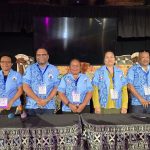
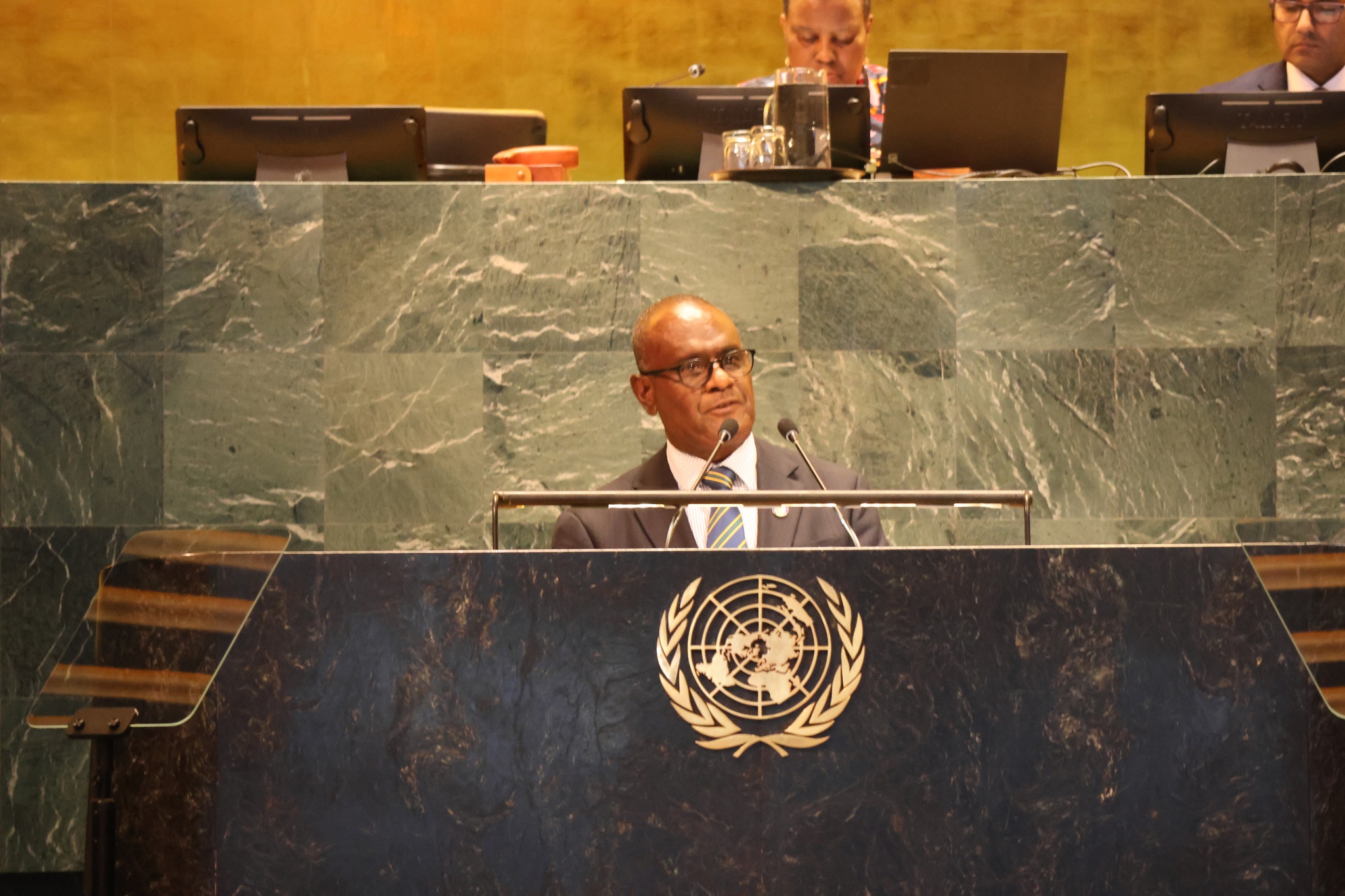
Solomon Islands Prime Minister and Forum Chair Jeremiah Manele has told the United Nations General Assembly(UNGA) last week that the world is entering “a moment of profound uncertainty,” warning against militarisation, rising inequality, and inaction on climate change.
“We meet at a moment of profound uncertainty – marked by deepening conflicts, armed aggression, widening inequalities, and the growing disregard for international law,” Manele told the 80th Session of the UNGA.
He cautioned that the erosion of the UN Charter and the alarming return of unilateralism “threatens the very foundation of our multilateral system.”
“We note with deep concern that the world is now over-armed, spending less on the development agenda and increasingly adopted a militarised posture. We need to halt and reverse these non-peaceful trends,” he added.
Manele said the Pacific was determined to remain a zone of stability and unity.
“We seek a region free from nuclear weapons, militarisation, trafficking of illicit drugs and geopolitical posturing. My subregion recently adopted the Ocean of Peace Declaration. It is rooted in the Pacific’s collective history and culture. It is our collective vision for a resilient, peaceful, and prosperous Blue Pacific continent.”
Manele also confirmed Solomon Islands’ commitment to humanitarian principles.
“Solomon Islands signed onto the Declaration for the Protection of Humanitarian Personnel, noting that 380 humanitarian personnel paid the ultimate sacrifice last year. It is our collective responsibility to respect international humanitarian law, protect the safety of humanitarian personnel and civilians and instil accountabilities for all in disaster and war zones.”
Turning to climate change, Manele said the threat was immediate and devastating.
“Climate change is a crisis multiplier that is defining our future. The World Meteorological Organisation declared 2024 was the warmest year on record. This pushes us further off track from the 1.5 degrees goal we agreed to in Paris.”
He stressed that big emitters must lead.
“We need urgent and ambitious climate action now that puts us on a 1.5 degrees pathway. Large emitters and those with historical responsibility must take the lead in drastically cutting emissions. Contrary to what we heard here a few days ago, the science on climate change is clear and my people are suffering from it.”
Manele welcomed the landmark International Court of Justice(ICJ) advisory opinion on climate change, which he said confirmed that states carry binding legal obligations to prevent harm, protect human rights, and support vulnerable nations.
“For Small Island Developing States, this opinion brings hope and recognition. It affirms that even if rising seas inundate our islands, our statehood and maritime boundaries will endure, preserving our sovereignty and our rights.
“This is more than a legal finding, it is indeed a call to the international community that only better together can we honour the 1.5°C commitment, protect the most vulnerable, and secure a just and sustainable future for all nations and peoples”.
He highlighted that climate displacement is now a legal concern.
“The Court has now confirmed that the principle of non-refoulement applies. Which means that no State can lawfully return people to places where climate change makes survival impossible.”
He also saluted the leadership of Vanuatu and Pacific youth in driving the ICJ process on climate change.
“Though small in size, our island nations are large in purpose, and when we stand together, governments, communities, and young people alike, we embody the very theme of this Assembly: ‘Better Together: 80 Years and More for Peace, Development and Human Rights.’”.
As Forum Chair, Manele pushed for stronger regional financing tools.
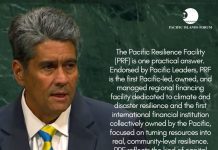
“As Forum Pacific Chair, I am pleased to announce the establishment of the Pacific Resilience Facility. It is Pacific owned, and Pacific led response to the escalating impacts of climate change and disasters on our peoples.”
The goal is to raise USD$500 million by 2026, with USD4166 million already pledged.
He also backed Australia’s bid for COP31, calling it “a vital opportunity for the Pacific to amplify its voice and demand stronger climate action.”
“On the question of COP31, Solomon Islands supports Australia’s bid to host COP31. It will provide a vital opportunity for the Pacific to amplify its voice and demand stronger climate action”.
Manele stressed Solomon Islands’ identity as a big ocean state.
“The lives and livelihoods of our people are inextricably linked to the health and resilience of the marine environment.”
He reaffirmed support for the BBNJ Agreement, the Melanesian Ocean Reserve initiative, and community-based conservation.
On tuna, he said: “Over half of the world’s tuna is caught in Pacific waters, and all four species—albacore, yellowfin, bigeye, and skipjack—remain biologically healthy. Our region stands ready to collaborate with the international community and share our experience in fisheries management and restoring fishing zones to sustainable level based on science.”
Manele also confirmed that Solomon Islands had lodged continental shelf submissions with Fiji and Vanuatu, called for urgent progress on a plastics treaty, and restated the country’s moratorium on deep sea mining.
“A bilateral submission with Fiji concerning the Melanesian Border Plateau and a trilateral submission with Fiji and Vanuatu for the North Fiji Basin. Solomon Islands looks forward to engaging constructively with the Commission on these matters in the spirit of cooperation and mutual respect.
“On deep sea mining, Solomon Islands is taking a precautionary approach and has placed a moratorium on it,” he said.
PM Manele said Solomon Islands supported a regional approach on deep sea mining as agreed by Forum Leaders last month.