


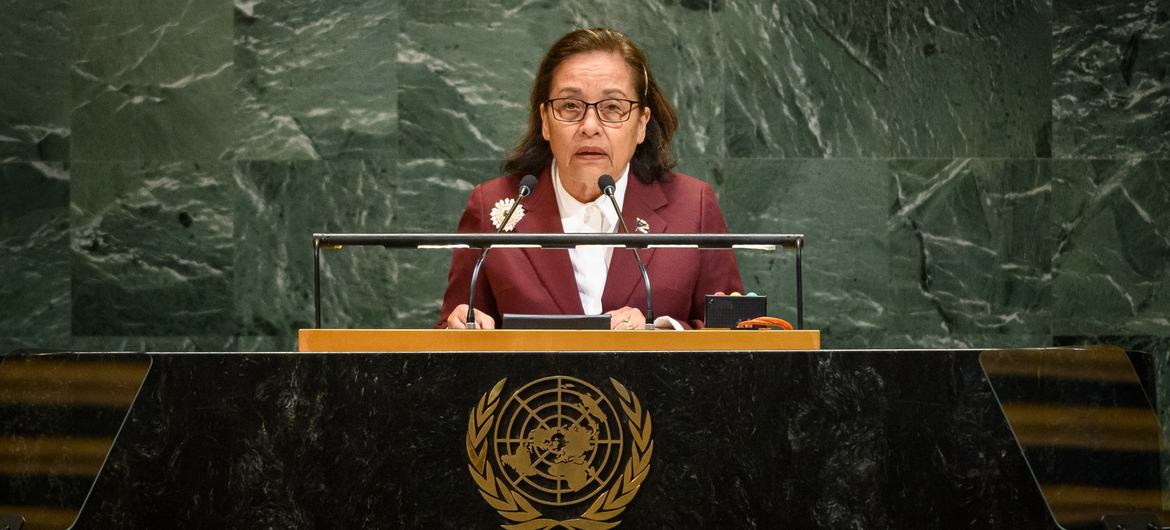
From the rainforests of Central America to low-lying atolls in the Pacific and drought-stricken plains in Africa, leaders came to the United Nations General Assembly on Wednesday with a common message: climate change is no longer a distant threat, but an immediate danger demanding bolder global commitments.
Their appeals, sharpened by rising seas, failed harvests and disappearing ecosystems, echoed Secretary-General António Guterres’s warning at a climate summit that the world is already in the “dawn of a new energy era” – one where clean energy must replace fossil fuels, and where finance and justice remain at the heart of the global response.
“The bottom-line: clean is competitive and climate action is imperative,” he declared, calling for “dramatic emissions cuts” aligned with 1.5°C goal of the landmark Paris Agreement on climate change, agreed by all nations in 2015.
“We know it can be done … COP30 in Brazil must conclude with a credible global response plan to get us on track,” he added, referring to the 30th UN climate change conference in November, which aims to accelerate global efforts to limit temperature rise and advance commitments on emissions, adaptation and climate finance.
The UN chief’s urgency provided the backdrop as world leaders presented compelling accounts of climate peril and promise on the second day of the Assembly’s annual general debate.
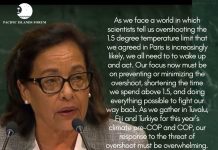
For the Marshall Islands, a Pacific nation of more than 1,200 islands and 29 coral atolls climate change is a question of survival.
President Hilda Heine delivered one of the day’s most urgent interventions, warning that promises alone cannot save sinking atolls.
“We’ve heard the promises – but promises don’t reclaim land in atolls. They don’t develop mangrove defences, shore up our hospitals and schools against rising seas or preserve cultural stability tied to land that is slipping under waves,” she said.
“Those things require money.”
Heine pressed the international community to close the trillion-dollar climate finance gap, particularly for adaptation and loss and damage.
As COP30 approaches, she said nations must not only honour their pledges but also deliver stronger plans that show a clear pathway to phasing out fossil fuels and halving global emissions within this decade.