


By Pita Ligaiula in Honiara, Solomon Islands
Marshall Islands Climate Envoy Tina Stege says the International Court of Justice (ICJ) advisory opinion on climate change delivers the legal clarity Pacific nations have long sought in the fight against global warming.
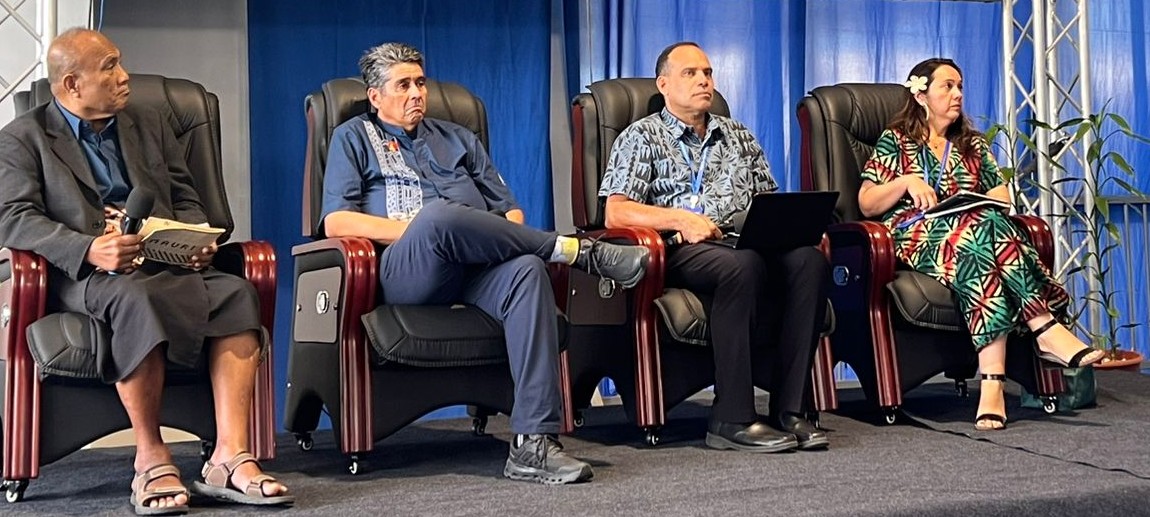
Speaking at a side event on the ICJ ruling on the sidelines of the Forum Leaders Meeting, Stege recalled the day the opinion was delivered.
“It was overwhelming. One point after the other validated what we’ve been fighting for tirelessly as a region, more than I think we ever expected.
“We’ve had the moral clarity, we’ve had the scientific clarity, and finally now we have the legal clarity,” she emphasised.
Stege said the ICJ opinion confirms that the 1.5°C warming limit is legally binding, and that all states have obligations.
“It is now clear that 1.5 is a legally binding global threshold. Every country is obligated to put forward its most ambitious targets.
Those who have benefited from fossil fuels have an obligation to those of us now suffering as a result. And whatever happens with sea level rise, our maritime boundaries remain. Our sovereignty is not in question,” she said.
She said the ruling is a powerful tool for Pacific negotiators, who have faced years of pushback at global talks.
“In UN negotiations, we’ve continuously been told the interpretation is up for grabs. What this opinion gives us is an interpretation that is clear, and that we can use,” she said.
Looking ahead, Stege said the next climate talks in Belem, Brazil will be a test of whether the world will act on the ruling.
“It is a chance for the world to demonstrate they’re living up to the decision, and that would mean delivering ambitious 1.5 alignment. And when it’s clear those don’t meet the threshold, we must have the discussion about course correction. That discussion cannot be avoided,” she said.
She said the ICJ opinion also strengthens the case for litigation.
“We hope polluters will deliver the changes needed. But now, with the possibility of litigation related to this decision, perhaps that will push things in a way we have not seen advance in recent years,” Stege said.