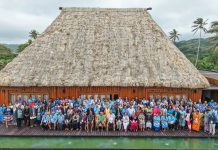
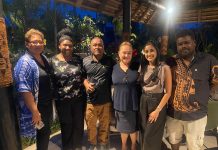
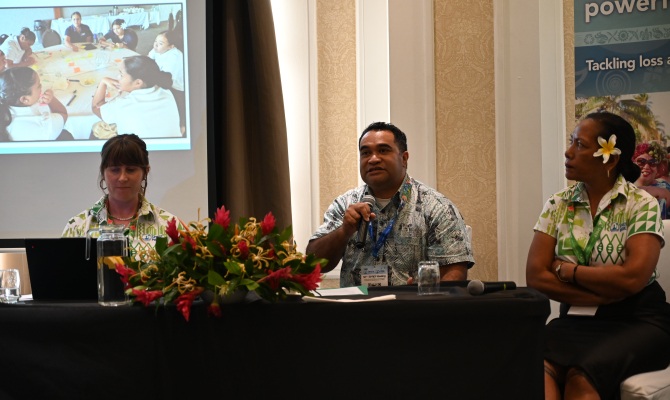
A collective effort is underway to deepen the understanding of climate-induced loss and damage from Pacific countries and Pacific youth perspectives.
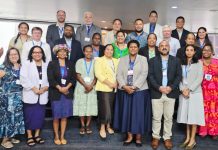
This commitment was highlighted on Tuesday evening, during a side event on the margins of the 32nd SPREP Meeting of Officials, drawing on reflections and experiences from the diverse audience in attendance.
The side event focused on sharing the regional and national level activities currently ongoing in the Pacific.
The event also shared the key highlights and outcomes of the inaugural Pacific Youth Dialogue on Loss and Damage and the second Pacific Regional Dialogue on Loss and Damage, recently held in Samoa.
Case studies from Niue, the Cook Islands, Tonga and Tokelau were presented as a snapshot of current efforts.
Understanding the efforts in the region is valuable for event participants to join the momentum in addressing loss and damage across the region.
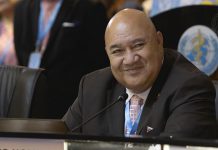
Haden Talagi, Director of Environment Niue, presented on the progress made in Niue in addressing Loss and Damage.
Niue held their first National Dialogue and Youth Dialogue in May this year.
“The youth dialogue was a the first of its kind and provided a valuable space for the youth to build their knowledge and become leaders in the emerging area of loss and damage,” Talagi said.
Niue is also on track to carry out loss and damage pilot projects on culture, intergenerational connection, biodiversity and youth empowerment.
Irris Etches, a youth present at the side event, reflected on how “The National Youth Dialogues provide a starting point for my generation to conserve Non-Economic Values like language, culture, and traditional values, which would otherwise be lost to climate change.”
Through the Loss and Damage Capacity and Capability (LDCC) Project funded by New Zealand MFAT and the Building Our Loss and Damage (BOLD) Response Project funded by the Federal Republic of Germany, countries in the Pacific are able to understand, unpack, and articulate how they address loss and damage.