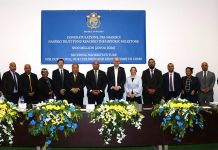
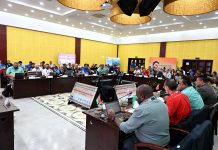
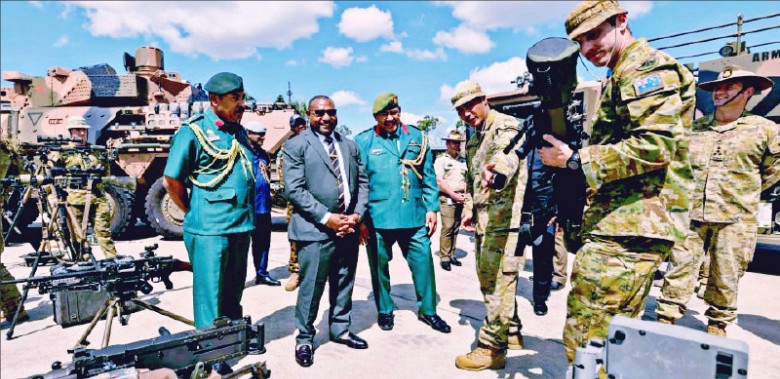
Papua New Guinea and Australia have taken a major step toward signing a historic Defence Treaty after Foreign Affairs Secretary Elias Wohengu and Australia’s Defence Secretary Greg Moriarty initialled the draft at Murray Barracks on Monday, 25 August 2025.
Defence Minister Dr Billy Joseph confirmed PNG and Australia will sign “our first treaty of any kind with any country” on Monday 15 September.
The two countries have continued their negotiations under the watchful eye of China who is a growing influence in the Pacific.
China has considered PNG and Fiji as the main thought leaders for the South Pacific Forum and the Melanesian Spearhead Group (MSG). The Papua New Guinea Government recently reiterated that China remains a vital economic partner, saying PNG would continue to engage Beijing on trade, investment, and infrastructure.
PNG has consistently upheld its “friends to all, enemies to none” foreign policy, but the treaty signals Port Moresby’s intent to anchor its defence future with its closest neighbour.
Defence Minister Dr Billy Joseph described it as historic.
“Papua New Guinea will commit 10,000 personnel, with capacity to provide more if required,” he said, calling the pact the most significant security agreement in the nation’s history.
Dr Joseph outlined five key elements of the Treaty:
1.A Natural Progression: Strengthening a historic PNGDF–ADF relationship that predates independence.
2.Cross-Recruitment Opportunities: Opening ADF service to Papua New Guineans, creating career pathways for youth and professionals.
3.Boosting PNGDF Capability: Enhanced training, joint exercises, and resource-sharing.
4.Respect for Sovereignty: ADF troops in PNG will remain subject to PNG law, just as PNGDF will follow Australian law.
5.Strategic Trust: A foundation for wider cooperation in labour mobility, immigration, and regional security.
Prime Minister James Marape said, “This is not just about boots on the ground,” he stressed, “but a deeper partnership that supports resilience, development, and respects our sovereign interests.”
PM Marape is not shy in reminding his Australian counterparts that PNG’s sovereign interests come first.
The Prime Minister outlined a 20-year roadmap for the defence sector, focusing on:
*Military capability: Maintain three land battalions with a total force of 5,000–7,000, supported by upgraded training and equipment.
*Interoperability: Establish a joint Air Wing to aid defence, policing, disaster response, and national security.
National Volunteer Service: Introduce military training for civilians and activate a Reserve Force to boost national preparedness.
*Discipline: Enforce strict no-smoking and no-drinking rules for new recruits for at least five years.
*Self-sufficiency: Restore in-house logistics, catering, medical and engineering services to reduce reliance on private contractors.
*Financial sustainability: Reinvest funds into internal capacity while ensuring long-term viability after recent economic shortfalls.
PM Marape said, “Our defence force is here to safeguard Papua New Guinea, not to be deployed against our own people.”
“We must work together to ensure our nation’s security, so that future generations inherit a stronger, safer country.” The treaty will expand and modernise the PNG–Australia defence partnership, rooted in World War II and strengthened through decades of cooperation.
Proposals include joint operations, disaster response, and an unprecedented opportunity for PNG citizens to serve in the Australian Defence Force (ADF).
The Australian Defence Force (ADF) has explored options for recruiting Pacific Islanders but under current rules they would face stringent entry criteria and must apply for Australian citizenship within 90 days of joining.
Final negotiations continue ahead of the formal signing.
The agreement also carries wider geopolitical weight.
With China deepening its footprint in the Pacific through loans, infrastructure, and security offers, Australia’s closer alignment with PNG is viewed as critical to regional stability.
Final negotiations are underway ahead of what leaders describe as a “landmark moment” for both nations, placing PNG at the centre of Pacific regional security.