The UN Committee on the Rights of Persons with Disabilities Tuesday concluded its consideration of the initial report of Kiribati on its implementation of the Convention on the Rights of Persons with Disabilities.
Committee Experts commended the State’s disability policy framework, while asking questions on the accessibility of infrastructure and services, and on the forced institutionalisation of persons with disabilities.
Rosemary Kayess, Committee Expert and Coordinator of the Country Taskforce for Kiribati, welcomed that Kiribati had a framework for protecting the rights of persons with disabilities, including the disability national action plan and a joint disaster response plan, and that it had prepared “disability monographs” with data that informed State policies.
Kayess said, however, that accessibility in many areas of the State was problematic, including in transportation, airport facilities, and Government offices. How was the State party addressing these issues? Were there enforcement mechanisms for the Building Code and accessibility standards?
Hiroshi Tamon, Committee Expert and Member of the Country Taskforce for Kiribati, asked whether measures had been taken to abolish the forced institutionalisation of persons with mental disabilities. How did the State party prevent non-consensual psychiatric treatment?
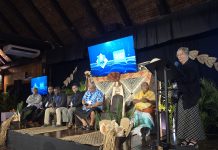
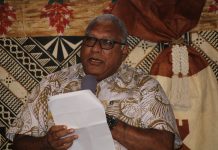
Introducing the report, Kaaro Neeti, Secretary for the Ministry of Justice of Kiribati and head of the delegation, said that, since ratifying the Convention in 2013, Kiribati had made steady progress toward promoting disability rights.
The national disability policy 2018–2025 provided the framework for the State’s efforts, with a focus on accessibility, inclusive education, healthcare, employment and empowerment.
On accessibility, Neeti said the Kiribati building act 2024 mandated accessibility standards in all new public buildings. The State had improved access to public spaces, transport and services through the provision of ramps, accessible toilets, sign language interpretation and Braille signage.
The delegation added that the Government was conducting structural assessments and providing recommendations for buildings that did not have accessible facilities. It planned to seek funding for accessible transportation in the outer islands to support the inclusion of persons with disabilities.
On institutionalisation, the delegation said a new mental health bill, which was awaiting finalisation by the Parliament, specified that persons with psychological disabilities could only be admitted in institutions involuntarily when they posed a threat to themselves or others.
The patient could be released to receive treatment in the community once it was deemed safe.
Abiteta Teitibwebwe, Interim Head of Mission, Permanent Mission of Kiribati to the United Nations Office at Geneva, said Kiribati had made significant strides in promoting disability rights by implementing accessible infrastructure and education programmes, and strengthening its legal framework.
However, challenges persisted, and the State was committed to addressing these through policy reforms.
She said Kiribati was committed to translating the Committee’s recommendations into tangible actions that would improve the lives of persons with disabilities.
Tamon commended the State’s work in implementing the Convention, but noted the need to fast-track this implementation by amending legislation and policies.
He welcomed the goodwill expressed by the State party and looked forward to seeing the implementation of its planned actions for persons with disabilities without delay.
Miyeon Kim, Committee Chair, in closing remarks, said that the dialogue had provided insight into the situation of persons with disabilities in the State party.
The Committee commended the State party for its efforts and called on it to implement the Committee’s concluding observations to further strengthen the implementation of the Convention.
The delegation of Kiribati consisted of representatives of the Attorney-General’s Office; Ministry of Justice; Ministry of Health and Medical Services; Ministry of Women, Youth and Social Affairs; Office of Te Beretitenti; Quality Control and Inspection Unit; Meeria Ward Department; and the Permanent Mission of Kiribati to the United Nations Office at Geneva.
The Committee will issue its concluding observations on the report of Kiribati at the end of its thirty-third session on 26 August.