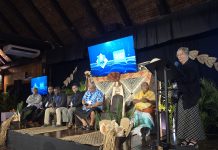



The World Bank is backing Pacific-led development with commitments to job creation, trade reform, and climate resilience, Managing Director of Operations Anna Bjerde told the Pacific Islands Forum Economic Ministers Meeting (FEMM) in Suva Tuesday.
Addressing the Ministers from across the region, Bjerde praised the Pacific for charting its own course through the 2050 Strategy for the Blue Pacific Continent and the Pacific Roadmap for Economic Development.
“Because the Pacific is not waiting for the world to define its future. You have already done so through the 2050 Strategy for the Blue Pacific Continent and the Pacific Roadmap for Economic Development.
“The 2050 Strategy is more than a plan. It is a promise to your people, to your children, to the region, and to the world. A promise of a resilient, secure, and prosperous Pacific, where every Pacific Islander can lead a free, healthy, and productive life.
“It reflects your values, which I have been privileged to experience firsthand in my short time here: cooperation, equity, cultural identity, and connection to land and sea” she said.
Bjerde’s said the Pacific is leading with a clear vision, and the World Bank stands ready to scale up its support across multiple fronts—starting with better trade connectivity, faster crisis response, and more investment in people.
“It’s a privilege to join you on behalf of the World Bank Group,” said Bjerde.
“I want to thank the Pacific Islands Forum Chair, Prime Minister Dr ‘Aisake Vale Eke of the Kingdom of Tonga, and Pacific Islands Forum Secretary General Baron Waqa, for this opportunity to be here with you.”
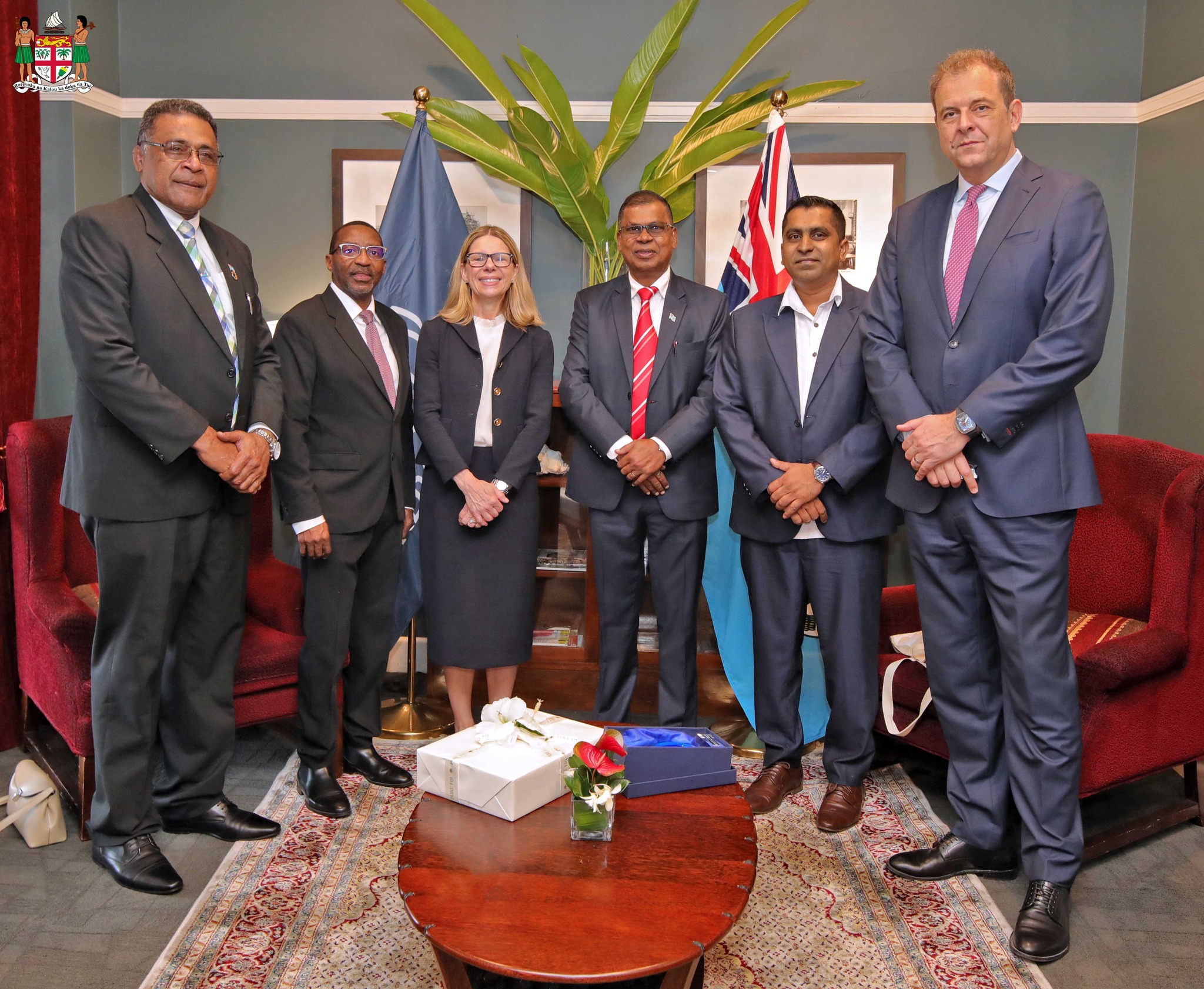
She also acknowledged Fiji’s role in hosting FEMM 2025 and noted a productive bilateral discussion with Deputy Prime Minister and Finance Minister Biman Prasad earlier in the day.
Bjerde outlined three strategic areas where the World Bank is working with Pacific Island countries to deliver on the region’s development ambitions.
The World Bank is developing a Pacific Trade Facilitation Project, a direct response to calls from Forum leaders in 2024 to President Ajay Banga. The initiative will support the Pacific Islands Forum’s Regional Trade Facilitation Strategy by streamlining customs procedures, cutting red tape, and making it easier for businesses to export and grow.
Bjerde acknowledged that trade in the Pacific remains prohibitively expensive.
“Pacific countries face the highest trade costs compared to the wider East Asia region: equivalent to an average of 210 percent of the value of the goods being traded. It is very difficult indeed for Pacific businesses to compete regionally or globally with these costs.”
The World Bank is also expanding its Correspondent Banking Project, which helps Pacific nations maintain vital financial connections for remittances, trade, and investment.
“The number of corresponding banking relations in the Pacific has fallen by 60 percent in the last decade—twice the rate seen in the rest of the world,” she said, describing it as a serious challenge for regional economic integration.
Bjerde emphasised the World Bank’s growing investment in climate-resilient infrastructure and emergency response tools.
“No region feels the effects of climate change or natural disaster vulnerability more directly than the Pacific,” she said. “Ten countries in the Pacific are ranked among the top 30 globally for disaster-related economic losses relative to GDP.”
The Pacific Climate Resilient Transport Programme, now worth US$339 million, spans six countries and is building roads, ports, and airports to withstand natural disasters. It’s already benefiting 45 percent of the population across participating countries.
“Infrastructure is not just about concrete and steel. This work is connecting Pacific people to jobs, services, education, and to each other,” said Bjerde.
The World Bank has also revised its Procurement Framework to ensure local employment is prioritised.
“From 01 September 2025, companies working on World Bank-funded projects must include a minimum total cost for local labor in international civil works contracts,” she announced.
The World Bank will also provide technical support to the Pacific Resilience Facility (PRF), a Pacific-owned and led fund aimed at boosting community-level climate resilience.
The World Bank is scaling up efforts to support employment, inclusive growth, and human capital development across the Pacific.
“Too many small and medium enterprises cannot get the finance to invest,” Bjerde noted. She encouraged reforms that improve access to finance and digital inclusion.
“We are investing in digital connectivity and digital ID systems so more people can access finance, start businesses, and participate in emerging sectors—driven by rapid technological change. The Pacific cannot be left behind.”
A flagship health initiative—the Pacific Healthy Islands Transformation Project—is in the pipeline.
It will connect Fiji, Kiribati, Tuvalu, Tonga, and other Pacific nations through a shared public health strategy designed to reduce non-communicable diseases (NCDs) and the reliance on costly overseas medical referrals.
“NCDs account for 59 to 66 percent of premature deaths among 15- to 49-year-olds in several countries, compared to the global average of 41 percent,” she warned. The initiative aims to strengthen public health systems and train 16,000 health care workers across the Pacific.
“By connecting countries like Fiji, Kiribati, Tuvalu, and Tonga, and anchoring support through regional institutions like the Pacific Community, this project will bring scale to national challenges and benefit 2.5 million Pacific Islanders.”
Bjerde also announced that the World Bank is preparing a new Small States Strategy, tailored to the unique needs of countries like those in the Pacific. The strategy will focus on:
*Job-creating infrastructure and food security
*Innovative financing instruments and risk tools
*Operational reforms to improve project delivery and lower transaction costs
This includes closer alignment with the Asian Development Bank (ADB) under the new Full Mutual Reliance Framework to reduce duplication and improve delivery.
Bjerde stressed a strong commitment from the World Bank Group to be the Pacific’s long-term partner in action—not just in words.
“We will work with you. We will learn from you. We will share practices from elsewhere. And we will help bring others—partners, financiers, and the private sector—alongside you.”
“Because when we row together, we can build a more connected, more resilient, and more prosperous Pacific. For this generation and the next,” she said.