


A powerful committee of the U.S House of Representatives is examining the Department of Defence’s efforts to counter China’s initiatives to mine critical minerals in deep-sea waters, raising concerns that the communist nation is outpacing the U.S in the race for the ocean’s wealth, specifically in the Pacific island region.
“As [deep-sea mining] is largely unregulated, Chinese companies and the (Chinese Community Party) are actively pursuing the extraction and commercialisation of deep-sea minerals through DSM, while simultaneously developing and testing new maritime and military capabilities,” Rep James Comer, chairman of the House Committee on Oversight and Government Reform, stated in a July 15 letter to Defence Secretary Pete Hegseth.
Comer asked Hegseth to discuss what his department is doing to comply with President Donald Trump’s executive order expediting the process of extracting critical minerals from the ocean floor, thus ensuring U.S leadership in deep-sea mining.
Comer noted that the CCP has designs to extract and commercialise these resources, boxing out the U.S and its allies from direct access to these critical minerals.
He also pointed out that China is establishing agreements with small island nations worldwide, particularly in areas with high concentrations of critical minerals, such as in Pacific island nations.
“This allows China to form strategic partnerships and access to waters rich in underwater critical minerals,” said Comer, whose panel is the main investigative committee of the U.S House of Representatives.
Kiribati, Nauru and the Cook Islands have entered into agreements with China to collaborate on researching and potentially extracting critical minerals from the seabeds surrounding the Pacific islands.
That these smaller Pacific island nations may not want to partner with the CCP matters not because they do not have the power to protect their waters against China’s military and commercial reach, Comer said.
This, he said, emboldens the CCP to encroach upon the sovereign waters of these less powerful countries in the Pacific.
“The long-term repercussions could impact the freedom of navigable waters, [the] commercial enterprise of [deep-sea mining], and the sovereignty of smaller, less powerful Pacific island nations,” he added.
The House committee gave Hegseth until 22 July to provide a staff-level briefing on his department’s efforts to protect American interests and national security in the deep-sea mining sector.
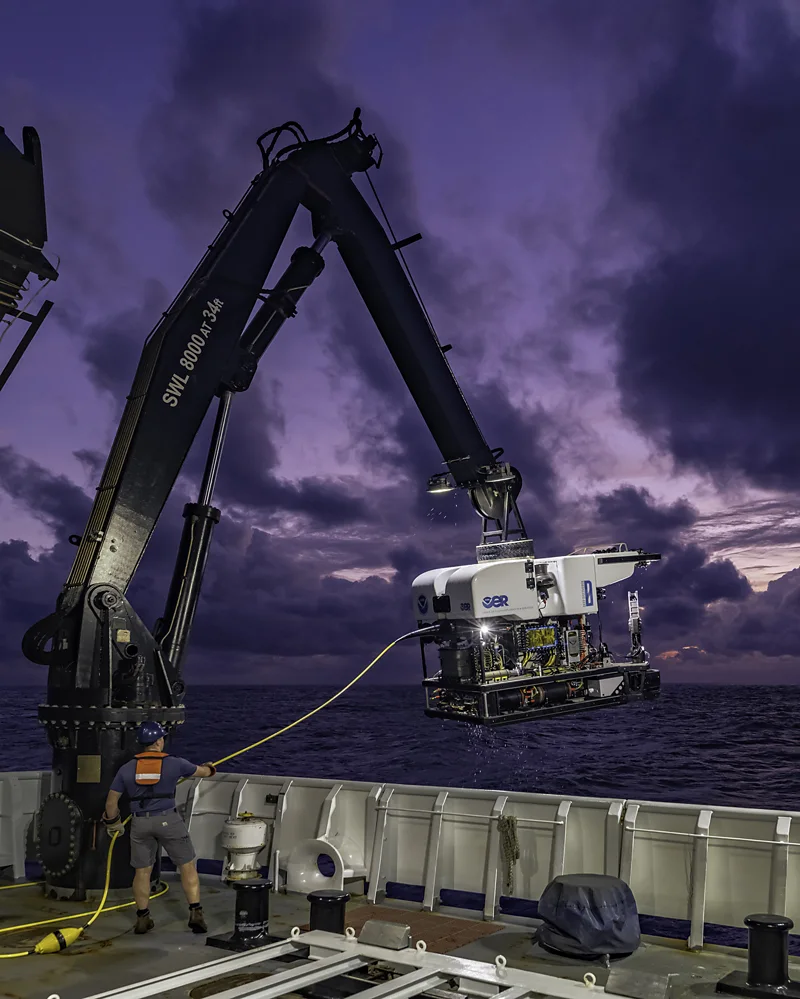
Deep-sea mining has the potential to provide an abundance of critical and rare earth minerals.
The primary target of this effort is polymetallic nodules, which are located approximately 4-6 kilometres beneath the ocean. These are believed to contain minerals such as copper, nickel, cobalt and manganese that are critical to modern-day technologies like cell phones and batteries.
American Samoa is currently in the process of initiating this project. A California-based company, Impossible Metals, has requested permission to lease an area off the coast of American Samoa, where it plans to explore using autonomous underwater vehicles designed to harvest polymetallic nodules from the seabed.
Trump issued the executive order, “Unleashing America’s Offshore Critical Minerals and Resources,” in April, instructing agencies to launch offshore initiatives to maintain “leadership in deep-sea science and technology and seabed mineral resources,” focusing on critical minerals essential for various industries, including defence and technology.
Technologies developed for deep-sea exploration and mining are believed to significantly impact advancements in both the maritime and defence sectors, making these technologies crucial for both commercial use and U.S national security.
The Department of the Interior’s Bureau of Ocean Energy Management has issued a request for information and interest, seeking indications of interest in mineral leasing offshore American Samoa.
“Respondents, including from the deep seabed mineral mining industry, are requested to nominate specific areas, the minerals of primary interest, and the available mineral resource information within the specific area described in the RFI,” John Romero, spokesperson for BOEM, said in an email to the Pacific Island Times.
The deadline for submission of responses was 16 July.
Romero explained that the feedback obtained through the solicitation of interest will help inform BOEM’s assessment of the commercial viability for potential mineral leasing of American Samoa’s outer continental shelf.
Romero clarified that Impossible Metals has not been authorised to conduct any sea-harvesting, nor has it received approval for a seabed lease offshore American Samoa.
“Rather, in response to the unsolicited mineral lease sale request from IM, BOEM has initiated the first steps that could potentially lead to a lease sale of OCS minerals offshore American Samoa,” he said.
Romero said the bureau’s initiative is part of the Trump administration’s broader strategy to reduce reliance on foreign critical minerals, thereby strengthening national security and economic stability.
“By providing opportunities for companies to source domestic deep-seabed minerals needed to support our growth and security, we are ensuring that all Americans can benefit from these efforts,” he added.