

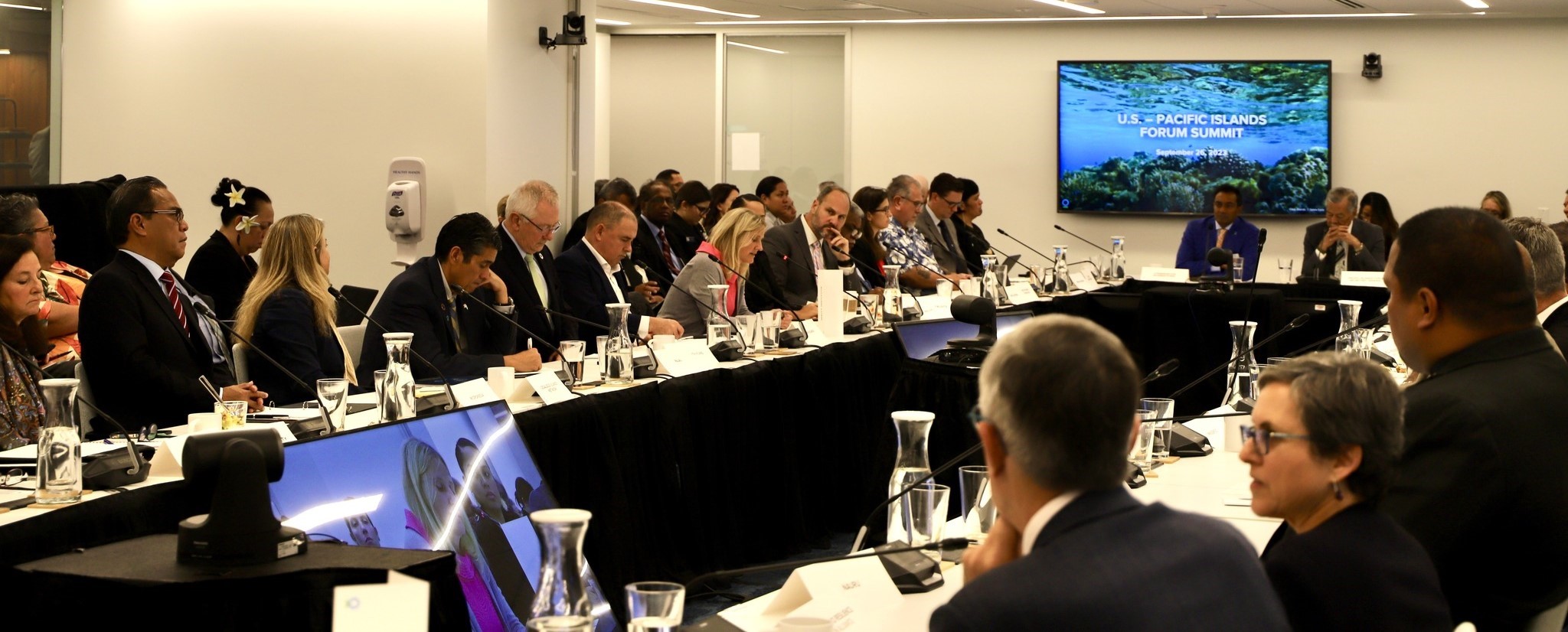
A proposal to boost Washington’s diplomatic relations with Pacific island nations received a new push in the U.S Congress amid President Donald Trump’s erratic foreign policy direction and faltering interest in the region
Proponents of the diplomatic reinforcement Thursday revived the “Our Pacific Partnership Act,” which would mandate the Department of State to institute a clear and comprehensive strategy to enhance the United States’s diplomatic posts, defence posture and economic engagements with the Pacific island bloc.
“Our Pacific Partnership Act responds directly to the reality that our country’s and world’s future lies in the Indo-Pacific, and that the islands of the Pacific are our indispensable partners in charting that future,” Rep Ed Case said.
The Democratic lawmaker from Hawaii authored the same bill in the previous session of the U.S House of Representatives. The bill was passed by the House but never voted on by the U.S Senate.
“The Pacific islands are under increasingly severe economic, environmental and geopolitical stress, and we must expand our generational engagement to assist them where they most need assistance,” Case said.
“The Pacific Partnership Act, moulded directly on the Pacific Islands’ own blueprint to their collective future, is our roadmap to expanded engagement as well.”
The “Pacific Partnership Act” has re-emerged as bicameral and bipartisan legislation, co-sponsored by Case, American Samoa Delegate Aumua Amata Radewagen, Senators, Catherine Cortez Masto (D- Nev.) and Joni Ernst (R-Iowa), who underscored the necessity of maintaining Washington’s strategic partnership with Pacific island nations to keep China at bay.
“This bipartisan bill is critical to strengthening our ties with our allies in the Pacific and ensuring they become enduring global relationships,” Masto said.
Regional experts have warned that Trump’s lukewarm engagements, aid cuts and climate change denial will pose a major setback to the U.S-Pacific partnership rebuilt in recent years and, subsequently, embolden China even more to amplify its regional clout.
Aid groups operating in the Pacific—one of the world’s most aid-dependent regions—are still evaluating the impact of Trump’s sweeping directives freezing billions of dollars in foreign aid in line with his “America First” foreign policy.
In the Pacific, the federal cuts affected development programmes funded by the U.S Agency for International Development, particularly climate change-related initiatives, which matter most to island states.
“Supporting our allies and partners in the Indo-Pacific is essential to combating the Chinese Communist Party’s influence and to our long-term national security,” Masto added.
The “Pacific Partnership Act” would establish a consultation process between the U.S and its Pacific allies—including Australia, Japan, New Zealand, Taiwan and regional institutions—on development programme planning for the region.
The legislation seeks to engage the Pacific Islands Forum(PIF), the Pacific Islands Development Programme (PIDP), the Pacific Community (SPC)and the Secretariat for the Pacific Regional Environment Programme (SPREP) concerning programmes to assist the Pacific islands.
The bill would also extend to the Pacific Islands Forum certain privileges and immunities provided to other international organisations, including exemption from most federal taxes and customs duties.
“This bipartisan legislation equips us to work with nations in the Pacific that serve as the first line of defence against the Chinese Communist Party and keep Americans safe at home,” Ernest said.
Radewagen said the U.S needs to sustain its engagement in the Pacific islands to keep China’s influence in check and strengthen mutual development opportunities.