

By Nic Maclellan
A leading Kanak politician has declared “Bougival is dead”, following a vote in the French National Assembly that rejected proposed constitutional reforms for New Caledonia.
Last week, on 02 April, French government legislation proposing a new political statute for New Caledonia was rejected without debate, in a 190-107 vote in the French legislature.
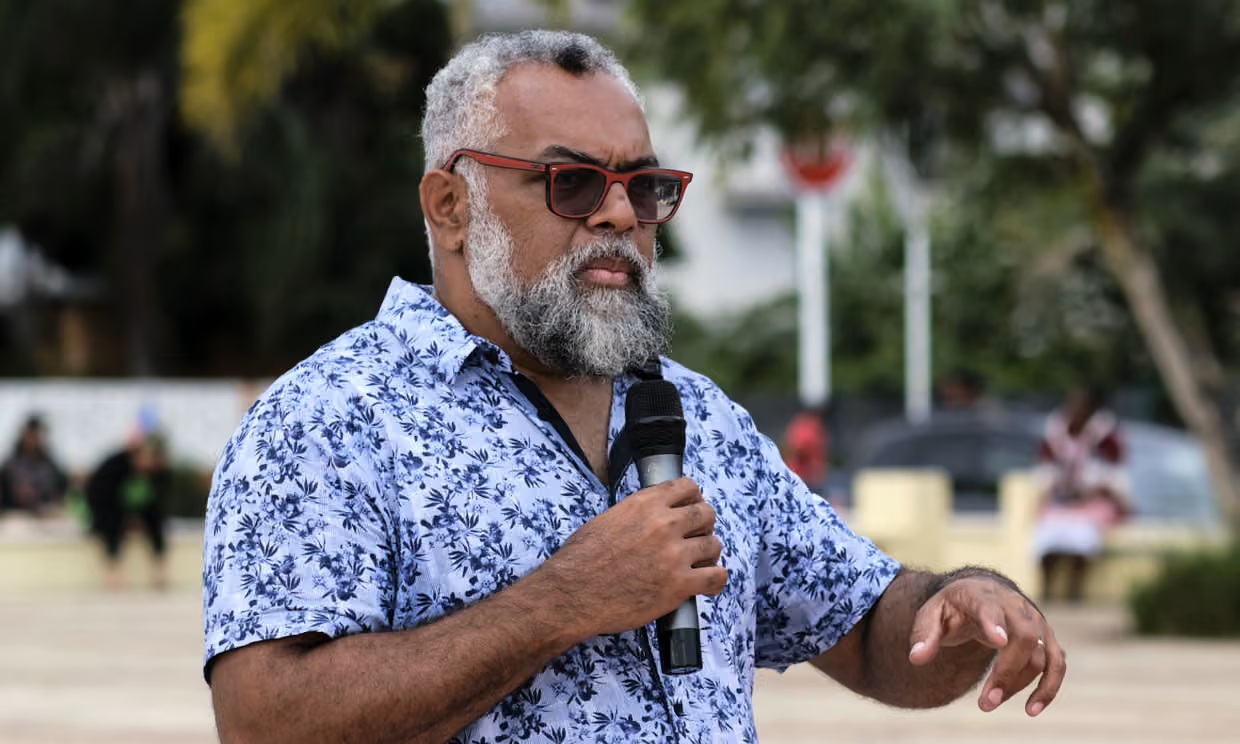
The resolution to reject the text was proposed by Emmanuel Tjibaou, president of the independence party Union Calédonienne, and one of two New Caledonian deputies in the National Assembly.
Speaking with Islands Business from Paris, Tjibaou said: “Today, Bougival is dead.”
“The FLNKS rejected it last August,” he said, “and now the parliamentarians have rejected the text. So, I don’t see under what title they can propose it again.”
The French government under Prime Minister Sébastien Lecornu had sought to develop a new political statute to replace the 1998 Noumea Accord, proposing to create a new State of New Caledonia within the French Republic.
To achieve this, the government put forward legislation to implement two political agreements drafted by the French State with five of six New Caledonian parliamentary groups: the July 2025 Bougival Accord and a supplementary text adopted in Paris in January this year, known as the Elysée-Oudinot Accord.
However, both texts have been rejected by the main independence coalition Front de Libération Nationale Kanak et Socialiste (FLNKS). After adoption by the French Senate in February, the legislation was criticised by a range of political parties in the lower house, ranging from the Left bloc to the extreme-Right Rassemblement National.
Parliamentary process
Emmanuel Tjibaou noted that the government’s bill was first rejected by the National Assembly’s Legal Commission: “We went through the provisions of the text that had been endorsed by the Senate (although more than 80 Senators abstained). It was clear that there was no agreement in our commission and the text was challenged by different groups and rejected.”
However, he acknowledged “there was always a risk” that some parties might change their mind when the bill came up for debate in a full plenary session on 02 April.
“We had statements of principle issued by the Rassemblement National and a number of other groups, saying they’d vote to reject the bill,” Tjibaou explained. “But beyond these statements of principle, what really counts is the vote. People may say they will vote for it, but they do not turn out to vote when the time comes, so in that sense, I called for a public commitment in very clear terms.”
The parties that rejected the bill included the Left alliance (La France Insoumise, the Ecologists and the Gauche Democrate et Républicaine), as well as Marine Le Pen’s Rassemblement National.
Unlike the Left, which criticised the legislation as a denial of the right to self-determination, the RN rejected the bill as a pathway to independence. Tjibaou acknowledged that domestic French politics was an element in the result, “because what is happening in the National Assembly involves political stakes surrounding the upcoming presidential election, which everyone in France is keenly aware of.”
Government ignored warnings
After the Senate vote in February in favour of the bill, Prime Minister Lecornu forged ahead to present the bill to the lower house, despite warnings from a range of politicians that the government lacked a governing majority to succeed in the National Assembly.
Even if the government’s constitutional reform had gained a majority in the French legislature, it would still need to be ratified at a joint sitting of Senators and Deputies, known as the Congress of Versailles. However, Tjibaou stressed that this joint sitting would not have guaranteed the numbers to adopt the reforms: “Given it’s been rejected by the National Assembly, I don’t see how they can get the 3/5 majority at the Congress of Versailles.”
Former Overseas Minister Manuel Valls was the architect of the Bougival Accord, but was later dismissed from the second Lecornu government, and replaced by the current minister Naïma Moutchou. Reflecting on the current impasse in a TV interview this week, Valls was critical of the French President and Prime Minister for ignoring criticisms of the Bougival process.
“The government, the current administration, has wasted a great deal of time since October,” Valls said. “It has made many mistakes and has given the impression of having lost its way. It is therefore hardly surprising that confidence has gradually been lost among both local and national stakeholders. This explains the vote to reject the constitutional amendment that would have implemented the Bougival Agreement.”
He added: “If the government, the President of the Republic and the Prime Minister continue to try and pull a rabbit out of the hat at every turn in order to buy time, and try to reach an agreement that seems increasingly difficult to implement, we risk hitting a brick wall – and everyone remembers the riots of May and June 2024.”
Meeting with parties
The day after the National Assembly vote, Prime Minister Lecornu tweeted: “Faced with this unprecedented deadlock, the Government will fulfil its responsibilities: neither inaction nor forcing the issue.”
He proposed a meeting of the Bougival signatories on Tuesday 7 April in Paris, to discuss the way forward. After discussion, he later agreed that members of the FLNKS political bureau could also join the discussion by video from Noumea, even though the main independence coalition had opposed the agreement since last August.
This decision sparked an angry response by leaders of the two main anti-independence groups, Les Loyalistes and Rassemblement-Les Républicains, who pointed out that the FLNKS was not a signatory to the current agreement. They said they would not meet with FLNKS President Christian Tein and reiterated two core demands – calling for a consultation in New Caledonia on the Bougival Accord, and for the opening of the electoral rolls to all French voters, for the next provincial elections scheduled in June.
Facing a boycott by hardline anti-independence leaders, Lecornu then organised two separate meetings. The first included representatives of the FLNKS (in person and online), the Wallisian party Eveil océanien and the anti-independence party Calédonie ensemble. A second meeting followed with the anti-independence parties, plus members of the Union Nationale pour l’Indépendance (UNI), Eveil océanien and Calédonie ensemble.
In a joint public statement, the Loyalists and Rassemblement said: “We do not understand the purpose of this meeting. If the aim is to organise a consultation on the Bougival Accord, we will only support that if there is a clear commitment from at least the majority of parliamentary groups to respect the result. Can the State give this guarantee? At this stage, no.”
The Loyalists have also been pressing to open the provincial electoral rolls to all resident French voters in New Caledonia, rather than just New Caledonian citizens.
A number of politicians – including the conservative New Caledonian Senator Georges Naturel – have proposed opening the rolls just to any locally-born voter who did not meet the current technical definition of New Caledonian citizenship. However the Loyalists firmly rejected that compromise, stating: “Does the State wish to make us swallow the bitter pill by asking us to accept that access be restricted solely to New Caledonian-born citizens, even though this reform, which favours the independence movement, would put an end to any hope of broader access to the vote in the future?”
Breaking the impasse
After Tuesday’s meeting, a statement from Calédonie ensemble pulled no punches about the current impasse: “The government is scrambling to find a way out that does not exist (an early public consultation, a partial lifting of the electoral freeze, and so on). Moreover, the government’s initiative is turning into a shipwreck.”
Speaking to Islands Business after the meeting, Emmanuel Tjibaou suggested that many parties were losing confidence in the government.
“For us the FLNKS,” Tjibaou said, “we wonder whether the French State is truly committed to what they say, or whether this is a deliberate attempt to deprive the Kanak people of their rights and pave the way for a forced takeover. We translate their strategy as the abandonment of the State’s impartiality and the adoption of the policies and attitudes of the local parties of the Right. That’s how I feel.”
Asked whether the FLNKS leadership would continue to engage with the French government over the way forward, Tjibaou voiced obvious frustration at the tactics of Prime Minister Lecornu and Overseas Minister Moutchou.
“The FLNKS remains calm,” Tjibaou told me. “We’ll make the necessary arrangements and attend the meetings. But given that they’ve continued to deny the obvious, it is unclear how we can explain to our people why we should continue to engage in dialogue with a State that continues to ignore us and reject the positions we’re putting forward.