

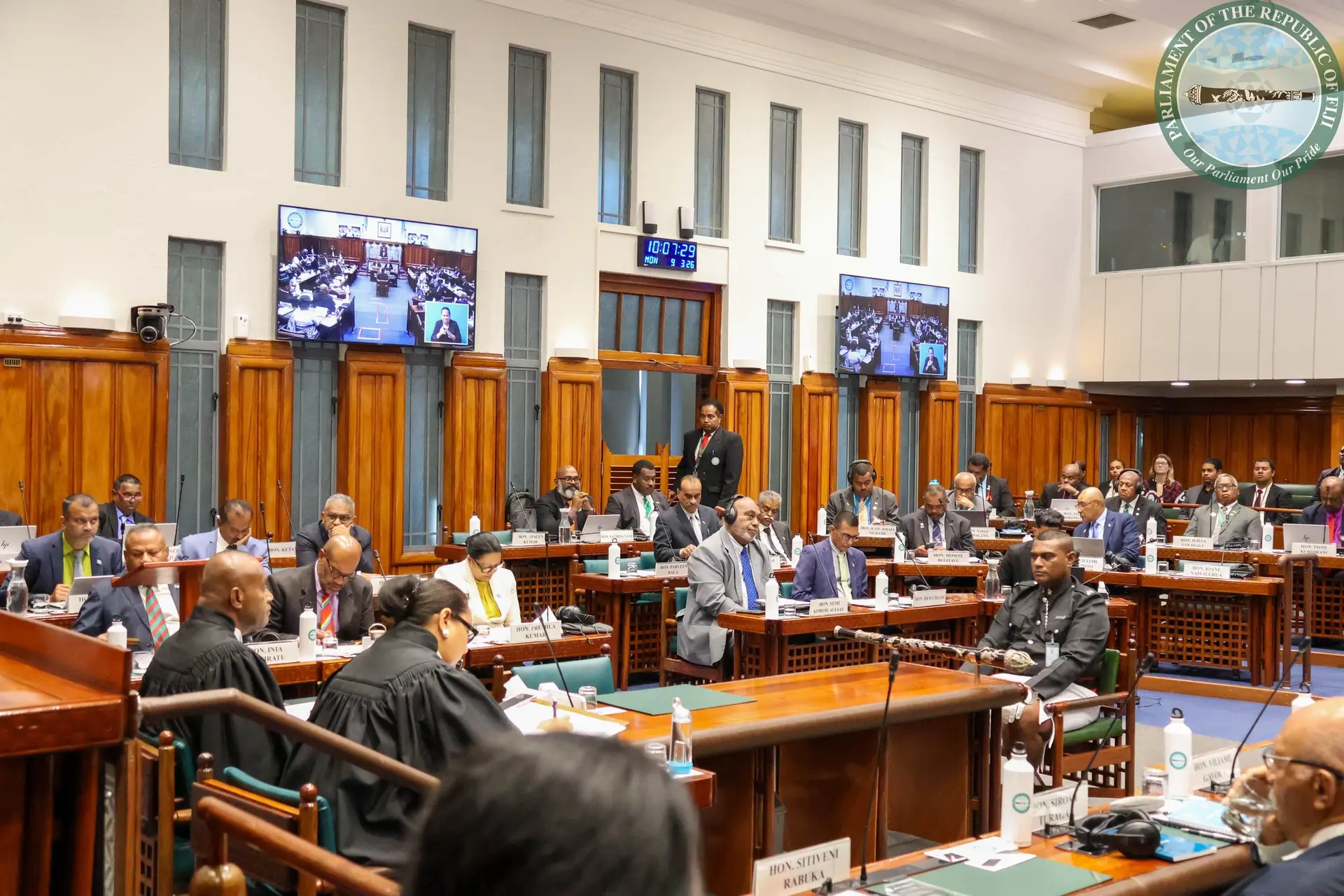
Fiji Prime Minister Sitiveni Rabuka has proposed a 20 percent pay cut for Ministers, Assistant Ministers and MPs, saying leaders must share the burden as Fiji prepares for possible economic pressure from global fuel instability.
The pay reduction, which is subject to Parliamentary approval, was revealed Wednesday during the Prime Minister’s national address outlining the Government’s response to emerging fuel security risks triggered by escalating tensions in the Middle East.
In the same address, Rabuka confirmed that ‘all overseas travel for Ministers and Assistant Ministers has been stopped with immediate effect’, describing the measures as necessary to demonstrate leadership and fiscal discipline during uncertain times.
But Rabuka said that he approved the travel of two ministers who are going to negotiate directly with Fiji’s overseas partners on how they can assist Fiji with the crisis caused by the Middle East war.
“Minister for Foreign Affairs is going to the Far East looking for further support in our fuel supply and fuel storage. And the Minister for Welfare and a member of the IPU is going to Turkey. I told her to be careful, that’s very close to the flashpoint. But she needs to be there because they spend a lot of time talking about humanitarian assistance in times of trouble. And this is the time to be sharing.”
Rabuka stated that all overtime payments for civil servants are suspended, with time in lieu applied instead.
The Prime Minister has also stated that all new civil service positions are on hold.
Rabuka said that all job evaluations are suspended and all overseas travel is stopped for permanent secretaries and civil servants.
The Prime Minister said Fiji remains in Phase One of the National Fuel Emergency Action Plan – Preparedness and Responsible Use, stressing that while the situation is serious, it is currently under control.
“I want to reassure the nation: fuel is still available. There is no immediate shortage,” he said, adding that developments overseas require Fiji to stay alert and act responsibly.
Rabuka said Fiji currently has more than 50 per cent of its national fuel supply, with secured shipments expected to last until the end of May.
However, he warned that supply beyond that period could become uncertain should global shipping routes remain disrupted.