


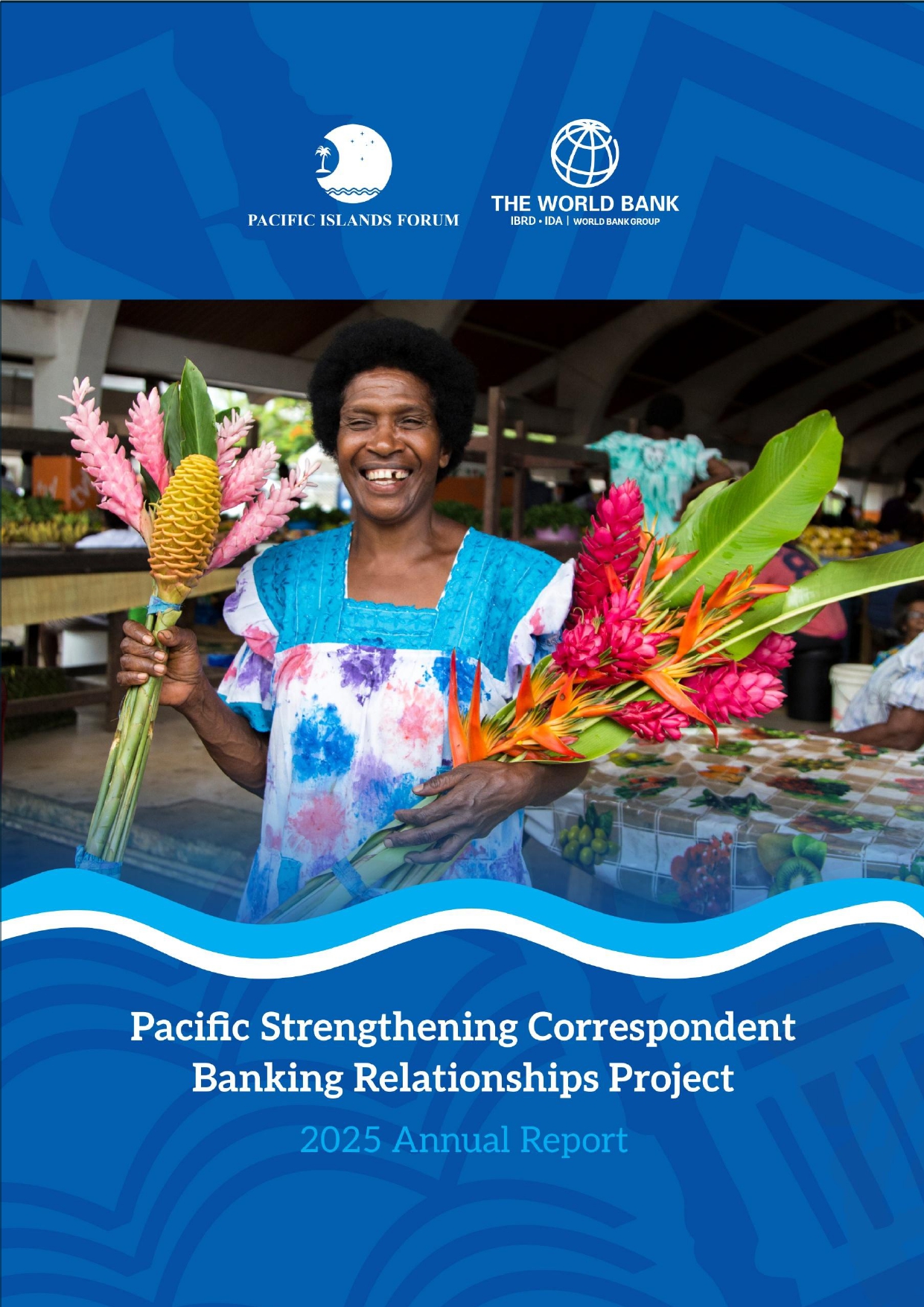
The Pacific’s access to global finance is under growing strain, with a new Pacific Islands Forum report warning that the steady loss of correspondent banking relationships is pushing the region toward a critical tipping point.
The ‘2025 Annual Report on the Pacific Strengthening Correspondent Banking Relationships Project’ paints a grim picture of a system under pressure, with the number of active correspondent banks servicing Pacific institutions falling sharply over the past decade.
“The withdrawal of Correspondent Banking relationships (CBRs), a well-documented global phenomenon affecting many emerging markets and developing economies, has adverse consequences and negative externalities for Pacific Islanders, including seasonal workers, small and medium enterprises (SMEs), and vulnerable populations.”
“Based on publicly available data, the number of active correspondents for Pacific banks has declined significantly since 2011 to unsustainably low levels that put the whole Pacific financial system at risk,” the report said.
For Pacific Island countries, the stakes are high. These banking relationships underpin almost every aspect of economic activity, from trade and tourism to remittances and humanitarian assistance.
“Pacific Island Countries (PICs) are uniquely vulnerable to the withdrawal of the CBRs that underpin international trade, tourism, remittances, and humanitarian financial flows”.
The report makes clear that the issue is not abstract. Reduced access to correspondent banking services can lead to higher transaction costs, disrupted payment systems and limited financial access for communities already facing geographic and economic challenges.
In response, the Forum, working closely with the World Bank and regional partners, has launched a coordinated effort to stabilise and strengthen these critical financial links.
“In response to these risks, the Pacific Strengthening Correspondent Banking Relationships Project was developed as a coordinated regional initiative aimed at safeguarding continued access to international financial services.”
The project, valued at US$68 million and running through to 2030, currently covers Fiji, Samoa, Tonga, Vanuatu, Kiribati, Tuvalu and the Republic of the Marshall Islands, with other countries expected to join.
The 2025 report outlines progress made during the first year of implementation, despite a late project start in April. Much of the year focused on setting up the Project Management Unit and building the foundation for delivery.
Under its first key component ensuring continued access to correspondent banking services- work is underway to secure a service provider that can offer temporary access to banking links for countries at risk of losing them.
A formal request for expressions of interest has already been completed, with four financial institutions responding and three progressing to the next stage of negotiations. Final contracting is expected by mid-2026.
At the same time, the project is moving to address deeper structural issues through its second component-improving the regulatory and institutional environment across the region.
Efforts in 2025 included launching data collection pilots in Fiji, Samoa, Tonga and the Marshall Islands to support the development of a CBR Resilience Index, a tool that will assess financial institutions’ eligibility for support and track system stability.
The report also highlights progress in strengthening anti-money laundering and counter-terrorism financing frameworks, with draft action plans developed for participating countries in collaboration with regional and international partners.
These plans identify key gaps in legal, regulatory and supervisory systems and will guide targeted technical assistance in the years ahead.
Beyond regulation, the project is also looking at modernising payment systems across the Pacific.
A regional workshop held in Nadi in December brought together central banks, regulators and development partners to advance work on faster, more efficient payment systems tailored to small island economies.
Work is also progressing on a feasibility study for a Pacific Payments Mechanism, aimed at improving cross-border payment efficiency and reducing costs through greater regional integration.
Despite these steps forward, the report acknowledges that progress in 2025 was limited by the short implementation window, with many targets yet to be met.
Still, Forum officials say the groundwork laid during the year is critical to long-term success and to protecting the region’s financial connectivity.
“This report details the project’s progress for the year 2025, highlighting key achievements, challenges encountered, and strategic adjustments made to strengthen the resilience of correspondent banking relationships across Pacific Island Countries.”
Without sustained action, the decline in correspondent banking relationships could further isolate Pacific economies from global markets.
But with coordinated regional effort now underway, the Forum and its partners are betting that the Pacific can stabilise its financial links and build a more resilient system for the future.