



The Western and Central Pacific Fisheries Commission (WCPFC) has confirmed record tuna catches in the Pacific, while warning of growing uncertainties linked to climate change, shifting fishing patterns and data gaps.
The findings are contained in the WCPFC22 Summary Report released on 11 March 2026, following the Commission’s 22nd annual meeting held in Manila from 01 -0 5 December 2025.
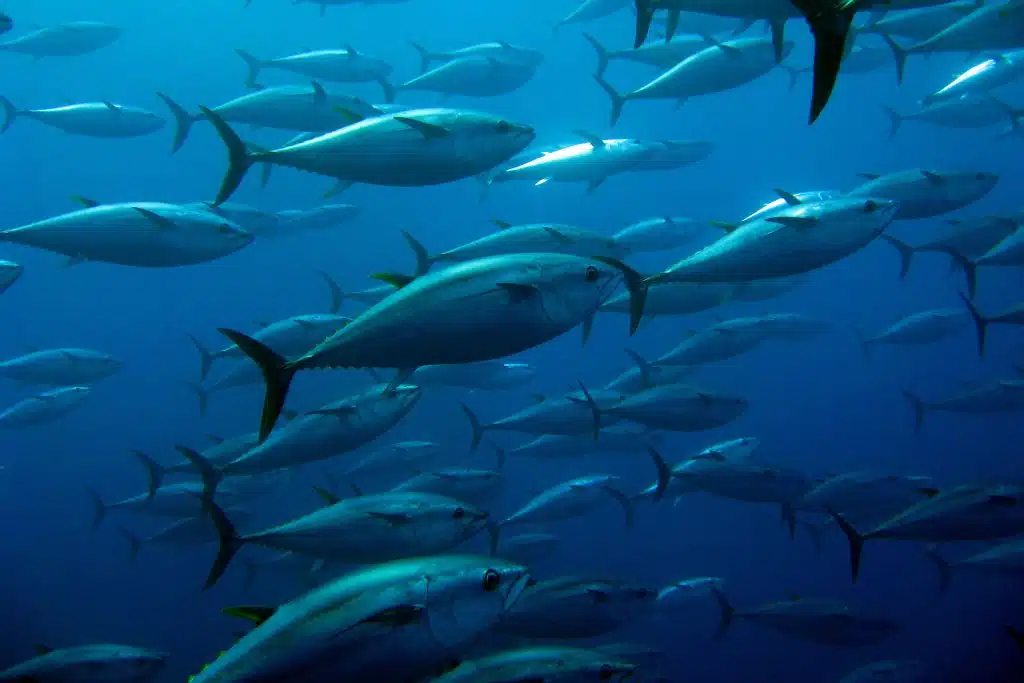
The Tuna Commission report shows 2024 delivered the highest tuna catch ever recorded in the Western and Central Pacific.
“2024 was a record total tuna catch in the WCPFC-Compliance Assessment, and a record skipjack catch.”
While skipjack led the surge, other key species showed mixed results.
“There were minor changes in yellowfin and bigeye catches, but albacore catch was notably higher in 2024 than 2023.”
Fishing effort across the region remained stable despite these changes.
“Recent effort is generally stable across all gears.”
The report confirms that key tuna stocks remain healthy overall.
“All key tuna stocks (skipjack, bigeye, yellowfin and South Pacific albacore) are currently assessed as in the green (not overfished and not undergoing overfishing) and close to their TRPs or other relevant objectives.”
However, not all species are in a strong position.
“Southwest Pacific striped marlin is still considered overfished (noting biomass estimates have high uncertainty), but unlikely to be undergoing overfishing.”
The report also confirms that swordfish stocks remain stable.
“Southwest Pacific swordfish is assessed as not overfished, and not undergoing overfishing.”
The Commission highlighted significant shifts in fishing patterns, linked to climate variability.
“Purse seine activity contracted to the west, with more sets conducted due to a notable increase in free school sets in 2024 compared to 2023, resulting in slightly lower purse seine bigeye catch.”
Scientific experts said these changes are largely driven by climate conditions rather than policy measures.
“Climate-driven changes in tuna distribution, rather than the FAD closure regime, appeared to be the primary driver of the recent set-type patterns.”
They noted that La Niña conditions played a role in shifting fishing activity westward and increasing free-school fishing.
The report flagged increasing uncertainty in stock assessments, particularly for South Pacific albacore.
“Higher uncertainty in biological parameters, natural mortality, and productivity, together with the use of multiple alternative assessment models and stochastic recruitment in the projections, resulted in a wider range of projected outcomes than for other tuna stocks.”
This highlights the need for continued scientific research and improved data collection.
The Commission also noted changes in fishing technology and practices.
“Historical time-series of hooks deployed showed a substantial increase in hook numbers despite fewer vessels.”
This shift is linked to more efficient fishing gear allowing vessels to deploy more hooks per set.
The meeting brought together a wide range of members, partners and observers from across the Pacific and beyond.
Participants included Pacific Island countries such as Cook Islands, Fiji, FSM, Papua New Guinea, Samoa, Solomon Islands Tuvalu, Kiribati, Tuvalu, Marshall Islands, Niue, Tokelau Vanuatu alongside major fishing nations and international organisations.
The report also highlighted cooperation with regional bodies including the Pacific Islands Forum Fisheries Agency (FFA) and the Secretariat of the Pacific Community (SPC).
The WCPFC22 meeting covered a wide range of issues, including conservation measures, compliance monitoring, climate change and illegal fishing.
Key agenda items included:
* Conservation and management of tuna and billfish
* Monitoring and compliance systems
* Impacts on non-target species
* Climate change considerations in fisheries management
* Adoption of the 2026 IUU vessel list
The Commission also continued work on harvest strategies and improving monitoring systems to ensure sustainable fisheries.
While the report confirms that tuna stocks remain in a healthy state, it also points to emerging risks from climate change, shifting fishing patterns and data gaps.
The WCPFC’s latest findings highlight the need for continued cooperation, stronger science and improved management to sustain the world’s largest tuna fishery.
The Tuna Commission’s decisions and ongoing work will play a key role in ensuring that Pacific fisheries continue to deliver economic benefits while maintaining long-term sustainability.