Kevin once led a mob to burn nine ‘sorcerers’. The Telegraph went to Papua New Guinea to find out why accusations persist
By Sarah Newey Global health security correspondent and Simon Townsley Photographer, in Enga
Years before he traded guns for the gospel, Kevin Lunga led an armed gang of 77 men known as ‘The Disciples’ on a frenzied witch hunt to round up, torture and burn nine women alive.
Rumours and fear were swirling in the rugged highlands community after a wealthy businessman unexpectedly died. Instead of blaming disease, people were pointing at each other, and it wasn’t long before a woman with skin imperfections was singled out. People said she was a “sanguma” – a sorcerer who had used her powers to steal the man’s heart.
And so Kevin’s crew began their brutal inquisition.
Fuelled by potent drugs, a homebrew known as firewater and the support of a baying mob, they lit a fire, held iron rods to the flames, and used the scorching metal to force a “confession”. Lashed to a stake and in agony, the woman eventually named eight “accomplices” – by the end of the ordeal, four were dead and all were horribly burned.
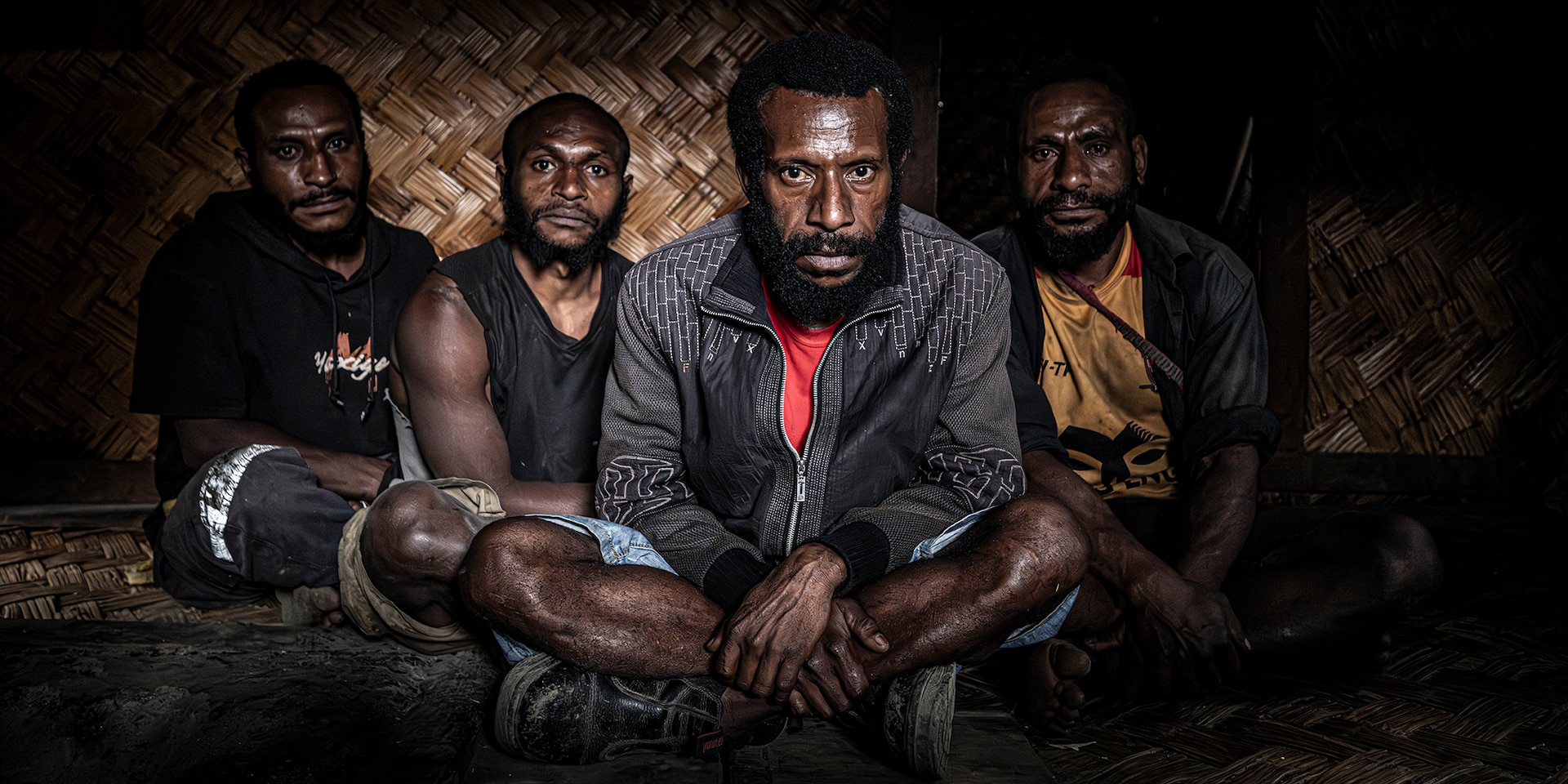
“Rumours [were] going around – we heard this and we believed it was true, really,” says Kevin, sitting on the latticed floor in his dim hut in Monokam, a village nestled at the bottom of a lush valley in Papua New Guinea’s Enga province. “So, we burned them.”
It’s tempting to think of witch hunts like this as a phenomenon confined to history. Centuries have passed since Matthew Hopkins, England’s self-styled Witchfinder General, threw women into rivers to establish their sorcery or otherwise.
Yet modern iterations of these trials, which academics call sorcery accusation related violence (SARV), still take place around the world. Data is limited, but a UN-commissioned report published in 2023 estimated that at least 20,000 people in 60 countries were accused of witchcraft between 2009 and 2019, from Ghana to India.
“The basic issue here is that human beings, traditionally, are very bad at coping with uncanny misfortune – they really don’t want to believe in bad luck,” says Prof Ronald Hutton, a professor of history at the University of Bristol and author of ‘The Witch: A History of Fear, from Ancient Times to the Present’.
“There are three entities people blame when they have rotten luck,” he tells the Telegraph. “Number one is angry land spirits, fairies or elves. The second explanation is ghosts, perhaps ancestral spirits whom you’ve annoyed… But by far the most popular explanation of all, across all continents, is that evil is caused by nasty human beings working bad magic.”
Often, though not universally, the accusers are men and the accused are women. But events are almost always linked to social upheaval: Hopkins operated during the English Civil War, a collective hysteria drove the Salem witch trials, and a society in crisis sought easy answers during the Holy Roman Empire – where tens of thousands were burned at the stake.
Throughout history, fearful people have repeatedly looked for convenient culprits and concrete certainties when the world around them shifts. Papua New Guinea today is no different.
Against a backdrop of upheaval, swathes of the largely undeveloped and volatile country have seen the frequency and brutality of witch hunts intensify, according to the limited data available and anecdotal reports.
The culturally diverse and deeply religious Pacific nation is home to at least 10 million people, who speak more than 840 languages. Most live in isolated communities dotted across a picturesque but unforgiving landscape twice the size of the UK.
Beliefs in sorcery and spirituality are not new here, but have varied widely. In some coastal provinces, black magic is practiced by men using rituals and potions; in other highland regions, people believe “embodied cannibalistic spirits” can live inside a woman and extract and eat the organs of others.
In some communities, allegations of sorcery are verified by a traditional ‘Glassman’ who interprets the smoke of burning bamboo; in others charismatic religious leaders known as ‘prayer warriors’ say witchcraft is the work of Satan.
Whatever the case, the belief system is open to dangerous abuse and can rapidly tip into violence. Claims are sometimes motivated by greed or jealousy, but targets are almost always someone on the margins – a widow with little money, a man’s third wife or someone with a disability.
Yet beliefs and accusations are increasingly “moving into places where they didn’t exist before, and narratives around them are changing,” says Prof Miranda Forsyth, the director of the International Network Against Accusations of Witchcraft and Associated Harmful Practices.
A 114-page report on witchcraft, co-authored by Prof Forsyth and published last year, warned that witchcraft was becoming “a crisis situation” in parts of the country, with a “growing degree of torture and sexual abuse associated with such accusations”.
One area that “stands out for the volume and consistency of cases recorded” is the Southern Highlands, a restless region of limestone peaks and rich natural resources.
While data is incomplete, incidence appears to be mounting: the Catholic diocese, which operates a safehouse to help those targeted, recorded 16 incidents of SARV in the region in 2021. In the first nine months of 2024, that figure jumped to 96.
“Every province is different, but this kind of belief didn’t exist here before,” says Dr Cathy Pilang, the formidable principal of a health worker training school linked to the Catholic church in Mendi, a bustling riverside town and the province’s main hub.
Speaking to The Telegraph in the serene grounds of the diocese headquarters, Dr Pilang says the first case she saw in Mendi was almost 15 years ago, when a woman called Christina suffered severe burns after being tortured in public.
A surreal photo of the witch-trial, which is too graphic to publish, shows Christina standing on a raised platform of corrugated iron. She is tied up between two trees by her wrists and ankles, naked save for a blindfold. A large crowd huddled under bright umbrellas watch intently as a man holds an iron rod, fresh out of the fire still burning nearby, to the skin of her face.
The incident was a sign of things to come.
“Probably there were cases before, but they were hidden or less violent and didn’t come to our attention,” says Dr Pilang. “But since 2012 the trend – this thing about sorcery – the false beliefs and accusations, they’ve been increasing. Now we’re seeing many, many cases.”
As if to prove her point, it takes only a few quick phone calls for Dr Pilang to reach three women and a man who have since been accused in the region, including Stella Kapipi.
The mother of four was washing in the river near her home in Kambeyakupukul – a small, dusty village on a hillside high above Mendi – when her brother died suddenly.
While Stella blamed pneumonia, members of her large extended family blamed her. Whispers that she was a sanguma quickly escalated into open accusations: they claimed she’d consumed her brother’s heart by the water’s edge. Their revenge was swift and brutal.
“They took me down to the village and said I had to speak the truth, to confess that I had eaten his heart,” Stella says, gesturing emphatically inside her rundown home. “They started to kick me in the head, I was still holding my child. I was afraid for our lives. I said it was all false but they did not stop.
“Then they started burning me… they burned every single part of my body,” she says.
Like Christina, she was tied to a tree in the village square for two days as her neighbours and relatives used hot iron bars to scorch her legs, stomach and genitalia.
Stella was repeatedly told to identify her accomplices. Eventually, hoping it would ease or end the pain, she started shouting out names at random. But the violence only stopped when a relative with status living in a nearby village intervened.
Years later, her skin bears pale burn marks and she takes daily medication to ease gnawing pain that makes it difficult to move. None of her attackers have faced any repercussions.
“I was afraid to report it – I thought they might kill me,” she says, tears rolling down her cheek as she lights a cigarette. “Even today I prefer to stay in the house, I’m still a bit afraid that some people [suspect me]. And it’s hard to walk, it’s hard to work.”
Horrors like this do not come out of nowhere. Two major social dynamics are providing fertile ground for violence to flourish: structural change and access to new ideas.
“I think of it as an extraordinary human rights crisis, an epidemic driven by poverty, inequality, lack of education and poor health awareness,” says Nick Booth, the Papua New Guinea resident representative for the United Nations Development Fund (UNDP), which works on SARV projects part-funded by the UK.
Dramatic population growth since independence from Australia in 1975, widespread corruption and uneven development mean the benefits of Papua New Guinea’s rich natural resources and foreign investment have not trickled down.
The World Bank estimates half of people live on less than US$3 a day (£2.20), while youth unemployment and substance abuse are rising, and services from health to education are lacking. Life expectancy is 65, while national statistics suggest just 35 percent of five to 29 year olds attend school and only 20 percent of people have access to electricity.
“Modernity has brought a transformation that has provided extreme wealth for some people, but it hasn’t really brought development gains for the majority,” Booth says. “Accusations are fuelled by all kinds of things, but feed on the vulnerability of victims, intensifying lawlessness, and this inequality.”
In Monokam, a village at the bottom of a winding dirt road in a deep, mist-coated valley, it was the sudden death of the wealthy “Bossman” that ignited bubbling tensions.
At the time, Kevin and his Disciples saw themselves as heroes. After all, they were taking action both to tackle a malign threat in the village, and restore the businessman’s life by finding and replacing the organ “stolen” by the sanguma. But after a day of horrific violence the man was still dead. Four of the women were too.
“The aim of torturing was not to kill. I didn’t want them to die,” Kevin says. There’s a long pause. “We didn’t like that sorcery existed in our community, in the village. We suspect that a lot of sorcerers [were] living here, practicing it – but if we burned some, it would make others stop.
“Lots of people were encouraging us, even pastors and community leaders,” adds Kevin, who is around 36 years old. “Our minds were disturbed, from all sorts of bad things.”
Kevin’s Disciples were used to solving problems with guns and crossbows. The brazen ‘raskol’ gang was paid handsomely by elites looking to protect their land, mining interests and political seats with force.
Across Papua New Guinea, there is a pervasive atmosphere of lawlessness and violence of all kinds has been normalised. At least 65 percent of women have experienced domestic violence, while eruptions of tribal conflict remain frequent – made all the more deadly by a healthy black market in military-grade weapons.
The country’s justice system is weak and largely relies on a controversial compensation system in village courts, and there are only 6,000 police officers employed to protect 10 million people – a ratio roughly four times lower than the international benchmark for a stable state.
“Society becomes fragile when the institutions meant to support it are undermined by corruption and weak governance,” says Serena Sasingian, a Pacific Research Fellow at the Lowy Institute and a lawyer formerly in Papua New Guinea’s Department of Justice, who worked on SARV legislation.
“As a result we’re seeing the worst form of violence, where people turn on the weakest and there’s a breakdown of trust and relationships within communities,” she adds. “But SARV is not for power, it’s to get rid of a perceived threat. People can’t see their lives improving and think a person is the cause of their downfall – a block to their health, wealth or status.”
Prof Malcolm Gaskill, a historian and author of ‘The Ruin of All Witches’, says that throughout history, these beliefs have been very real – but not intellectual.
“It’s deeply emotional – it’s always about toxic emotions like rage and envy and anxiety,” he says. “To some extent, all witch hunts do resemble one another. Human emotions have not changed that much over the last 500 years, even though the circumstances in which we live are indeed very different.”
In Papua New Guinea, a distinctly modern phenomenon is also exacerbating and morphing witchcraft accusations: social media.
In WhatsApp groups and Facebook feeds, people are posting footage of horrendous public torture which is far too graphic for The Telegraph to publish. But many who see these videos use them as a kind of blueprint for the ‘right’ way to deal with a witch.
“People looking at this are horrified, but there’s also this element of ‘copy-catting’,” says Prof Forsyth, adding that the most extreme violence is now unfolding in areas where witchcraft accusations have only recently emerged.
“It’s like a population hasn’t been inoculated against it. They see these extreme, very violent behavioural scripts online and consider that the ‘necessary’ response.”
Much like the Southern Highlands, beliefs in witchcraft are relatively new to the region where Kevin and his Disciples live. Traditionally, illness and death were attributed to ghosts.
“Maybe 10 or 15 years ago, we started to hear rumours and see sorcery violence reported on the media,” says Kevin. “So, when the ‘bossman’ died, I believed that a sanguma had taken the heart… everybody in the community believed it. We were afraid.”
Having never seen a witch trial, The Disciples turned to videos posted online for guidance.
“Many times we’d seen videos of torture. We copied what we had seen,” Kevin says, dropping his head and breaking his piercing gaze as he described torturing the nine women, including his distant relatives. “That’s how we knew what to do, we practiced what we saw.”
Internal migration is also playing a role in the spread of these ideas. While travel in Papua New Guinea is difficult and expensive, people are increasingly moving for work and marriage, bringing their beliefs with them – including into the coastal capital, Port Moresby.
In Morata, a neighbourhood on the outskirts of the city, Josephine Durua has been running a small safehouse on a shoestring budget since she herself was accused of sorcery in the early 2000s. The corrugated metal shack, which lacks glass windows or running water, is the only shelter for survivors of witchcraft accusations in the sprawling capital.
Once, the majority of accused women who came here had fled from other provinces, but Josephine, who is also a local court magistrate, is increasingly seeing cases emerge closer to home.
“In the city, we come from different provinces – and people bring this custom to the city,” she says, sheltering in the shade under a tree in the lush yard. “Now when people get sick, they go to torture and kill, even here.”
Rising rates of chronic disease – from diabetes to heart attacks – have also contributed to the violence, she adds, while unemployment, alcohol and drugs fuel attacks.
“People are not looking after their good health, or don’t have a doctor nearby. Then, when someone dies, the question is ‘who killed them?’, not ‘what killed them’.
“I’m concerned for my people and my country when I see all these things happening,” she adds. “We say we’re a Christian country, but I think many people who go to Church will go to hell.”
Those working to tackle the deep-rooted issues that drive accusations of witchcraft face major hurdles.
“There’s this big development deficit in many parts of the country… and turning that around needs much bigger action. Until we do, there’s going to be fertile ground for this kind of abuse to get worse,” says Mr Booth, the UNDP’s representative.
“We need community leaders’ support, and we need provincial governors and administrators and health workers and church leaders to speak out and act against this. The fact is, there’s not nearly enough of that happening.”
But he adds that cause for hope can be found even in Enga, where Kevin led his Disciples on their witch hunt.
The Catholic Church, unlike some other denominations, has been vocal in its condemnation of witchcraft allegations. In Enga their approach is bearing fruit: between February and December last year, there were no torture cases triggered by sorcery accusations, according to the Bishop of Wabag, Justin Soongie.
“A few years back, every time we had a death there was a suspicion of sorcery,” he says in an office crammed with books across from the colourful cathedral. “But we have targeted 2027 to be a year without SARV in our province, that is our vision, and I am optimistic.”
Previously the church focused on rescuing victims, treating their injuries and providing shelter. They also worked on facilitating a safe reintegration into communities for survivors, sometimes with small grants to set up new income streams.
But the clergy soon grew frustrated at a culture of impunity that allowed violence to flourish.
The minimal police presence and weak legal system meant few arrests were made, even after the introduction of the landmark Glassman Act in 2022, which criminalised the witch doctors and prayer warriors who identify sorcerers. According to local media, 14 people had been prosecuted by December 2025, with 134 perpetrators in custody.
“Implementation is very poor,” says Bishop Soongie. “I have heard of successful prosecutions in other provinces, but in Enga nobody has been prosecuted, and even the few who were arrested escaped from jail. “That is the reason we changed our strategy to advocacy… we have to be proactive to prevent this from happening in the first instance.”
Through Caritas, the Catholic aid organisation, the church launched a training advocacy programme, sending volunteers into communities to “de-mythologise” sorcery and explain illness in scientific terms. Working with the perpetrators of violence – especially young men abusing drugs and alcohol – is a priority.
After a difficult childhood and more than a decade at the helm of a ‘raskol’ gang, it was this programme which transformed Kevin’s life.
“Slowly, slowly, my mind changed after going to the workshops and training. Now I know I was wrong, I feel so ashamed of what I did,” he says from the back of a 4×4.
A sudden downpour has turned a steep dirt road into a slippery mire, but at the top of the hill is a blue cross adorned with a homemade gun. The rudimentary monument was built to mark the moment in 2023 when the Disciples disbanded, burned their weapons (the “smell was terrible”), and renounced both marijuana and firewater.
“It is a symbol of us giving up that lifestyle,” Kevin says, gesturing at the simple wooden cross. “When I tell other people about my story, I always say that what I practiced was not good. I took other people’s lives for no reason.”
No longer guns-for-hire, the young men now make money through a trade store, poultry farm and vegetable garden. Kevin, who was baptised by Bishop Soongie, has also become a Caritas volunteer, and leads the very workshops that changed his mind.
But perhaps the most remarkable element of Kevin’s story isn’t really about Kevin at all.
Bennie Oposki was one of the eight alleged accomplices named – and tortured – in the witch-trial he led seven years ago.
“What happened lingers in my mind now, even though I cannot really remember the specifics,” says Bennie, a slight woman in a beanie hat.
Her husband’s other wife, a woman called Lucy, was one of the four who died at the stake, and as a result she now looks after 15 children. And yet Bennie has somehow been able to forgive Kevin and his gang.
“I am a Christian, and so I forgave them,” she says, sitting in the smoke by an open fire in a long, dark village hut. “I am also thankful to God, I am still alive because of him.”
In some ways, she had no choice. In many other communities Bennie would have been the one shunned, and in the absence of any substantive justice system the Disciples were unlikely to spend any time behind bars.
Instead, the men paid the five survivors compensation in the form of cash and pigs – a controversial system which critics say reinforces a cycle of consequence-free violence.
Still, whether Bennie really has forgiven Kevin was unclear until, as the interview nears an end, he enters through the hut’s low doorway. Bennie doesn’t flinch but smiles as he sits down opposite her. They say they often drink tea together.
“I can see how the perpetrators, like Kevin, are upset that they did it,” she says. “And I can see how those perpetrators were not in their right mind at that time, they had too much alcohol, too much drugs. I can forgive them because they have changed.”
The former witch hunter and one of the women he burned at the stake, together by a smouldering fire – in Papua New Guinea, this might just be the closest any survivor gets to closure.