


Scientists are warning that chemicals used in plastic food packaging may pose significant risks to human health, with thousands of substances linked to plastics potentially migrating into food and contributing to chronic diseases.
The concerns were raised during a recent seminar by researchers from the Food Packaging Forum, where Managing Director and Chief Scientific Officer Dr Jane Muncke and Senior Scientific Manager Dr Birgit Geueke presented research on chemicals in food packaging and their implications for human health and the environment.
Dr Muncke said the organisation conducts independent research and science communication on chemicals in food contact materials, with a focus on preventing chronic diseases linked to hazardous chemical exposure.
“Our goal really is to prevent chronic diseases, non-communicable diseases that are attributed to avoidable hazardous chemical exposures,” she said.
“These chemicals transfer out of food contact materials, out of food packaging into food, and there’s quite a lot of hazardous chemicals there.”
Plastics contain complex mixtures of chemicals derived largely from fossil carbon, including both intentionally added substances and “non-intentionally added substances” such as impurities and reaction byproducts formed during manufacturing.
“Chemically speaking, plastics are very complex mixtures of many different chemicals,” Dr Muncke said.
“Some of them are intentionally used, some of them are non-intentionally added substances, and a lot of the chemicals in plastic are actually unknown.”
Research by the Food Packaging Forum and other scientists has identified more than 16,000 chemicals associated with plastics, with around 4,200 known to have hazardous properties, including the ability to damage DNA, disrupt hormones or persist in the environment.
Dr Muncke said plastics production is expected to increase significantly in the coming decades as fossil fuel industries shift toward plastics manufacturing.
“Making plastic has become kind of the plan B for the use of fossil carbon,” she said.
Packaging remains the largest sector for plastic use globally, particularly in food products. Dr Muncke noted that plastics are often hidden within packaging materials such as beverage cartons or metal cans, where plastic layers come into direct contact with food.
She also highlighted environmental and health risks across the lifecycle of plastics, from production to disposal.
“Once the plastic is produced, there’s no great management option for how to deal with it,” she said. “Reducing production and consumption is obviously important.”
One major concern is the open burning of plastic waste, which releases highly toxic chemicals such as dioxins.
“If there’s one takeaway today, open burning is a severe problem, and it needs to be addressed. These chemicals are very toxic at very low levels and can remain in the environment for decades.”

She noted that open burning remains a challenge in many regions where waste management infrastructure is limited, including in some small island developing states.
Dr Muncke also stressed that food packaging is a major contributor to global plastic pollution, with most items collected during beach clean-ups linked to food packaging.
“There’s this convenience culture and fast-food culture, which really is a huge problem in terms of environmental pollution,” she said.
According to research cited during the seminar, 56 global companies are responsible for more than half of branded plastic pollution identified during international clean-up audits.
The scientists also highlighted the importance of international policy efforts such as the Global Plastics Treaty, currently being negotiated under the United Nations.
The treaty aims to establish a legally binding global agreement addressing plastic pollution across the entire lifecycle of plastics, from production and design to consumption, recycling and disposal.
Dr Muncke said the treaty is particularly important because plastic chemicals are not regulated consistently across countries and plastic pollution crosses national borders.
“Member countries of the United Nations said they want to negotiate a legally binding treaty to end plastic pollution in the marine environment.
“That also means looking at all the life stages of plastic and reducing the harm to human health.”
She also commended Fiji’s role in the negotiations, noting that the country has been advised by scientists through the Scientist Coalition for an Effective Plastics Treaty.
“I really want to thank the Government of Fiji for playing a leading role in this process and for demanding high ambition and basing their policy proposals on science,” she said.
Dr Geueke then presented findings from the Forum’s Food Contact Chemicals and Human Health Project, which compiles global evidence on chemicals used in food packaging.
She said scientists created the project because evidence on chemical use, migration into food, human exposure and health effects had previously been scattered across many studies.
“We knew there are many plastic chemicals, and that they migrate from packaging into food and are present in humans,” Dr Geueke said.
“We measure them in urine, in blood, in breast milk, in hair, in the placenta; everywhere.”
By analysing regulatory lists and scientific studies, researchers identified about 4,500 chemicals allowed for use in plastic food packaging. However, when they compared these lists with chemicals detected migrating into food, the overlap was far smaller than expected.
“We saw the overlap is pretty small,” she said.
“That really surprised us because we thought, where are all these chemicals coming from that are not regulated?”
Many of these substances are believed to be non-intentionally added chemicals formed during manufacturing or degradation processes.
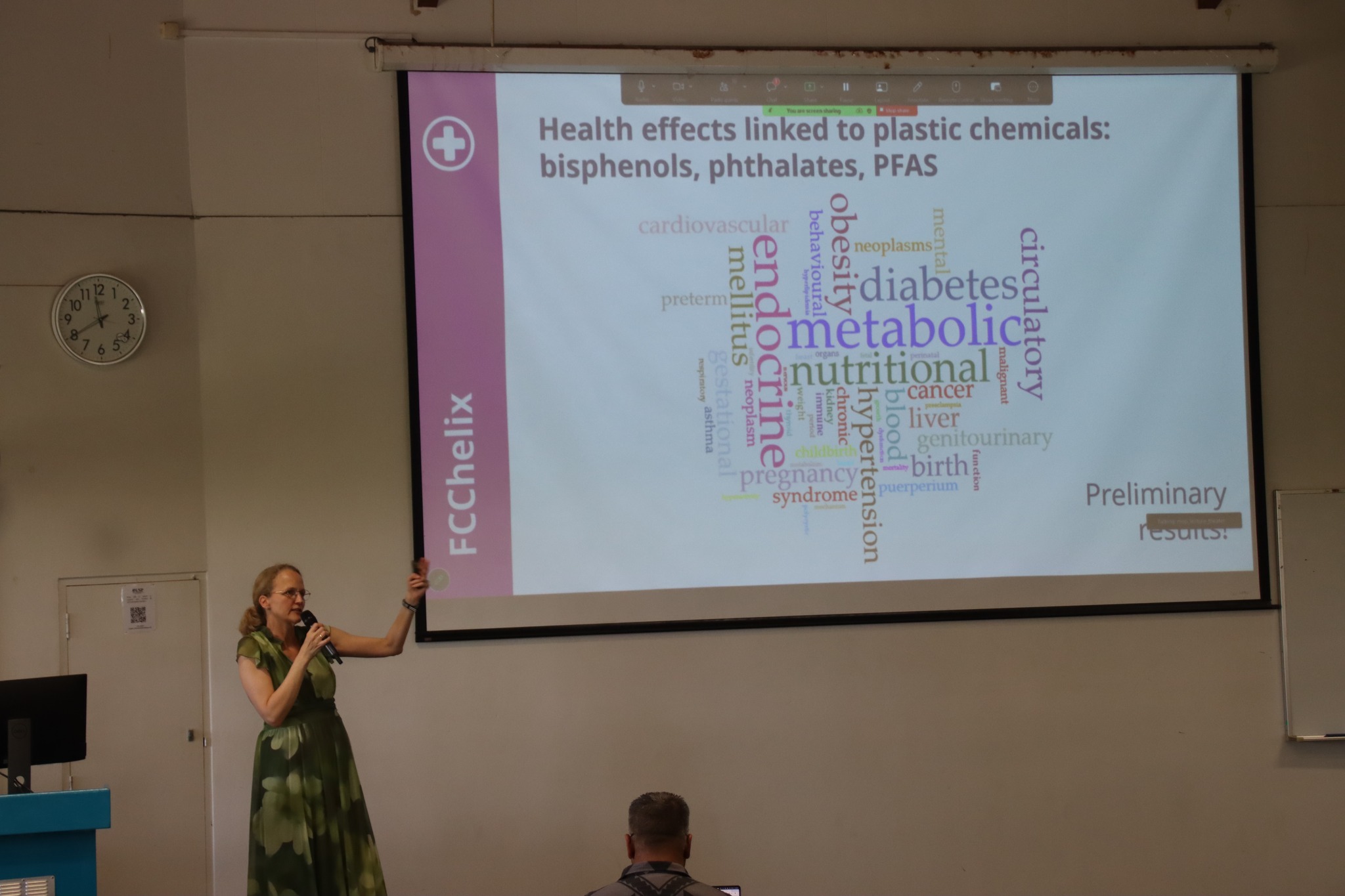
The research also found that thousands of plastic chemicals have been detected in human samples, with studies linking exposure to metabolic diseases, endocrine disruption, reproductive effects and cancer.
“Cancer-causing chemicals are present in our packaging and in our bodies,” Dr Geueke said.
Scientists are also studying microplastics released from food packaging, with evidence suggesting that heat, ultraviolet light and mechanical stress, such as opening and closing bottle caps, can generate microscopic plastic particles.
Despite growing scientific evidence, Dr Muncke said current regulatory testing remains limited.
“The chemicals that are intentionally used to make plastic need to be tested toxicologically, but only if they are present at certain levels,” she said.
“And the testing focuses mainly on whether they damage DNA.”
She said this approach does not fully account for other ways chemicals may affect human health.
“Chemicals contribute to diabetes, cardiovascular disease, reproductive health problems, immune system impacts and brain health. Those are not being tested at all right now.”
The researchers stressed that addressing plastic pollution will require systemic change, including reducing plastic production, improving waste management and promoting safer materials.
Dr Muncke said solutions could include greater reliance on local food production and packaging systems using reusable or inert materials.
“Local food production and local food consumption can be part of the solution,” she said.
“Import foods in bulk and do the filling locally in Fiji, and you can create jobs while reducing single-use packaging.”
She added that tackling plastic pollution will require collaboration between scientists, policymakers and communities.
“We need system thinking to end plastic pollution. If we work together, we can find responses to tackle this big problem,” she said.