


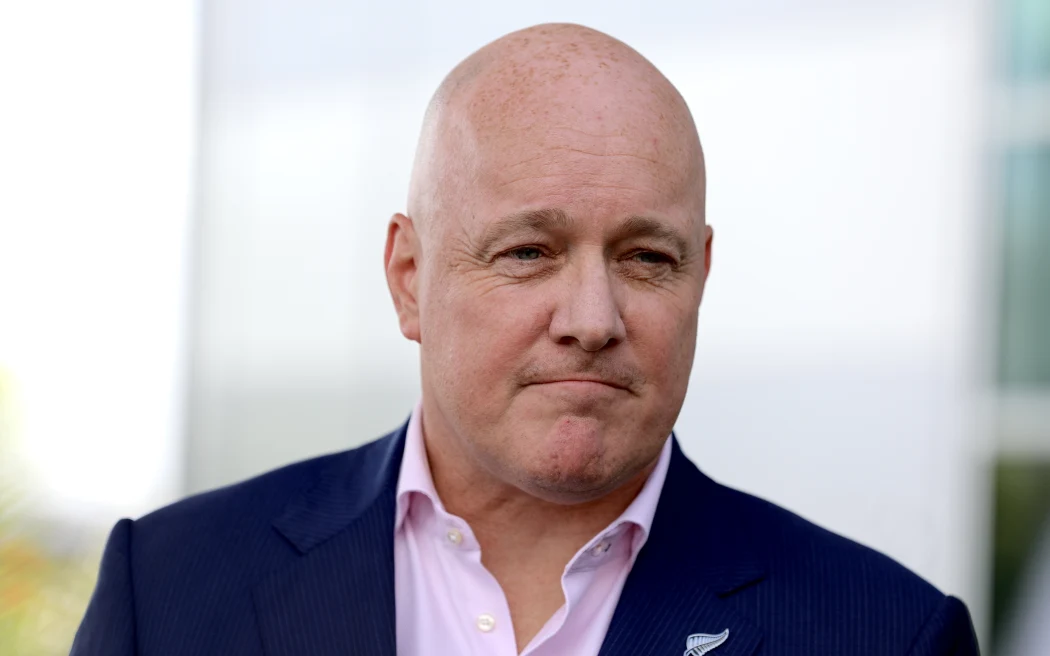
New Zealand Prime Minister Christopher Luxon is off to Samoa, then Tonga as their new governments grapple with a scourge of drug trafficking.
Criminal groups are increasingly using the Pacific as a ‘drug highway,’ its vast expanse of ocean an appealing route for smuggling cocaine and methamphetamine from Latin America or Asia to lucrative markets like Australia and New Zealand.
The guts of Luxon’s trip will focus on transnational crime and how to better collaborate with – and build capability in – the Pacific nations.
The seriousness in which the Government is taking drug trafficking is evidenced by who was on the prime minister’s plane: Police Minister Mark Mitchell, Police Commissioner Richard Chambers and Customs chief executive Christine Stevenson.
“The attractiveness of the Pacific, Australia and New Zealand, particularly to the South American cartels, has been quite something,” Luxon told The Post in a pre-trip interview.
“It’s just a level we haven’t seen before, it’s an intensity we haven’t seen before.”
Coordinated efforts to stop drug trafficking through the Pacific have ramped up recently; French authorities – with assistance from New Zealand and U.S agencies – intercepted more than four tonnes of cocaine in French Polynesia in early February.
Collaborating with others was key to curbing the flow of illegal drugs, Luxon said.
“All of that’s just stepped up a gear and obviously we work very, very closely with their counterparts.”
With the spotlight on transnational crime, one notable omission from the prime minister’s programme is a visit to the Manawanui wreck.
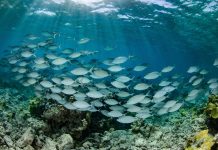
It’s been more than a year since the Royal New Zealand Navy ship sank off the south coast of Upolu in Samoa after hitting a reef, spilling hundreds of thousands of litres of diesel and oil into the ocean.
The Government has paid $6 million (US$3.47 million) in compensation, and three naval officers are now facing a court martial, but the effects of the disaster are far from over in Samoa.
Its government has been forced to increase surveillance of the wreck following reports of illegal diving and it’s also considering how to stabilise the wreck to mitigate pollution risks.
As the ongoing impacts of the Manawanui will likely be discussed in closed-door meetings between leaders, The Post asked Luxon if New Zealand would offer more support to Samoa if it was requested.
“The $6 million (US$3.47 million) that we paid last year, we did that in good faith, and obviously it was full and final payment and settlement between the two governments,” he said.
New Zealand enjoys close, familial relationships with Samoa and Tonga by virtue of the Pacific diaspora living onshore and mutual memberships in the key regional group, the Pacific Islands Forum.
Luxon made a point of emphasising the special relationship between New Zealand and Samoa, and New Zealand and Tonga, ahead of his trip.
“We have a very unique relationship. It is one genuinely of family.”
Though it’s unlikely this intimacy will extend to further changes to New Zealand’s visa system right now.
Last month, New Zealand First leader Winston Peters accepted a petition from Arthur Anae, elected as National’s first Pasifika MP in 1996, calling for visitors from six Pacific nations (Fiji, Samoa, Solomon Islands, Tonga, Tuvalu, and Vanuatu) to be treated the same as travellers from 60 other countries.
At the moment they have to apply for a visitor visa as opposed to being eligible for the cheaper, more straightforward electronic authority to enter the country.
Asked how receptive National was to this idea, Luxon pointed out the coalition recently set up a year-long trial of lower visa fees for Pasifika people.
“We keep moving in that space. I think we’re done more in that space in the two years of our government and been open to making those concessions.
“The other thing that we have to deal with though on our side is that Samoa and Tonga have the highest overstayer rates in any of the countries that we deal with.
“So, there’s high risk there and if we don’t screen through some form of visas that problem would be much bigger.
“Like all of our immigration settings, they’re risk based. It’s where we see risk and applications and visas need to be considered very much in that regard.”
Luxon’s trip comes as the coalition considers what fuel rationing may look like as the Iran war drags on, and it becomes harder to get fuel into the country.
Pacific nations were exposed to oil shocks, but they were also no stranger to dealing with them, he said.
“I know they’re taking those risks very seriously, as we are, and it’ll be very good to get a sense of how they are [and] what actions they’ve taken to secure supply.”
The prime minister laughed off a question about any potential concerns his leadership might be challenged while he was abroad, off the back of a dire poll last week.
Luxon in in Samoa today, heading on to Tonga on Tuesday afternoon and returning to Auckland late Wednesday evening.