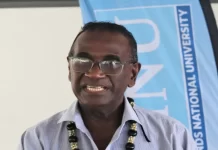
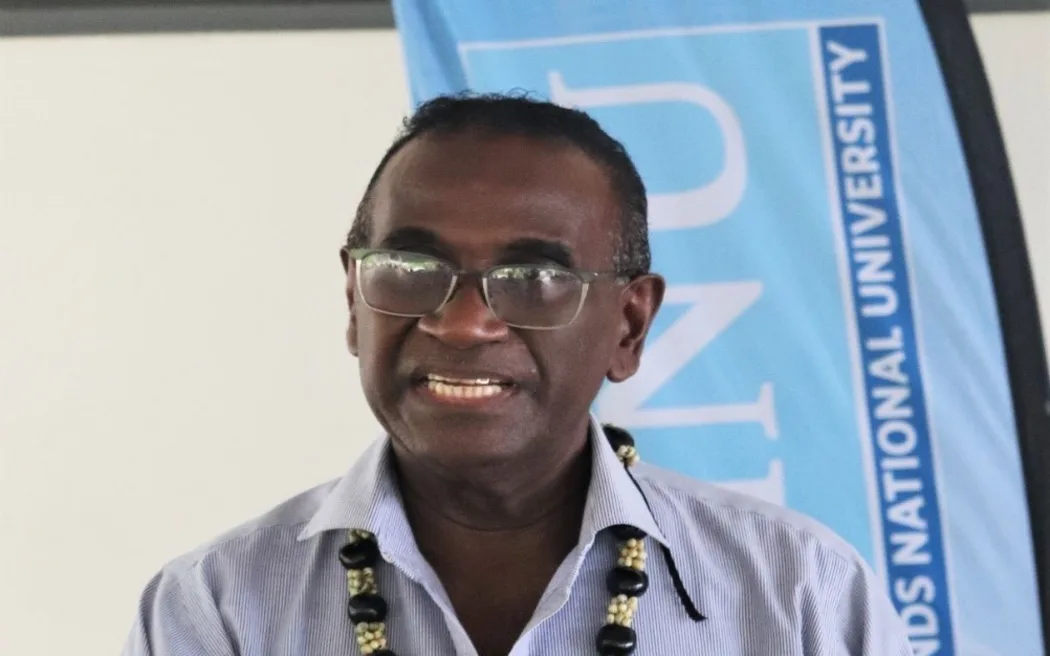
The Vice-Chancellor of the Solomon Islands National University, Dr Transform Aqorau, says the escalating conflict involving the United States, Israel and Iran will have direct consequences for Pacific Island countries and has urged the region to stand firm as an “Ocean of Peace.”
In a statement posted on social media, Dr Aqorau said the situation in the Middle East is deteriorating rapidly.
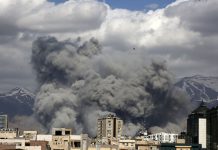
“The escalating conflict between the United States, Israel, and Iran is deeply alarming.
Missiles are flying. Civilians are dying. Oil tankers have reportedly been hit. The Strait of Hormuz — one of the world’s most critical oil routes — is now closed.”
He said declarations of success in war ignore the human cost.
“Some leaders speak of success. But war never has winners. The real cost is paid by ordinary people.”
Dr Aqorau warned that Pacific nations will not be shielded from the fallout.
“And the Pacific will not be immune.
If oil supplies from the Gulf are disrupted, global fuel prices will surge. For Pacific Island countries — heavily dependent on imported fuel — this means higher electricity costs, more expensive transport, rising food prices, and increased cost of living. Our already fragile economies could face another severe external shock.” said Dr Aqorau.
He said the region is already under strain from multiple crises.
“At a time when our region is struggling with climate change, rising sea levels, drug problems, mental health pressures, youth unemployment, diabetes, slow economic growth, and growing populations — we do not need more global instability.
We need peace.”
Dr Aqorau highlighted the Pacific’s long-standing position as an “Ocean of Peace.”
“Pacific leaders have declared our region an ‘Ocean of Peace’ — a commitment to unity, sovereignty, dialogue, and non-militarisation. This is not just symbolic. It is strategic. Our islands have suffered before from global power rivalries and war. We know the long shadows they cast.”
He said regional solidarity must guide the Pacific as global tensions rise.
“As global order shifts, the Pacific must look more to each other for solidarity and cooperation. Our strength is in regional unity. Our security must be rooted in development, climate resilience, and human wellbeing — not militarisation.”
Dr Aqorau said war shifts resources away from essential services.
“War diverts resources from schools to weapons, from hospitals to missiles, from climate action to destruction.
Peace creates the space for progress.”
He called for leaders and citizens to hold the line.
“For the sake of our children — their health, their education, their future — the Pacific must stand firm as an Ocean of Peace.
In a world drifting toward conflict, let us choose stability.
Let us choose cooperation. Let us choose peace,” he said.