


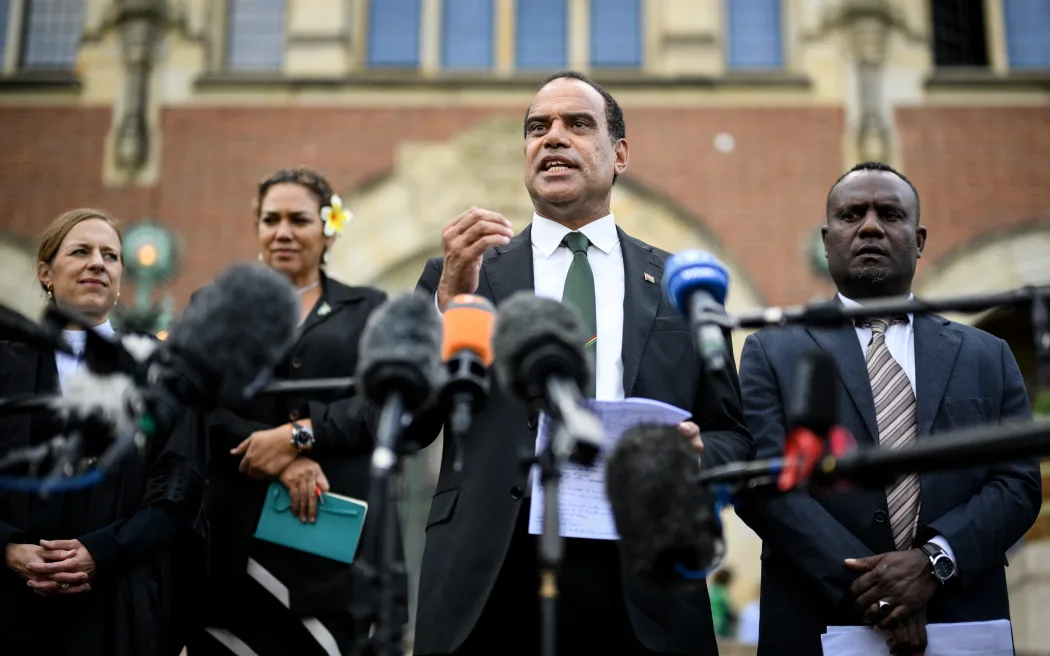
Vanuatu’s climate envoy says they are pushing on with their UN resolution on the International Court of Justice’s climate opinion, despite resistance from the U.S.
The 2025 opinion found that failing to protect people from climate change could violate international law.
But the Associated Press reported the U.S State Department telling its embassies and consulates it strongly objects to the proposal being discussed by the General Assembly; and that its adoption “could pose a major threat to US industry”.
“President Trump has delivered a very clear message: that the UN and many nations of the world have gone wildly off track, exaggerating climate change into the world’s greatest threat,” a cable obtained by the AP said.
Vanuatu’s climate envoy Ralph Regenvanu told the ABC’s Pacific Beat that they are pressing on.
“The U.S has made that statement when it received the text of the resolution. We are continuing with the normal process and we very much hope that they will engage in this normal multilateral process,” he said.
“We note their concerns but we’re continuing with the inclusive consultation process to enable all states to have the equal opportunity to provide the input into the draft resolution and we’ll see what happens.”
Regenvanu said the U.S pushback gave him a sense of deja vu.
He said it’s unfortunate, but they’ve seen something similar before – at the International Maritime Organisation (IMO) vote on a greenhouse gas levy for international shipping, ultimately leading to a delay.
“Last year we’d had a very strong vote in favour of bringing that forward and then when we got to the IMO in London in October, the U.S did exactly this – they did a de marche to all countries not to support it.”
The draft UN resolution is set to go before the UN General Assembly next month.
Previously, Climate Home reported Regenvanu saying the resolution “will be about ensuring the court’s findings are not left on paper but become living obligations”.
He said it was important to follow up the ICJ opinion with a further resolution at the UN General Assembly, because countries opposed to it could prevent it moving forward in other forums, such as the UN climate negotiations, which require consensus for decisions.