
Cook Islands continued to register sanctioned vessels tied to Russia’s “shadow fleet” months after New Zealand government began raising concerns, official information reveals.
Memos, emails and formal notices from New Zealand officials to their Cook Islands counterparts, released to RNZ Pacific under the Official Information Act, repeatedly criticise slow action in response to New Zealand concerns and directives.
They begin with emails from NZ’s High Commission in Rarotonga as early as April last year, before the NZ Sanctions Unit got involved in May and issued a “formal notice” in June.
A follow-up from the Unit on 22 August acknowledged that there “had been no additional CI-flagged vessels sanctioned by our partners ….”
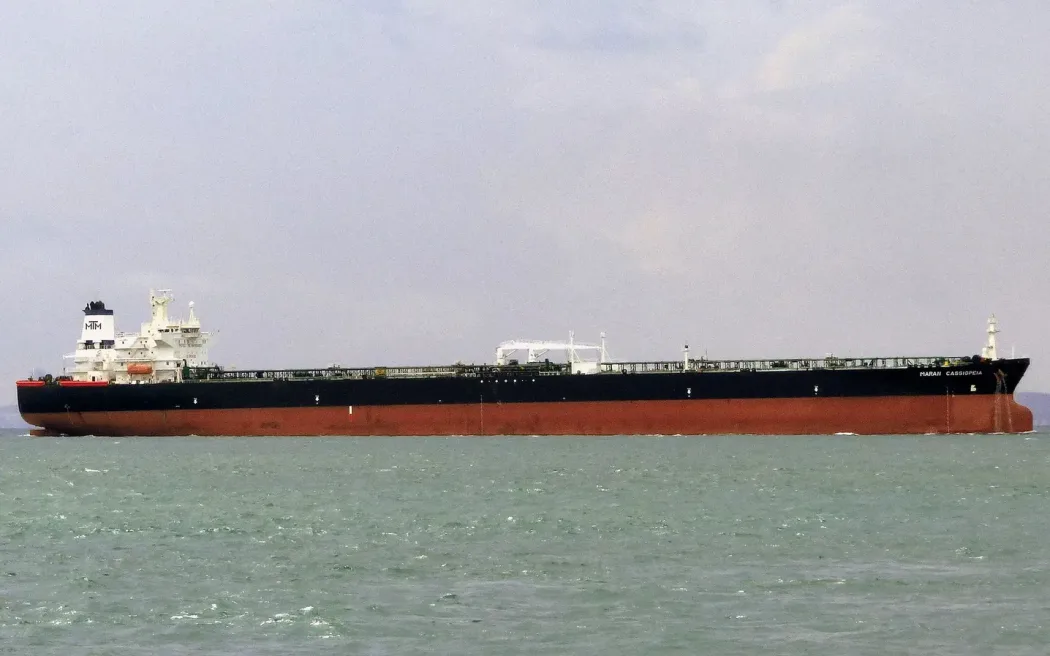
“Three sanctioned vessels now remain on the register: the widely-reported EAGLE S, a yacht owned by an oligarch, and a Crude Oil Tanker sanctioned by the US on 21 August for links to Iranian oil,” officials said in an email.
But Maritime Cook Islands (MCI) told RNZ Pacific that New Zealand had merely raised concerns about a vessel that transports vegetable oil, and another general merchant vessel, neither of which were sanctioned.
Officials on both sides, including MCI, appear to have met semi-regularly throughout 2025, beginning in February.
In meetings, NZ officials emphasised they were “looking to minimise risks for both CI and NZ” that were “legal and reputational”
One discussion between the Sanctions Unit and Cook Islands officials in late May appeared to show a growing confidence among NZ officials, with minutes noting it had “been taken as a signal that the government is taking New Zealand concerns seriously”.
However, a formal message to the Cook Islands sent just over a week later put the Cook Islands’ private registry on blast, listing 13 vessels that NZ “assessed as being of particularly high risk regarding dark fleet activity”.
That message had the New Zealand Defence Force, Maritime New Zealand, and the Cabinet Secretary copied in.
“We remain deeply concerned about (these vessels) and with the number of high-risk vessels that remain on the Register and continue to be added to the register. We consider that there is more that can be done to tighten (CI’s) Registry management and operation.”
The Eagle S, appearing to take centre stage in NZ concerns, caused consternation for the Cook Islands government in December 2024 after the ships anchor severed a subsea cable in the Baltic Sea.
It prompted Finland to send representatives to observe Cook Islands ship inspection processes, where Finnish officials “went through the deficiencies observed in the port state control inspection” with Cook Islands staff, according to a memo.
In April, the Cook Islands defended itself publicly by stating that the Eagle S had not faced any sanctions. This defence was repeated in meetings as late as 27 April.
The Cook Islands was technically correct until the European Union laid down sanctions on 21 May, less than a month later. All the same, the Eagle S would remain on the registry until October, which MCI said was at the request of the Finnish government.
“Eagle S remained temporarily registered at the specific request of Finnish authorities while legal proceedings were in progress,” they said.
By the near-end of the year, the Cook Islands side appeared more responsive. A message from October 20 pointed out four vessels on the MCI registry that had recently copped US sanctions, and a memo from October 25 credited MCI for deregistering the vessels days later.
“It’s positive that they took quite prompt action once the vessels were sanctioned,” it read.
But in December, Foreign Affairs secretary Bede Corry told a Parliament select committee that the registry debacle was key to the breakdown in trust with the Cook Islands, calling the situation “inherently bad.”
“The Cook Islands, to be fair, has taken some steps to address that, although those steps are not complete.”
This, among a number of other actions taken by CI without consultation with NZ, had “introduced friction” into the relationship, Corry said.
“You’ve seen that with your own eyes. It’s highlighted a gap on what free association means.”
An MCI spokesperson said sanctioned vessels are removed from the register immediately, having removed 188 vessels over the past 3.5 years.