
The UN’s climate chief last week urged countries to unite against an “unprecedented threat” to international cooperation from pro-fossil fuel forces — issuing the appeal as U.S President Donald Trump rattles the global order.
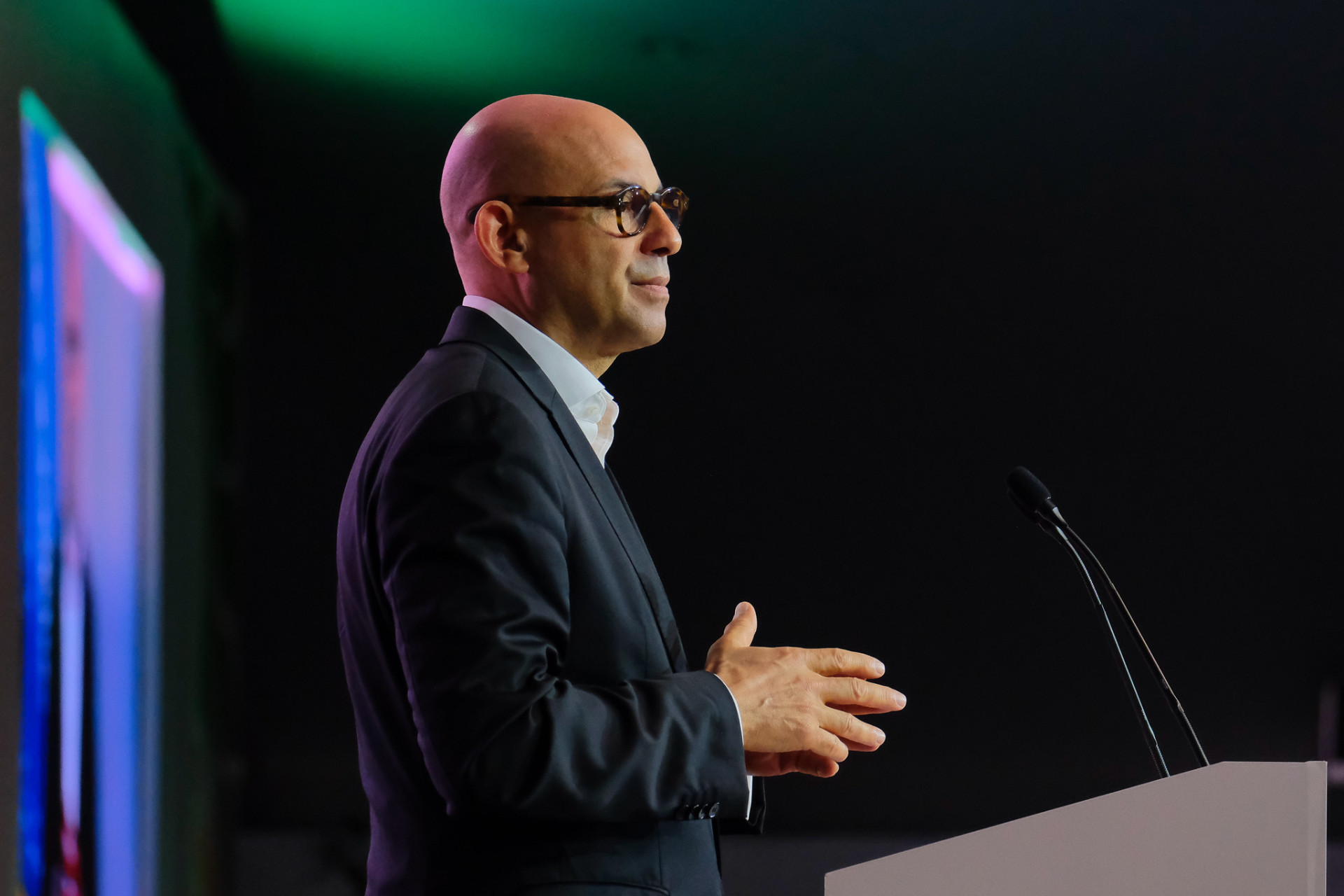
Simon Stiell, the head of the United Nations climate body, spoke in Istanbul as Turkey prepares to host the COP31 climate summit on its Mediterranean coast later this year, with Australia leading the negotiations.
“COP31 in Antalya will take place in extraordinary times. We find ourselves in a new world disorder,” Stiell said in an address alongside the president-designate of COP31, Turkish environment minister Murat Kurum.
“This is a period of instability and insecurity. Of strong arms and trade wars. The very concept of international cooperation is under attack,” he said.
Stiell made his plea as climate action is competing with concerns over security and economic growth around the world.
Trump has championed oil, gas and coal while moving to withdraw the United States from the UN’s bedrock climate treaty after pulling out of the Paris Agreement, the landmark deal reached in 2015 on curbing global warming.
The American leader, who has called global warming a “hoax,” was poised last Thursday to revoke a landmark scientific finding that underpins U.S regulations aimed at curbing planet-warming pollution.
Trump has also rattled European allies with his desire to acquire Greenland, as shrinking Arctic sea ice is turning the region into a strategic battleground.
Other nations have resisted moving away from oil, gas and coal.
The COP30 summit in Brazil late last year ended with a modest deal that lacked any explicit mention of fossil fuels amid opposition from oil giants such as Saudi Arabia, coal producer India and others.
The United States, the world’s top economy and second-biggest polluter after China, shunned COP30.
The last three years have been the hottest globally on record, driven by rising greenhouse gas emissions that are causing climate change.
Stiell warned that international climate cooperation was “under unprecedented threat: from those determined to use their power to defy economic and scientific logic, and increase dependence on polluting coal, oil and gas.”
“Those forces are undeniably strong. But they need not prevail. There is a clear alternative to this chaos and regression,” he said.
“And that is countries standing together, building on all we have achieved to date, to make it (international global cooperation) go further and faster.”
He noted that investment in clean energy was more than double that of fossil fuels last year, while renewables overtook coal as the top electricity source.
Stiell urged nations to deliver on their 2023 agreement at COP28 in Dubai to triple clean energy capacity by 2030 and transition away from fossil fuels, and for the most ambitious to form “coalitions of the willing”.
“Climate cooperation is an antidote to the chaos and coercion of this moment, and clean energy is the obvious solution to spiralling fossil fuel costs, both human and economic,” he said.
However, an early draft of the proposed “action agenda” for Cop31, leaked to the Guardian, omits mention of the phaseout of fossil fuels discussed in depth at Cop30, to the anger of campaigners.
Cop31 is to be held in Turkey this November, but with Australia jointly in charge of proceedings, in an unusual compromise arrangement reached after a long tussle between the two governments over the presidency.
Among 14 action agenda items, the “transition away from fossil fuels” does not appear once in the draft, and many of the top priorities appear to reflect Turkish preferences rather than general concerns. For instance, at the top of the list comes a resolution for “zero waste”, calling for the rapid reduction of methane derived from waste, such as landfill sites – which ignores the fact that far more methane comes from oil and gas extraction and from livestock farming.
The second item on the list is “tourism and cultural heritage”, which is also a key concern for Turkey, which has a large tourist sector, including the resort city of Antalya where Cop31 will be held. AI also appears on the list of actions, but “climate action implementation” only makes it in as the eighth item.
Andreas Sieber, head of political strategy at 350.org, said: “Fourteen priorities, around 50 sub-priorities, and not a single explicit reference to fossil fuels, the source of roughly three-quarters of global warming. [This] looks less like oversight and more like a wilful omission, especially after more than 80 countries backed a roadmap to transition away from fossil fuels.”
Emine Erdoğan, the wife of Recep Tayyip Erdoğan, the Turkish president, set up a “zero waste” initiative in 2017, and has made recycling and the “circular economy” a key issue. Sieber said: “When waste management tops the list, it makes you wonder what interests are shaping the agenda.”
The action agenda forms a key part of the annual “conference of the party” meetings, under the UN Framework Convention on Climate Change. It contains items that do not require formal approval under the negotiation process and thus are not subject to the effective veto wielded by countries such as Saudi Arabia, Russia and other petro-states.
At Cop30 in Brazil last November, countries failed to agree to put explicit language on the “transition away from fossil fuels” into the formal outcome of the conference, but did agree an indirect pledge on the phaseout, and an accompanying voluntary initiative to discuss the phaseout at a separate conference in Colombia this April.
Sieber called for the Cop31 action agenda draft to be rewritten.
“The action agenda and Cop31 must confront the energy transition head-on, because people everywhere are asking for clean, affordable power, safer communities, and a future that is not tied to the risks and costs of fossil fuels,” he said.
“It is essential that the co-presidencies highlight the phaseout of fossil fuels, which devastate local communities and exacerbate the climate crisis,” said Sierber.