



By Prashanth Pillay, Jo Elsom
Across the Indo-Pacific, people are spending more time online but finding it harder to know what to trust. The 2025 Reuters Institute Digital News Report 2025 shows nearly six in ten respondents struggle to distinguish between real and false information. A UK government study in Fiji, Samoa and Solomon Islands found that 85 percent of online users believe false information on social media is shaping opinions on elections and disaster response.
At the same time, authoritarian states are scaling up investment in state-aligned broadcasters. A 2023 Australian parliamentary inquiry reported that Beijing devotes “billions” annually to international media operations, including propaganda and disinformation. Funding for independent public service media in Australia, the UK and the U.S has not kept pace. In the U.S, PBS and NPR have lost significant funding after the closure of the Corporation for Public Broadcasting. A recent opinion piece by the Lowy Institute suggests that shrinking independent media and expanding state-backed narratives are deepening information insecurity.
Public service media matter now more than ever. Their mandate is to provide accurate, balanced and accessible information, and research by the British Broadcasting Corporation and others links strong public broadcasters with higher media literacy and trust. Commercial outlets remain important, but without at least one trusted public service broadcaster it becomes harder for citizens to assess competing claims, especially during elections and emergencies.
This value becomes clearer when looking at countries where public media independence has eroded.
Poland’s national broadcaster TVP is a cautionary case. After legislative changes in 2015 placed it under direct government control, its press freedom ranking fell from eighteenth to fifty-seventh and trust collapsed to around 22 percent. A reform process is underway, but legitimacy has been slow to rebuild. For Pacific and Southeast Asian countries with predominantly small markets and growing exposure to foreign state-backed media, these lessons are directly relevant.
Evidence from ABC International Development’s (ABCID) qualitative programme evaluations suggests that the contribution of public service media to information resilience is strongest when it supports institutional changes that build over time, such as newsroom workflows, editorial standards and audience trust.
Two case studies of ABCID-managed programs show how locally led media development strengthens information ecosystems. These programmes are the Media Development Initiative (MDI), a long-running DFAT-funded programme, and the Timor-Leste Media Development Program, which forms part of the Indo-Pacific Broadcasting Strategy.
Over two decades, MDI has worked with Papua New Guinea’s National Broadcasting Corporation (NBC) to strengthen leadership, modernise newsrooms, improve digital systems and bolster emergency broadcasting. A major shift has been the expansion of provincial reporting through NBC’s 22 stations across the highlands and outer islands. Mobile journalism training, which uses smartphones for storytelling, provided equipment and mentoring that enabled reporters outside Port Moresby to file stories in real time.
ABCID’s programme monitoring data and audience research indicate that this expansion has altered both geographic reach and content diversity. Analysis of NBC digital output following mobile journalism training shows a measurable increase in provincially originated stories, particularly during emergencies and political events, suggesting that decentralised reporting capacity is a key driver of improved access to trusted information.
ABCID’s internal audience research also shows NBC is the most trusted mass media platform in many provincial areas. Listeners noted that hearing their own language and concerns made NBC a reliable source during periods of political or economic stress. As one NBC talkback listener from East Sepik said:
Seeing and hearing more news from my community [on NBC] creates this special bond … I can’t quite describe it … but it’s reassuring … it’s the voice that boldly speaks for us even when everything around [us] is unstable … like the economy and politics. NBC speaks to me; it understands my struggle … it’s that guiding hand.
Importantly, internal audience research findings also note that trust remains uneven across demographics and platforms, with younger audiences more likely to encounter NBC content via social media feeds where it competes directly with unverified sources. Editorial credibility must be paired with platform-specific engagement strategies to sustain trust.
NBC’s influence is also tied to wider sector reforms. With support from MDI, the Media Council of PNG launched a new Code of Ethics and Professional Practice in 2024 – the first in more than a decade – and played a central role in consultations on the National Media Development Policy endorsed later that year. These processes reinforced expectations around editorial independence and set clearer benchmarks for public-interest journalism.
This experience in PNG reflects a broader pattern across the region, where sustained institutional support is helping public broadcasters navigate political and technological change. Audiences benefit from more accessible, inclusive information.
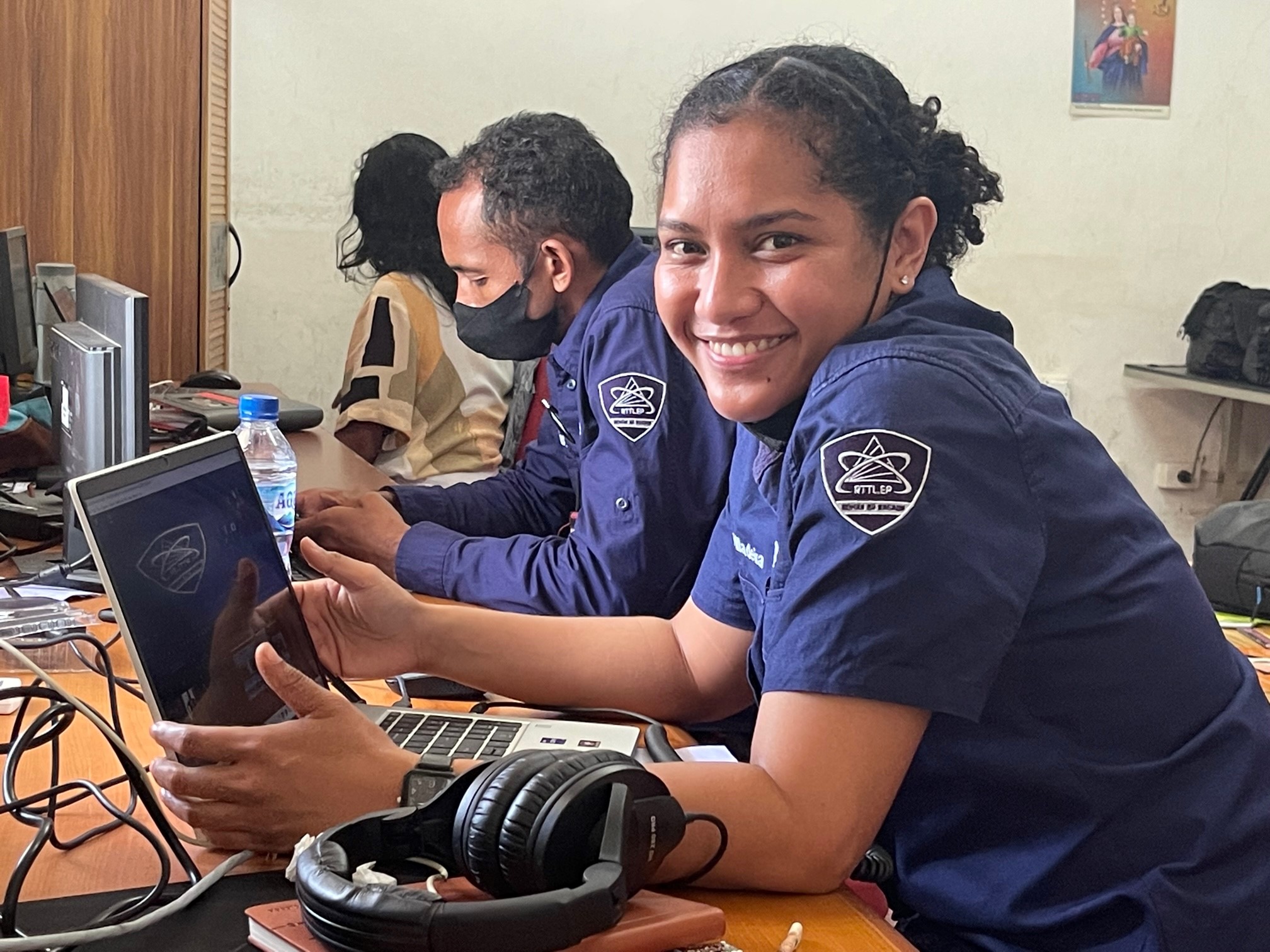
Timor-Leste’s national broadcaster, Rádio e Televisão de Timor-Leste (RTTL), was created after independence in 2002 and operates with limited resources in a competitive political environment. Through the Timor-Leste Media Development Program, ABCID has supported newsroom mentoring, institutional strengthening and technical upgrades as the country prepares for deeper regional engagement through ASEAN and the introduction of high-speed connectivity through a new submarine cable.
Interviews with RTTL staff highlight three shifts. First, specialist mentoring and ABC newsroom placements have strengthened multi-platform production skills: the ability to produce and adapt content for radio, television and online platforms. Second, new workflows are fostering collaboration across radio, television and online teams, reducing duplication and improving national coverage. Third, RTTL is moving beyond relaying official information toward more community-centred reporting that includes rural voices, young people and women. All improve information provision for and engagement with citizens.
A major milestone was the launch of RTTL’s first English-language television bulletin in 2023, supported by ABCID. The bulletin was widely seen as a step toward greater regional engagement, a view echoed by President José Ramos-Horta. Industry peers describe RTTL as a “mirror of the nation”, reflecting the diversity and aspirations of Timorese society. Members of parliament regularly cite RTTL reports in debates, underscoring its role as a trusted source of accurate information. That role carries historical significance, given the media’s legacy in documenting Timor-Leste’s struggle for independence.
Evaluation interviews suggest a need for caution, however: milestones alone do not guarantee sustained change. Staff emphasised the importance of follow-up support and realistic workload expectations to prevent new initiatives from over-stretching already limited newsroom capacity.
These experiences suggest three lessons for development partners.
First, information systems are central to governance and service delivery. They shape public understanding of elections, climate risks, gender-based violence and economic reforms. In environments where false information spreads quickly and foreign state-backed narratives are expanding, strengthening public service media is inseparable from strengthening national decision-making.
Second, trust in public broadcasters takes time and must be locally led. In both PNG and Timor-Leste, long-term mentoring and support for national sector bodies helped broadcasters define their own standards and pathways rather than import foreign models. Trust in information through cultural institutions such as public service media is critical to sustainable development. This finding is consistent with comparative evaluations across ABCID programs showing that impact is more durable when it is shaped and owned by national institutions.
Third, Australia’s investment in public service media through ABCID and its regional media counterparts contributes to institutional relationships and like-minded value systems and supports the goals of the International Development Policy – inclusive governance, regional stability and resilience to disinformation and foreign interference. Longitudinal evaluation findings from ABCID indicate that program impact is strongest where support has focused on strengthening long-term institutional relationships. In this context, trusted national broadcasters play a critical role in Australia’s regional engagement, as reliable information systems underpin effective institutions, accountable leadership and informed public debate.
In crowded and fast-moving information environments, these valued cultural institutions – trusted public broadcasters – give communities something rare: a stable point of reference. The journeys of NBC and RTTL show that steady, respectful support helps these institutions grow into their roles. Strengthening public media is therefore not only a sectoral task but also a long-term contribution to democratic resilience and regional cohesion.
Dr Prashanth Pillay leads the research and evaluation team at ABC International Development. He has published on regional media development and youth political engagement in Australia.
Jo Elsom is the head of ABC International Development at the Australian Broadcasting Corporation.