

The American Bar Association threw its weight behind Pacific Island opposition to deep-sea mining Monday, passing a resolution that brings more than 400,000 lawyers into the fight against federal leasing plans.
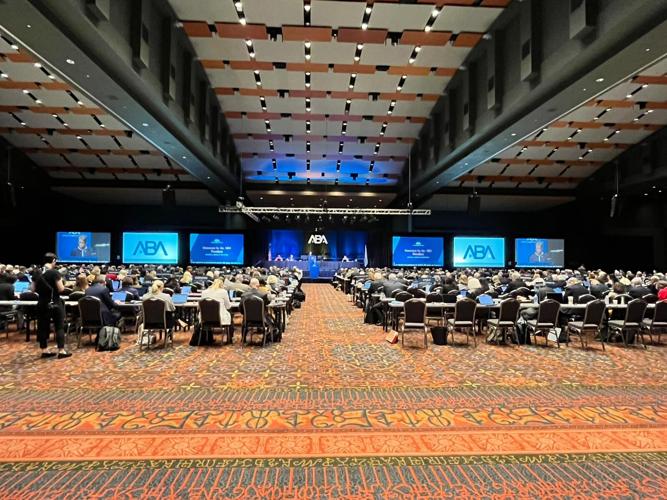
The resolution, submitted by the Guam Bar Association and approved by the ABA’s House of Delegates at its midyear meeting in San Antonio, Texas, calls on the federal government to halt all leasing for seabed mining off Guam, the Commonwealth of the Northern Mariana Islands, and American Samoa.
Guam Bar Association President Jacqueline Terlaje, who presented the resolution, said the vote amplifies voices that federal authorities have largely ignored.
“The people of the Pacific have spoken with one voice on this issue,” Terlaje said in a phone interview from Texas with The Guam Daily Post. “And the one voice is that we want a moratorium in place until the issues are more fully understood.”
The resolution marks the first major policy statement the Guam Bar Association has brought before the national body since gaining representation in the House of Delegates last year. The ABA had previously excluded Pacific territories from its governing structure.
“Now we’re not just three lonely voices in the Pacific,” Terlaje said. “Now we are a body of more than 400,000 people, including those who submitted their commentaries, which I think exceeded 66,000, and all the organisations.”
Adi Martínez-Román, co-founder and co-director of Right to Democracy, called the approval significant for demonstrating institutional support.
“The American Bar Association is the biggest bar association of the United States,” Martínez-Román told the Post. “And they have been working for a long time.”
The resolution demands the Bureau of Ocean Energy Management stop issuing leases due to lack of statutory authority and insufficient scientific data. It also requires that no ocean industrialisation proceed in U.S territories without free, prior, and informed consent from indigenous populations.
Resolution 402 specifically asks the federal government to respect the moratorium issued by American Samoa’s governor and resolutions passed by the Guam and CNMI legislatures.
The vote comes as BOEM accelerates plans to open Pacific waters to commercial mining for critical minerals. The agency doubled the proposed mining zone for American Samoa while facing unanimous opposition from territorial governments.
Terlaje said getting the resolution approved required intensive coordination across multiple organisations, including Right to Democracy and Blue Ocean Law.
“This was a massive effort,” she said. “Before we even leave Guam, we’re already drafting the paperwork; we’ve got to review everything.”
She described five days of back-to-back meetings with different state delegations to build support for the resolution. The comment period with BOEM closed 12 January, making the quick ABA response particularly notable.
“”When you think about the effort it took to get the ABA support on this, it’s quite impressive that they listened so quickly,” Terlaje said.
The resolution argues that BOEM lacks legal authority to lease seabed minerals in the territories. While the Inflation Reduction Act expanded the definition of “state” under the Outer Continental Shelf Lands Act to include U.S territories, legal analysis suggests this expansion applied only to offshore wind leasing, not mineral extraction.
The document also highlights insufficient baseline data about deep-sea ecosystems. Less than 0.001 percent of the deep seafloor has been visually observed, according to research cited in the resolution, with only seven known observation points in the 35.5-million-acre area proposed for leasing in the Marianas.
Recent discoveries about polymetallic nodules producing oxygen through electrolysis add to environmental concerns, the resolution states. Removing these nodules could permanently eliminate oxygen sources that sustain deep-sea life.
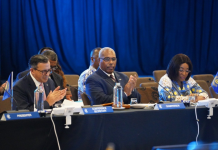
Terlaje attended the ABA meeting with Jay Arriola, the Guam delegate, and Alicia Limtiaco. Terlaje sat as delegate for the Northern Mariana Islands under rules allowing her to represent the CNMI in its delegate’s absence.