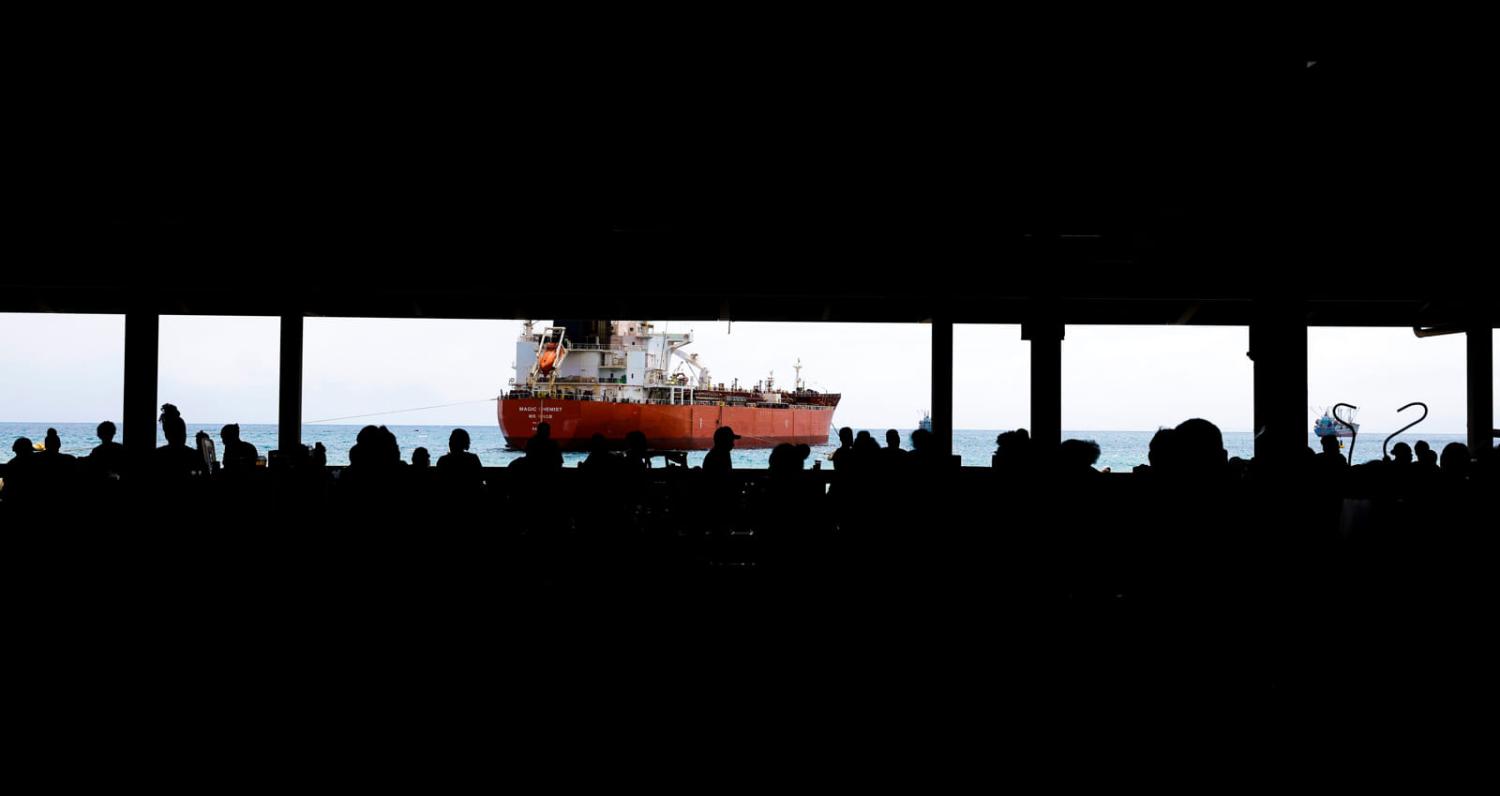
Moving beyond “Least Developed Country” status may be a sign of growing incomes – but not less vulnerability.
By Alexandre Dayant
In December 2027, Solomon Islands is scheduled to graduate from the United Nations’ Least Developed Country (LDC) category. It will be only the third Pacific Island country to do so after Samoa (2014) and Vanuatu (2020). In New York and Geneva, this is framed as a success story: Solomon Islands has exceeded the income and human assets thresholds in two consecutive UN reviews, enabling it to graduate.
In Honiara, however, the discussion is far more cautious.
While Solomon Islands now meets the thresholds for graduation, its economic resilience remains weak. Indicators linked to diversification, fiscal stability, governance, and climate exposure point to a country still operating with thin buffers and high vulnerability to shocks. Senior government and central bank officials have openly questioned whether the country is ready to lose access to the international community’s most concessional assistance and preferential market access.
This tension goes to the heart of the Pacific LDC dilemma. Graduation is meant to signal that a country no longer needs special international support. But the LDC framework captures only part of the regional reality. Structural constraints – remoteness, narrow export bases, limited fiscal space, and extreme climate exposure – are not transitional challenges that disappear with income growth. They are permanent features.
This is reflected in the Economic and Environmental Vulnerability Index (EVI), the third graduation criterion. Solomon Islands’ recent EVI (50) remains well above the UN threshold (32), reflecting heavy dependence on logging and fisheries, geographic dispersion and climate risk.
Solomon Islands’ graduation should be treated as a test case for the Pacific.
Solomon Islands is not alone. Kiribati and Tuvalu, both of which have repeatedly met the graduation criteria, face similar debates. Each may continue to pass the technical thresholds while remaining highly vulnerable, raising a simple question: is the LDC graduation process placing enough weight on vulnerability?
No is increasingly the answer. The current framework allows countries to graduate by meeting income and social thresholds even when vulnerability remains extremely high. Yet countries that remain structurally exposed are often not ready to lose access to international support measures, including concessional finance, trade preferences and other forms of special treatment.
For highly vulnerable states, graduation is less about the date than the terms: transition length, access to concessional finance, and the pace of the shift from grants to loans. This argues for a stronger vulnerability lens in graduation decisions and, at minimum, more robust “smooth transition” frameworks, longer preparatory periods and extended access to key benefits after graduation.
In practice, Solomon Islands is already pursuing that path. Recognising these challenges, the government secured a delay to graduation from 2024 to 2027 after the Covid-19 pandemic, civil unrest and disasters disrupted national planning. It has since adopted policies aimed at making graduation “sustainable and irreversible” including through economic diversification, stronger public finance and climate-resilient infrastructure. But such ambitions will require significant investments at a time when government revenues are thin and unlikely to expand.
Development partners are therefore decisive.
Graduation will not immediately cut off Solomon Islands from aid. Official development assistance still accounts for roughly one-third of government revenue, and eligibility is determined by OECD income thresholds that are far higher than the LDC cutoff. Australia, New Zealand, Japan, and the European Union have all indicated that their support will continue after graduation. However, some losses are unavoidable: the UN’s dedicated climate fund for LDCs, even if small in scale for Solomon Islands, will close to new proposals once graduation occurs.
The main risk to development financing does not stem from LDC graduation but from the expected shift, from 2026, of multilateral development bank financing – around 13 percent of total aid – from grants toward loans, following the IMF’s assessment that Solomon Islands’ external debt is sustainable.
Australia, as the Solomon Islands’ largest development partner, will be central to managing the transition. Its support so far has rightly focused on governance, health and education. But as graduation nears, the emphasis should shift toward economic resilience – including scaled-up investment in climate-resilient economic infrastructure.
Partners can also accelerate economic diversification. Supporting the Bina Harbour tuna processing project – a credible near-term alternative to declining logging revenues – would be a strong first step. Mining, while politically sensitive, has already overtaken logging as a source of export revenue and could be transformative if governance improves and tax exemptions are tightened. Australia could help shape outcomes by pairing blended finance, guarantees and technical expertise with firm environmental, social and governance standards.
Trade policy is another lever. While most preferences will remain, some exports – particularly coconut oil and veneer sheets – will face higher tariffs in key markets such as South Korea, Switzerland and Japan. Partners could help offset this by supporting export diversification, facilitating market access elsewhere, and investing in standards compliance and value-addition.
Solomon Islands’ graduation should be treated as a test case for the Pacific. A “soft landing” – graduating on schedule, backed by well-managed resources, realistic sequencing of reforms, and extended support from development partners – offers the most credible path forward. Australia and other partners should also use this moment to continue to push for broader reforms through the UN, OECD and development banks so that vulnerability weighs more heavily in future graduation decisions.
And if Solomon Islands ultimately concludes that the risks of graduation are too great, partners should be prepared to support a further deferral request.
Because graduation should not lead to greater fragility. It should mark a transition to stronger resilience.