
Corruption remains a persistent challenge across the Pacific, according to the 2025 Corruption Perceptions Index (CPI), released Tuesday by Transparency International.
Pacific leaders are failing to do enough to reduce corruption, despite their collective commitment to strengthen good governance as part of the 2020 Teieniwa Vision, the region’s roadmap to tackle corruption.
Whilst New Zealand (81) and Australia (76) retain relatively high rankings in the index, the long-term view shows a steady decline since 2012. In New Zealand, this downward trajectory is the result of a lack of action on anti-corruption legislation and insufficient resourcing to support investigative and prosecutorial functions.
Meanwhile, Australia should strengthen protections for whistleblowers with a whistleblower protection authority, tackle undue influence by introducing stricter regulations around lobbying, and strengthen its National Anti-Corruption Commission.
Nearby, in the Pacific Smaller Island Developing States, scores remain low. Papua New Guinea (26) is the lowest scoring country in the region, reflecting ongoing challenges in strengthening anti-corruption institutions and failing to address financial and political integrity risks.
In Vanuatu (47), Solomon Islands (44) and Fiji (55), there has been little to no change for the past several years, highlighting limited action to address corruption, weak oversight institutions and concerns around governance and transparency.
The Pacific’s journey toward transparency, and to live up to the commitments in the Teieniwa Vision to tackle corruption, is a shared one that calls for deep collaboration between political leaders, civil society and regional partners.
The Smaller Island Development States continue to rely heavily on foreign aid to advance development goals and need increased support from higher income nations in the region to progress the fight against corruption. However, leaders of these countries need to step up with stronger governance, and greater transparency and accountability. This will also help reduce corruption risks and increase the effectiveness and accountability of foreign aid.
Kelera Serelini-Varawa, Pacific Regional Engagement and Advocacy Lead at Transparency International said: “The Pacific cannot afford to let corruption undermine its future. Pacific leaders should move beyond statements and prioritise meaningful action to combat corruption, uphold integrity and strengthen democracy.
“With strong anti-corruption records, Australia and New Zealand are well placed to lead and support the region. Larger partners must step up, civil society must be empowered, and Pacific leaders must act with conviction to build a region founded on transparency, integrity and public trust.”
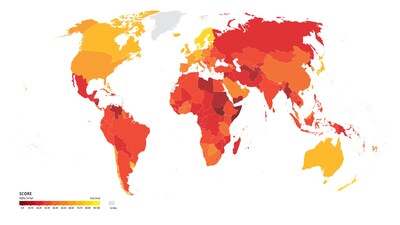
The CPI ranks 182 countries and territories by their perceived levels of public sector corruption on a scale of zero (highly corrupt) to 100 (very clean).
The top scorers were New Zealand (81) and Australia (76), ranking fourth and 12th in the world, respectively.
Papua New Guinea (26) is the lowest scoring nation in the region, dropping five points since 2024.
Fiji (55), the highest scoring of the Smaller Island Developing States due to its robust legislative framework, has seen no change in its score compared to five years ago.