

Vanuatu has introduced the zero draft of a United Nations General Assembly resolution to endorse the International Court of Justice’s advisory opinion on the obligations of states in respect of climate change, delivered on 23 July 2025.
A core group of States contributed to the zero draft. It had cross-regional representation from Vanuatu, Barbados, Burkina Faso, Colombia, Jamaica, Kenya, the Marshall Islands, the Federated States of Micronesia, the Kingdom of the Netherlands, Palau, Philippines, Singapore, and Sierra Leone.
The draft resolution seeks to welcome the Court’s unanimous clarification of States’ climate obligations under international law by the UN membership, reinforcing the authority of the Court and respect for the rule of law and given practical effect to multilateralism and cooperation in addressing the climate crisis.
“This initiative reflects our enduring commitment to climate justice,” Ambassador Odo Tevi, Permanent Representative of Vanuatu to the United Nations said.
“The Advisory Opinion provides authoritative legal clarity. Our collective responsibility now is to ensure that this clarity strengthens global climate action and multilateral cooperation.”
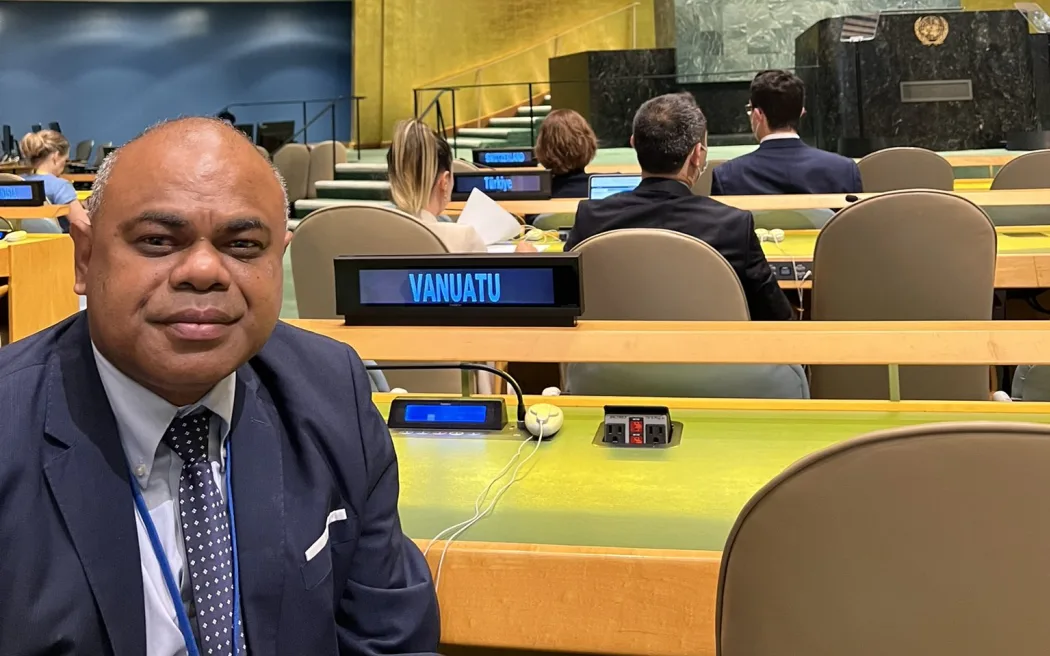
The zero draft has been shared with all UN Member States and will be discussed during informal consultations scheduled for 13 and 17 February in New York. These informals provide an inclusive and consultative space for Member States to exchange views, raise questions, and contribute to the development of a resolution that will garner broad support, necessary to cement the authority of the Court’s opinion.
Vanuatu highlighted its three overarching objectives for the zero draft:
• to fully and unreservedly welcome the ICJ’s Advisory Opinion.
• to strengthen climate action in line with clarified legal obligations; and
• to advance climate justice through mechanisms to drive the operationalisation of the Advisory Opinion.
During Friday’s panel presentation introducing the draft, Vanuatu and other Core Group members emphasised that the resolution is not about reopening or renegotiating the Court’s findings, but about respecting their authority and ensuring coherence between international law, climate action, and existing multilateral frameworks.
“In the current geopolitical context, sustained commitment to the rule of law is more important than ever,” noted Ralph Regenvanu, Minister of Climate Change of Vanuatu.
“Climate change is no exception. Upholding the Court’s clarification of existing obligations is essential for the credibility of the international system and for effective collective action.”
“At a time when respect for international law is under pressure globally, this initiative affirms the central role of the International Court of Justice and the importance of multilateral cooperation,” Minister Regenvanu added.
“Upholding the Court’s Advisory Opinion strengthens the credibility and predictability of the international system as a whole.”
The States involved expressed appreciation for the many Member States that have already engaged constructively and encouraged all delegations to participate actively in the upcoming informals.
The zero draft is offered in a spirit of openness, cooperation, and dialogue, with the aim of achieving a resolution that reinforces international law and supports a collective, just, and effective response to the climate crisis with a view to a vote by the end of March.