

New climate data shows that 2025 was the fifth warmest year ever recorded in the western Pacific, continuing a long-term warming trend that is reshaping conditions across the region.
According to ERA5, a global climate dataset from the Copernicus Climate Change Service, 2025 was the third warmest year on record worldwide, following 2024 and 2023.
In the western Pacific, it ranked fifth warmest since 1940, with January, February, March, May, and October all among the hottest months ever observed.
Across the region, the average air temperature in 2025 was 0.65 °C higher than the 1961–1990 baseline. Pacific temperatures have been rising steadily—about 0.1 °C per decade since 1940—and every year since 1986 has been warmer than the long-term average. Notably, the five warmest years on record have all occurred since 2016.
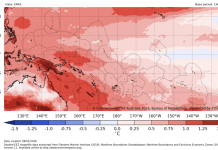
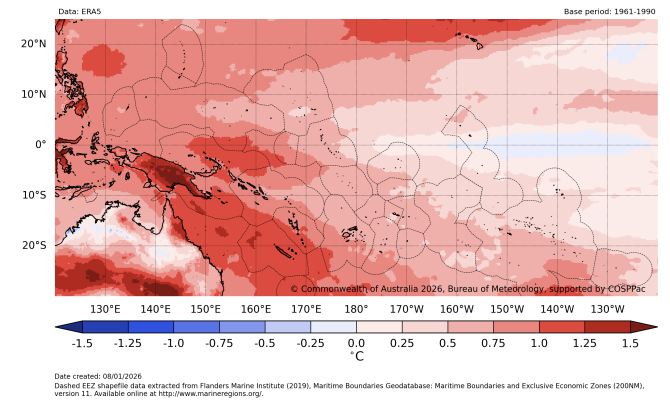
In 2025, unusually warm conditions were especially strong over the western equatorial Pacific and the Coral Sea, including areas around Papua New Guinea and New Caledonia. These patterns are likely linked to record high sea surface temperatures in the same areas.
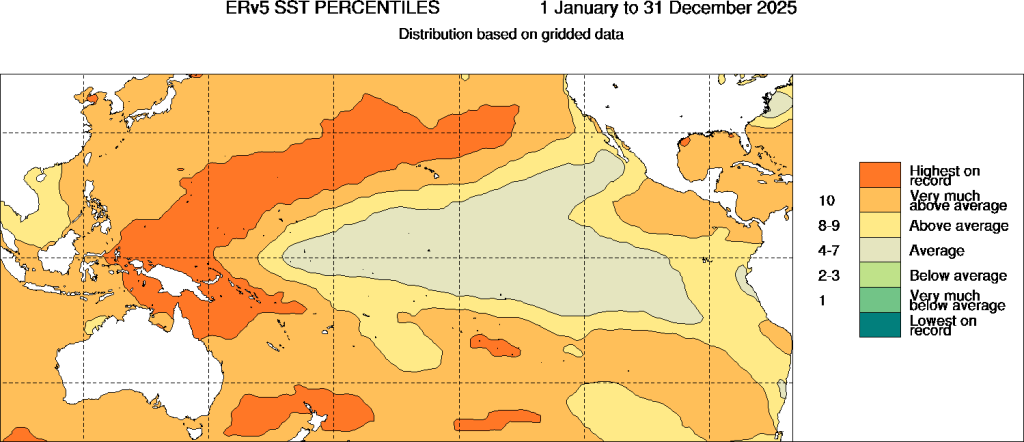
Meanwhile, parts of the central tropical Pacific experienced cooler than average air temperatures, reflecting sea surface temperature patterns associated with neutral ENSO or La Niña conditions.
Both daytime and nighttime temperatures were significantly warmer than usual in 2025. Maximum temperatures were 0.68 °C above average, and minimum temperatures were 0.63 °C above average, placing both in the top five highest on record.
Monitoring air temperature in the Pacific remains essential. Regional temperature trends do not always match global averages, and even small increases can have major impacts on health, food security, ecosystems, and daily life across Pacific communities.
“The Pacific is warming, and the science is clear,” said Salesa Nihmei, Director of SPREP’s Climate Science and Information Programme.
“Through the Pacific Regional Climate Centre Network and support from regional programmes such as the Climate and Oceans Support Program in the Pacific (COSPPac), we are turning regional climate data into practical outlooks that help Pacific countries anticipate risks and take early action to protect lives and livelihoods.”
This assessment is supported by the Australia and New Zealand-funded Climate and Ocean Support Programme in the Pacific (COSPPac), now in its third phase. COSPPac’s annual state of long-term change service ensures that climate information is useful – meeting real public information needs, usable – accurate, timely, and easy to understand, and used – informing Pacific government planning, climate assessments, and international negotiations.
The continued warming of the Pacific highlights the importance of reliable climate information and sustained regional support to help communities prepare for ongoing change.