A lack of investigation into the vessel intercepted with 4.87 tonnes of cocaine may hamper cross-border efforts to track and map criminal drug networks, a Pacific regional security expert warns.
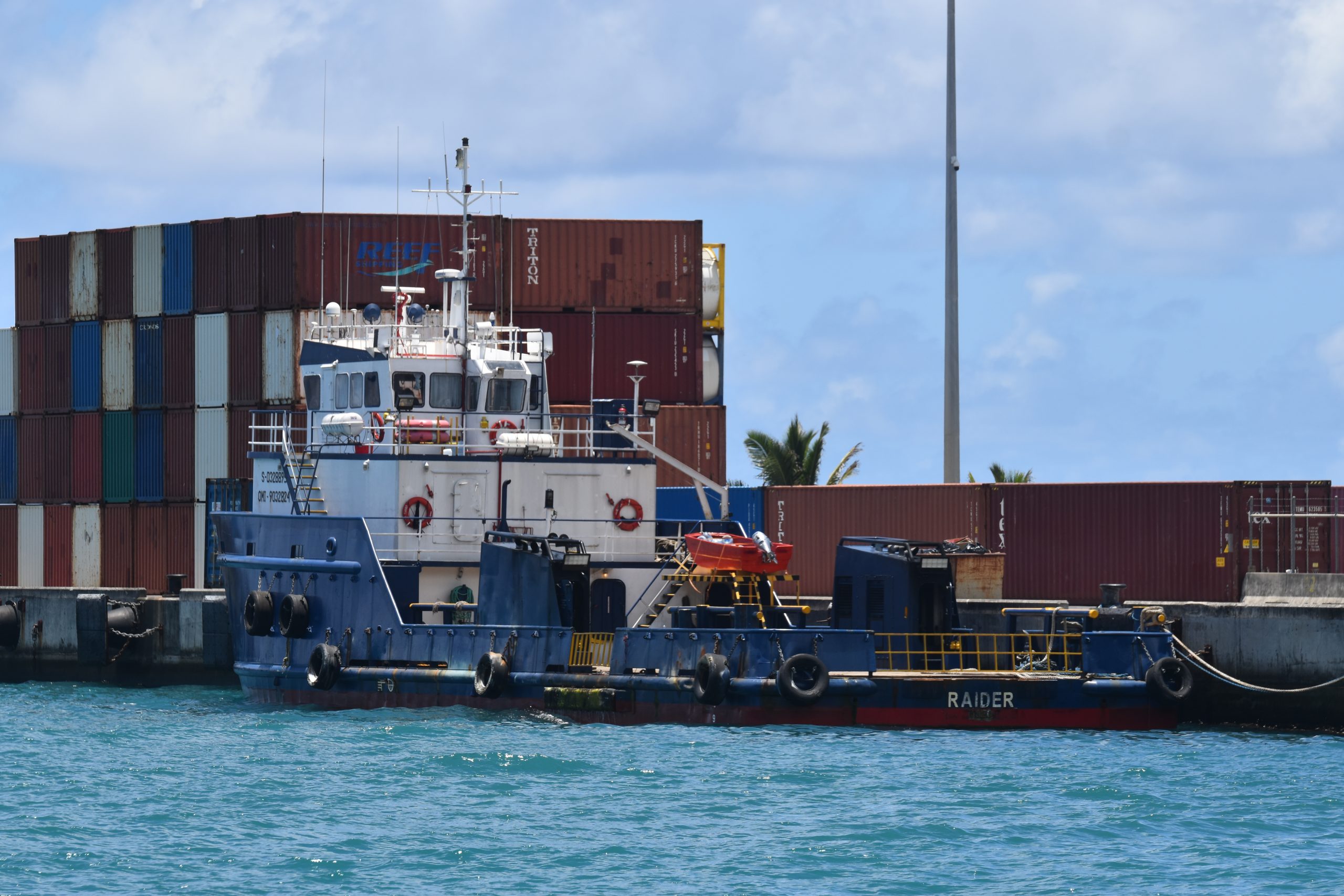
The MV Raider is docked under “24-hour security” at Avatiu Port after entering Rarotonga waters under a distress call for engine repairs over a week ago.
The multi-purpose offshore vessel sailing under the flag of Togo was intercepted by the French Navy mid-last month – French authorities released the vessel and its crew after seizing a shipment of drugs reportedly bound for Australia.
Concerns have been raised regarding why the vessel and its crew were released without an investigation.
According to José Sousa-Santos, associate professor of practice and head of the University of Canterbury’s Pacific Regional Security Hub, since the vessel was intercepted in French Polynesian waters 2t falls under French legal jurisdiction”.
Sousa-Santos said French law enforcement was responsible for the investigation as the apprehension took place in French Polynesian waters.
“This tactic is not one normally adopted in the region, however it may have been done to lessen the cost and demands on the judicial system in French Polynesia,” he told Cook Islands News.
“Unfortunately, it does complicate further investigations under other jurisdictions that may be interested in pursuing surveillance and mapping of these criminal networks.”
Cook Islands News has contacted the High Commission of the Republic in French Polynesia for comment on why French authorities did not investigate the vessel and its crew.
According to Tahiti Nui TV, the seized cargo, originating from Central America, was intercepted while en route to the Southwest Pacific. Despite this record seizure, “the sailors will not be prosecuted”, it reported last month.
French Polynesia’s public prosecutor Solène Belaouar told Tahiti Nui TV: “Article 17 of the Vienna Convention stipulates that the Navy can intercept a vessel on the high seas, after checking its flag state, and ask the public prosecutor (and the High Commissioner is involved in the decision) if they agree that the procedure should not be pursued through the courts, and that it should therefore be handled solely administratively.”
According to Tahiti Nui TV, this allows local judicial efforts to focus on local cases.
“However, it also results in the absence of investigations and therefore prosecutions by the French justice system against traffickers. Their respective countries can, however, prosecute them if they so choose.”
International law professor Alexander Gillespie from Waikato University said he does not think the French actions were necessarily wrong.
However, he noted that the situation highlights the need for greater cooperation and formal agreements between the involved entities, “especially since this will not be a one-off problem”.
“The main one is the need for enhanced international cooperation in combatting transnational crime,” Gillespie said.
“This (drug trafficking) is a plague which is expanding and something we are seeing increasingly throughout the Pacific. The need is for countries to cooperate more, at all levels – from intelligence sharing, to interceptions, to prosecutions.”
Gillespie commended the Cook Islands authorities for their handling of the vessel.
“I think what has happened here is very effective policing, and quite legal under the Law of the Sea rules (in terms of help to a vessel in distress) but the question of drugs on the high seas – and the importance of cooperation between States – flag state cooperation – and the 1988 Convention against Illegal Drugs – is more complicated. A lot will depend on which countries have signed what, and how the cooperation is working.”
Cook Islands Customs earlier stated that border agencies conducted border security search following the arrival of the vessel at Avatiu Harbour on 24 January and “nothing was found”.
The captain and crew were also questioned. The vessel has 11 crew members, consisting of Honduran and Ecuadorian nationals.
The crew were allowed brief onshore access “to obtain essential provisions under supervision”.
The duration of the vessel’s stay in Rarotonga is “currently unknown and depends on the completion of repairs and ongoing assessments by relevant agencies”.
“All associated costs, including harbour and port-related fees, are the responsibility of the vessel’s owners or operators,” Customs said.
“Cook Islands border agencies continue to coordinate to safeguard public safety, uphold maritime security, and maintain compliance with all applicable laws”.