

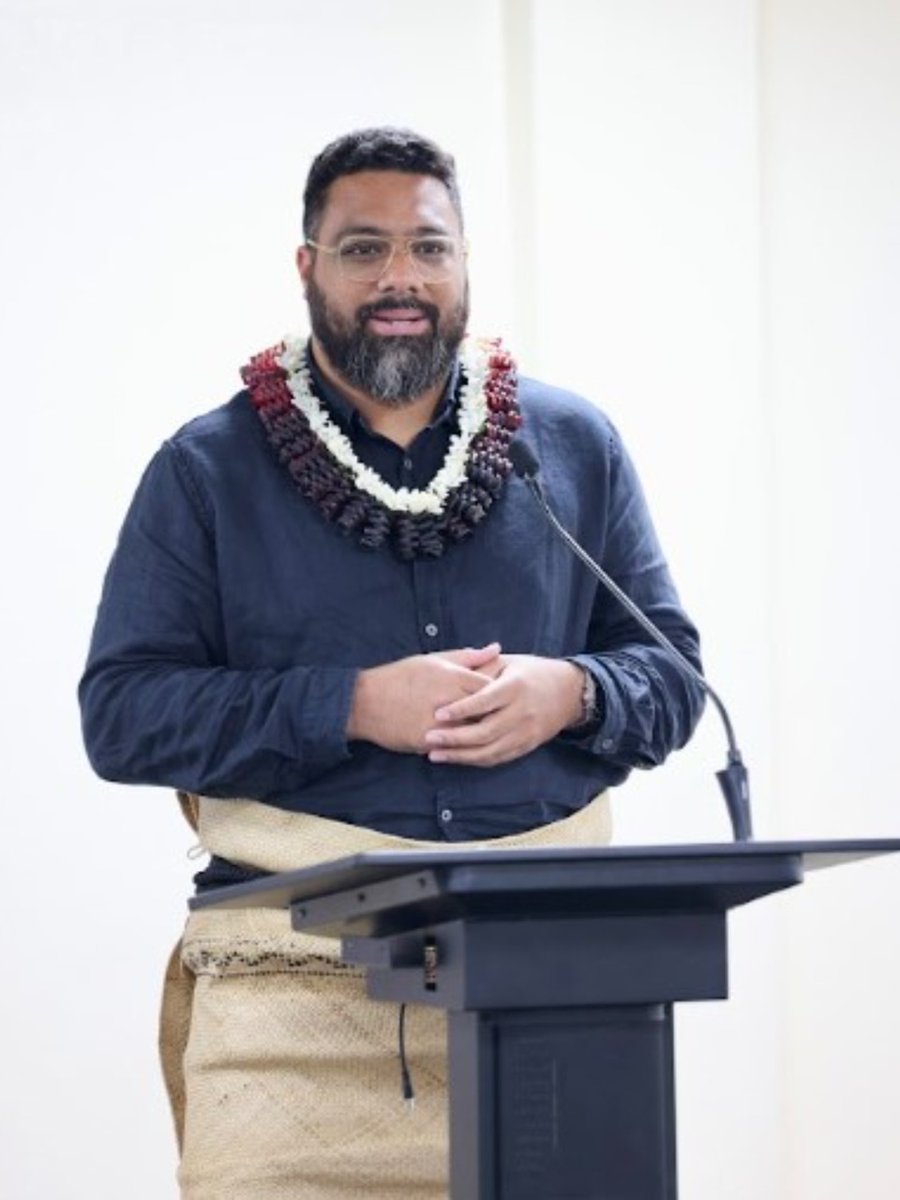
Tonga’s Legislative Assembly has elected Lord Fakafanua as the kingdom’s new prime minister following a secret parliamentary ballot this afternoon.
Interim Speaker Lord Tangi ʽo Vaonukonuka announced the result after returning from formally notifying His Majesty King Tupou VI of the outcome. Lord Fakafanua secured 16 votes in the secret ballot of 26 members, defeating Dr ʽAisake Valu Eke, who also stood for the leadership.
Earlier in the day, both candidates addressed the Assembly. Dr Eke’s nomination was supported by Tevita Puloka, Semisi Sika and Alani Tangitau, highlight his backing among several people’s representatives. Lord Fakafanua’s candidacy was endorsed by Viliami, Latu Seventeen Toumo‘ua and Lord Tuihaangana, reflecting support from noble peers.
After the speeches, the Assembly paused for members to cast their ballots in a process overseen by the Interim Speaker. With more than half of the votes cast in his favour, Lord Fakafanua was declared prime minister-elect.
In his first remarks, Lord Fakafanua thanked members of parliament for their support and called for unity among representatives and the wider Tongan community as the nation navigates post-election leadership transition. He said the government must work together to address shared challenges.
Under Tonga’s constitutional framework, the prime minister-elect will now select a cabinet and present it to King Tupou VI for formal endorsement. This follows Tonga’s general election on 20 November, which returned a new 26-member parliament with a mix of people’s and noble representatives.
After confirming the new prime minister, members of parliament elected Noble Vaea as Speaker of the Legislative Assembly, with Noble Tu‘iha‘angana chosen as Deputy Speaker.
The appointments mean two nobles now hold the most senior leadership positions in Tonga’s parliament, marking a notable concentration of noble representation at the top.
The outcome marks a significant moment in Tongan politics, with a noble representative assuming the premiership amid ongoing public discourse about democratic practice and traditional leadership roles in government.