

By Pita Ligaiula in Manila, Philippines
Sharks Pacific has delivered a sharp warning to the Western and Central Pacific Fisheries Commission (WCPFC22), calling for full transparency and tougher action on shark protection as members debate alternative shark-management measures under Conservation and Management Measure (CMM) 2024-05.
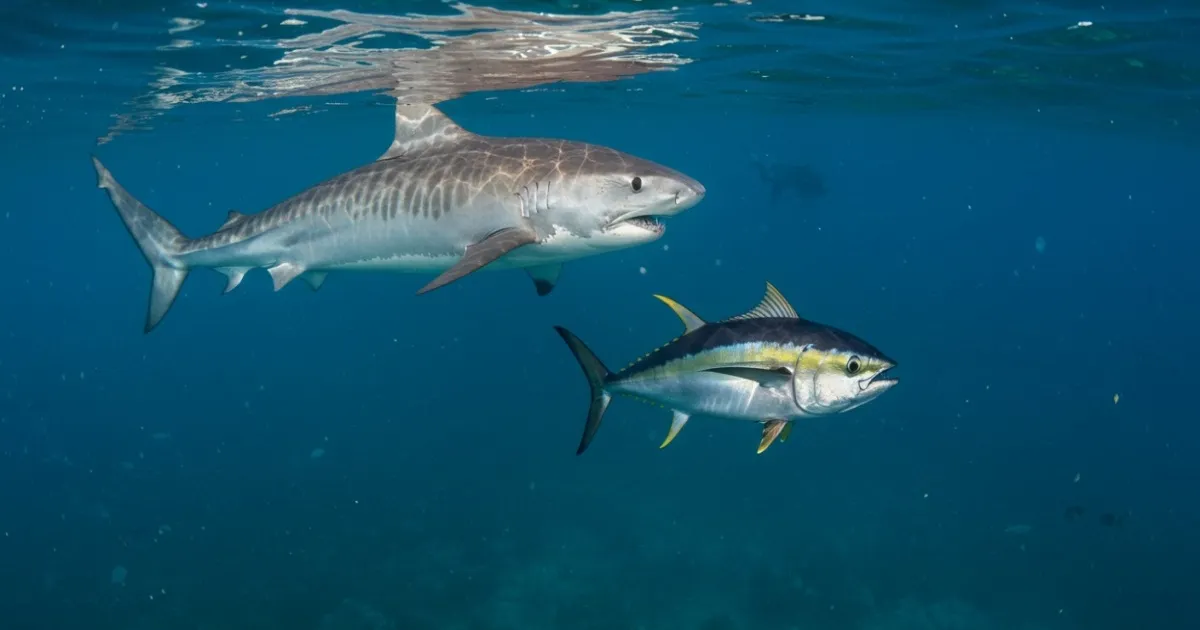
Policy Director Bubba Cook told delegates the Tuna Commission is failing its legal obligations to conserve non-target species, stressing that oceanic whitetip sharks remain “precariously perched on the cliff of extinction” despite slight signs of recovery.
“We would also like to address CMM 2024-05 and the proposed Alternative Measures for sharks. First, Sharks Pacific would like to thank the EU for its comments in support of the safe release and handling guidelines and FFA for their intervention. We would like to the remind the Commission that it is bound to manage and conserve Non-Target, Associated, and Dependent Species (NTADS) and that year after year, we continue to fail these non-target species,” Cook said.
“While some have said ‘it could be worse’, which is true – we prefer to take the view that it SHOULD be better. This Commission is mandated to ensure that it IS better.”
Cook said the NTADS review exposed fundamental weaknesses in shark data, undermining every conservation measure on the books.
“The NTADS review made it painfully clear that we have a data quality crisis, and it is undermining every shark measure we have, as well as the credibility of this Commission,” he said.
Sharks Pacific backed 21st Regular Session of the WCPFC Scientific Committee (SC21’s) call for targeted improvements through the Regional Observer Programme – Intersessional Working Group (ROP-IWG), including species identification, length-data standards and post-release mortality assessments.
He said the region’s extremely low observer coverage especially in the longline fishery is leaving shark management blind.
“The most critical issue for sharks, or any other NTADS remains too high mortality, assisted by abysmally low observer coverage—particularly in the longline fishery. We can’t monitor bycatch, verify gear-use rules, evaluate safe-release practices or calculate mortality without observers,” he said.
“Without significantly improved coverage, including integration of EM, we are effectively managing sharks in the dark.”
Cook delivered his strongest criticism on the alternative measures option under CMM 2024-05, calling it a poorly monitored loophole that some members appear to welcome.
“The ‘alternative measures’ pathway is a loophole that lacks transparency, and cynically, likely welcomed by some members in this room,” he said.
“The alternative measures provision was created as a narrow exception, conditioned on ‘enhanced monitoring’, but it’s hard to see the enhancement when the process remains obscured.”
 He warned that shark-finning rules cannot be enforced if only the users of the loophole can see how it is functioning.
“This Commission has repeatedly affirmed that combating shark finning is a priority. Yet we’ve built a reporting system where the only people who can see whether the exception is functioning are the same ones using it. That is not transparency; that is insulation that borders on an abuse of process.”
Cook said the Tuna Commission must decide at 23rd Regular Session of the Technical and Compliance Committee (TCC23) whether the alternative measures are effective or whether it is time to end the experiment and require fins-naturally-attached for all members.
“But let me be blunt you cannot meaningfully evaluate a loophole you’re not allowed to look into,” he said.
With shark populations still under severe pressure and alternative measures facing rising scrutiny, Cook told delegates that the Commission’s credibility is at stake.
“Year after year, we continue to fail these non-target species,” he said. “It should be better, and this Commission is mandated to ensure that it is better,” he said.
The WCPFC22 meeting will end on Friday.