

By Pita Ligaiula in Manila, Philippines
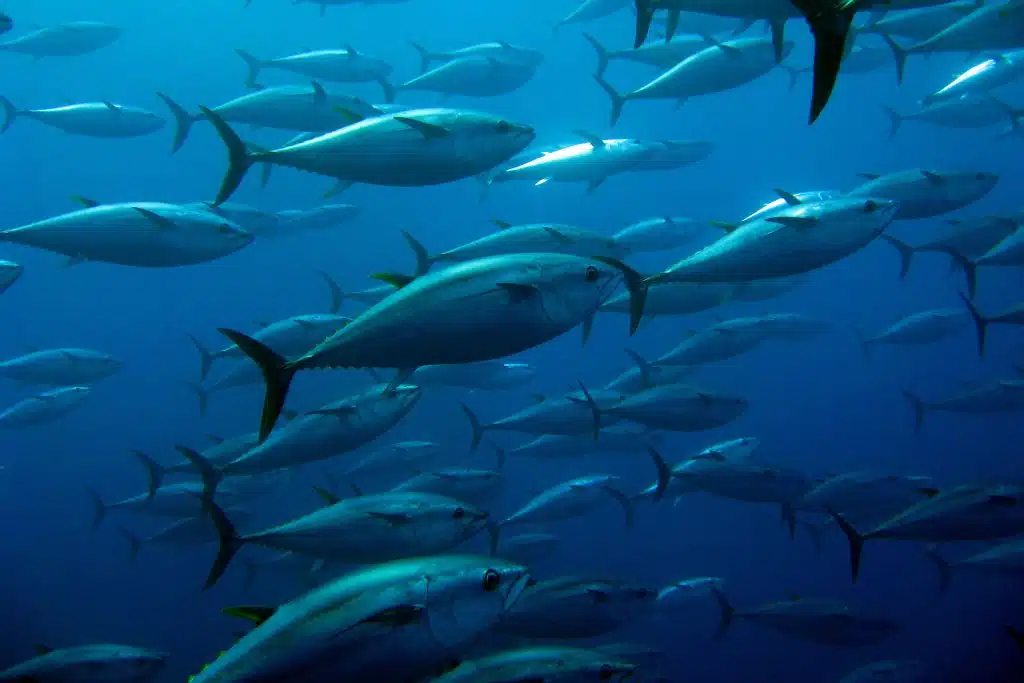
The scientific body advising the Tuna Commission says climate change is accelerating across the Western and Central Pacific, reshaping oceans, shifting tuna stocks, and demanding far stronger climate-ready management.
Presenting the Climate and Ecosystem Indicators Update to WCPFC22, SPC said new data confirms “increasing ocean temperatures, expanding warm pool conditions, rising ocean heat content, and more frequent marine heatwaves” across the region.
The briefing, delivered under the Commission’s 2019 Resolution on Climate Change, showed clear trends that tuna fisheries will face intensified pressure as the Pacific continues to warm.
“This presentation provides an update on the ongoing work to develop a core set of relevant climate and ecosystem indicators and presents the trends in various indicators that have so far been selected for annual reporting,” SPC said.
SPC said ENSO—the Pacific’s main climate driver—continues to shape fishing patterns.
“From 2020–2023, the WCPO experienced near continuous La Niña conditions… followed by a short, intense El Niño,” he said. Recent conditions have now shifted into neutral, with forecasts showing El Niño “might start to form by mid-2026.”
The shift is already influencing purse-seine effort distribution and may increase bigeye catch rates again in 2026.
Sea surface temperature data shows a clear warming trend in multiple parts of the WCPO.
“In regions 1 and 8… the top 10 hottest years have all occurred since 2010,” SPC reported. “2024 was an anomalously warm year in the WCPO.”
Region-by-region analysis shows some areas warming by up to 1°C since the 1980s, while others experience high short-term swings linked to warm pool movement.
One of the most striking findings is that the warm pool is not only shifting but getting hotter.
“Since 2014, waters 30°C have represented on average 30 percent of the warm pool area and as high as 55 percent in August 2024,” SPC said — a major jump from earlier decades.
Ocean heat content (OHC) — the best indicator of long-term warming — is steadily increasing.
“Ocean heat content for 0–300m depth of the WCPO appears to have increased from 1993–2023,” the SPC report noted.
The strongest warming is concentrated around the warm pool core adjacent to Papua New Guinea and Solomon Islands.
The climate update delivered one of the starkest assessments yet.
“There has not been a single day when at least part of the region was not exposed to a MHW event” in the past decade, SPC said.
The number, duration and depth of marine heatwaves have all increased, posing risks for ecosystems and tuna behaviour.
SPC said the indicators are being developed to support decisions under WCPFC’s climate resolution and will be refined before SC22 in 2026.
“This work should help SC and WCPFC be more informed on the recent trends of climate and ocean system change in the WCPO which can be considered in relation to management decisions,” it said.
The indicators presented were ENSO, Sea surface temperature, Warm pool area, Ocean heat content and Marine heatwaves.
“Overall, the indicators – from observational data – support the warming trend of the western Pacific,” SPC concluded.
As WCPFC debates harvest strategies, stock thresholds and transshipment rules this week, SPC’s message was clear that climate impacts are no longer theoretical — they are visible, accelerating, and already reshaping the world’s biggest tuna fishery.