By Pita Ligaiula in Manila, Philippines
The head of the Western and Central Pacific Fisheries Commission (WCPFC) has warned that the Tuna Commission cannot ignore the wave of global ocean pressures now bearingdown on fisheries governance, saying the decisions made in Manila this week must match the scale of the challenge.
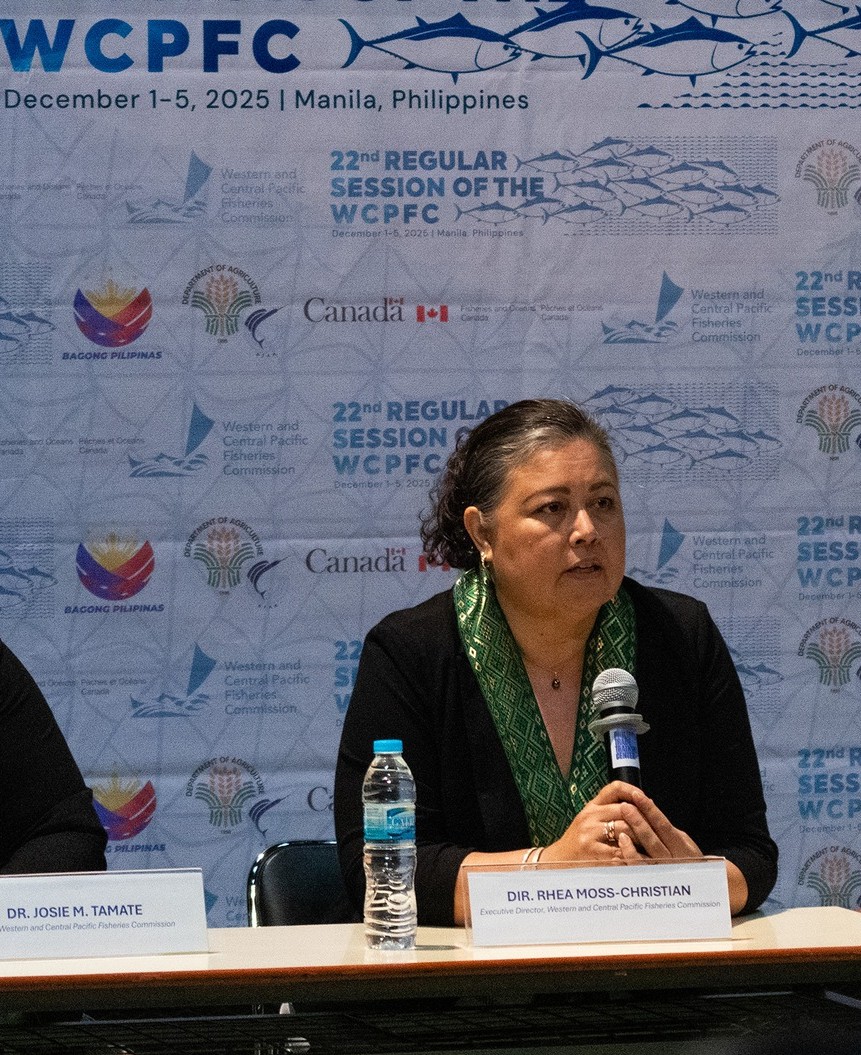
In a media briefing at WCPFC22 Monday, Executive Director Dr Rhea Moss-Christian set out the stark reality facing Pacific fisheries as climate change, deep-sea mining, and global ocean negotiations converge around the region.
“There’s been a lot of activity in the recent years and especially in 2025 at the global level about oceans health. And WCPFC occupies a very important and unique position within that global ecosystem of oceans governance,” she told journalists.
She noted that momentum has never been higher.
“We had the UN oceans conference this year in Nice that agreed to an action plan. We had, we just completed the COP31 climate change conference where ocean was front and centre in those discussions.
“And we have a lot of deep-sea mining activities that are exploration activities that are taking place in this region.”
Dr Moss-Christian said tuna management can no longer be viewed in isolation.
“Tuna stocks and the healthy tuna stocks are but one component of this larger ocean health conversation and WCPFC’s work is critical. But the work of this commission is dependent on the connections and the interdependence and members recognising the interdependence with all of these other ocean related activities that are happening.”
She said the Tuna Commission now has a chance to use its decades of scientific data to strengthen long-term fisheries security.
“So, the opportunity this year for the commission as it goes into its third decade of work is to really leverage the years and volumes of data and information that it has collected around the fishing activities in the region and the health of
the stocks and what’s required to sustain that health well into the future. And the adoption of harvest strategies is a huge part of that.”
Manila, she said, has a history of decisive moments for the Commission.
“Manila has been the home of several commission meetings and where really tough decisions have been taken. I believe that the hospitality and the energy around that the Philippines brings to these meetings adds to the spirit of cooperation and collaboration thats required for decisions and tough decisions to be made.”
Reflecting on the last Manila session eight years ago, she added: “When we were here in 2017, we concluded a completely revised tropical tuna measure. It concluded at three in the morning, and we hope that we don’t do that again this year.”
But she made clear that the road ahead will not be easy.
“We have really tough negotiations ahead of us and I like to believe that the environment and the atmosphere in which we operate is really important to influence the way people come together and the way people negotiate. And being here in Manila with this level of hospitality is really an encouraging start for us,” said Dr Moss-Christian.