By Pita Ligaiula in Manila, Philippines
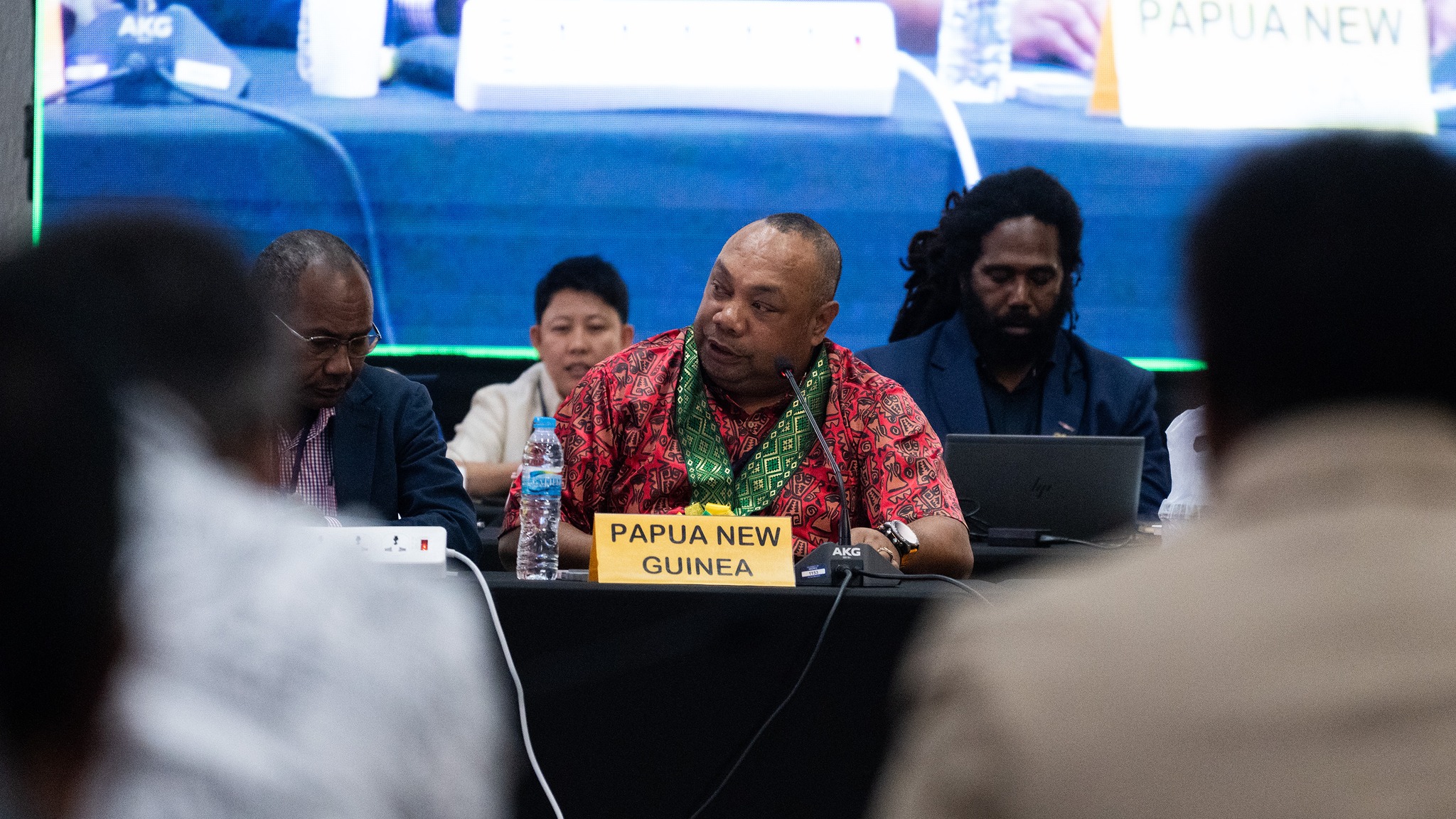
Papua New Guinea has delivered a strong message to WCPFC22, warning that Pacific nations cannot absorb new burdens, lose hard-won rights, or accept decisions that undermine their development aspirations.
“For us, our fisheries are not just a sector—they are lifelines. They fund schools, clinics, and infrastructure. They also sustain our people’s livelihoods and cultural identity,” said Jelta Wong, PNG’s Minister for Fisheries and Marine Resources.
Wong said PNG stands with Pacific countries in pushing for sustainable management grounded in science, equity, and the rights of Small Island Developing States.
Wong warned that increasing complexity in Commission rules risks sidelining the very States that depend most on tuna.
“Article 30 of the WCPF Convention legally requires WCPFC to ensure conservation and management measures do not impose disproportionate burdens on our small island developing States, while affirming our right to pursue fisheries development in ways that generate value for our people,” he said.
He called for a mandatory SIDS Special Requirements review clause in all new measures so “equity is not assumed but assured.”
Wong said Pacific countries remain committed to compliance despite facing the strongest impacts of climate change.
“The Pacific did not create the climate crisis, yet we bear its brunt,” he said.
“Scientific evidence confirms that climate change is already altering the distribution and productivity of key tuna stocks.”
He urged the Commission to ensure climate-driven shifts “must not result in a redistribution of benefits, away from those who have historically conserved these resources,” adding that WCPFC must integrate climate resilience into all future measures.
Wong said PNG fully supports two key FFA proposals — South Pacific albacore management and high-seas transshipment reform.
On albacore, he said: “The proposal on South Pacific Albacore before you today, is the culmination of many years of rigorous discussions and negotiations… with the collective endorsement of all 17 FFA member countries.”
He urged developed members to recognise “the profound dependency Pacific Island nations place on the decisions taken here.”
On high-seas transshipment, Wong backed stronger rules that shift activity into ports.
“By requiring transshipment in ports, we combat IUU fishing, ensure transparency and accountability, which safeguards our tuna resources,” he said.
“Port-based transshipment drives domestic development—creating jobs, generating revenue, and distributing the economic benefits of our fisheries amongst our communities.”
Wong warned against any erosion of national authority.
“The sovereign rights of member countries over their waters and resources must not be infringed upon. Regional decisions must further respect and complement national laws and priorities,” he said.
“Let us remember the Pacific is not asking for charity. We are demanding fairness. We are not passive recipients of global decisions—we are active architects of regional solutions,” he said.
He called on delegates to be guided by “justice, equity, and the spirit of Pacific solidarity.