
By Pita Ligaiula in Manila, Philippines
The leaders of the Western and Central Pacific Fisheries Commission (WCPFC) opened their annual meeting today with a blunt warning that the Tuna Commission cannot leave Manila without adopting a long-delayed management procedure for South Pacific albacore.
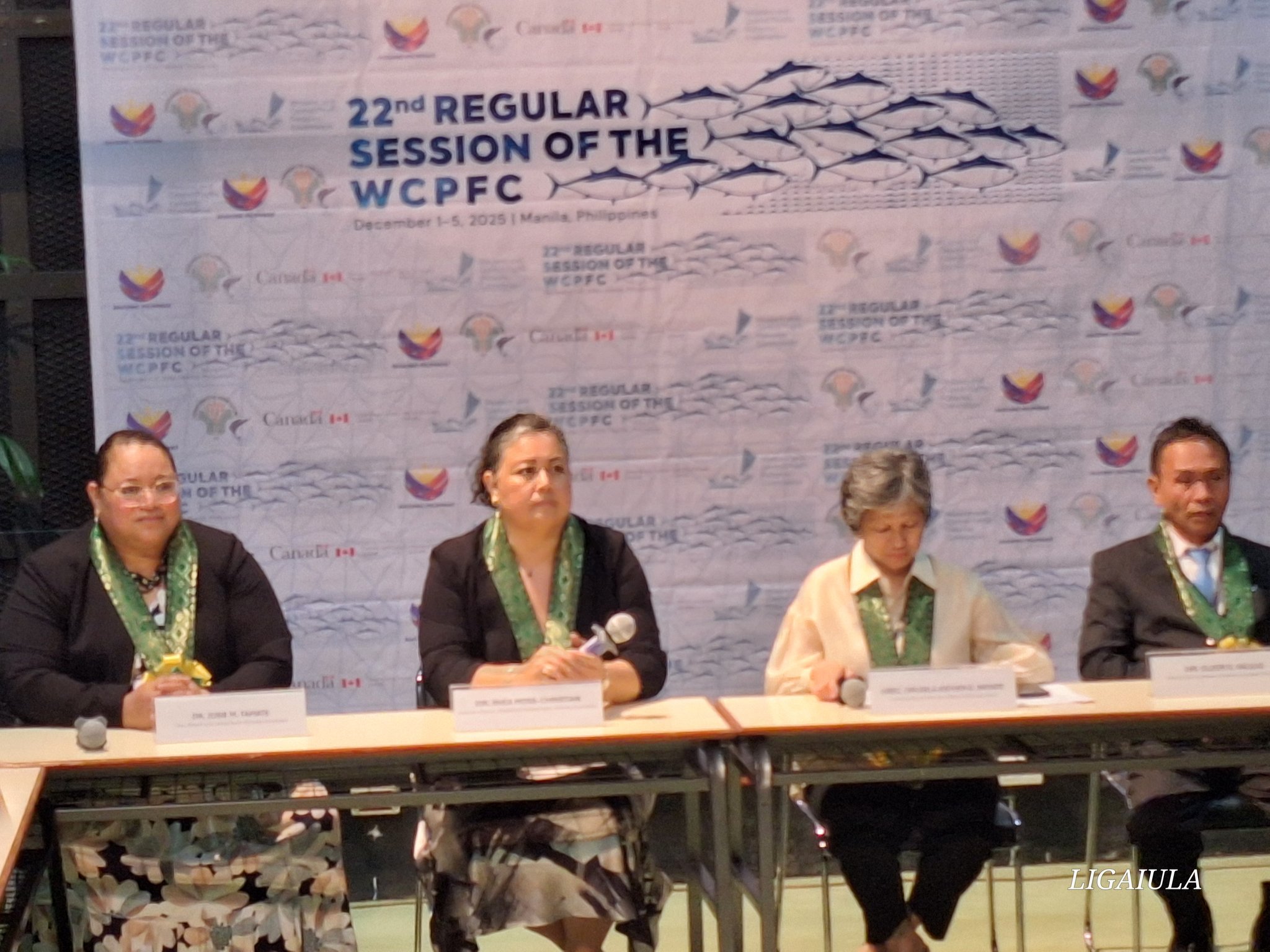
Speaking at a media briefing on Day One of WCPFC22, Executive Director Dr Rhea Moss-Christian made clear the stakes for Pacific fisheries, economies and global markets.
“I don’t think that members can leave this meeting without having adopted a management procedure. That is how serious the issue has become, in that another year of delay would be too costly,” she said in response to a PACNEWS question.
She said members were well aware of the urgency.
“And I believe that members recognise how high the stakes are, how much higher they are this year than last year.
And there has been a lot of intersessional work that the chair referenced in her opening remarks. And so, the momentum has been leading to this moment to negotiate and adopt a management procedure by consensus as the way that we operate in the WCPFC.
At this moment, on this first day, I am optimistic.” she said.
Dr Moss-Christian warned that failure to adopt the measure would hit fleets and Pacific economies hard.
“The risk is to those fleets that have certifications, sustainability certifications, most notably through the Marine Stewardship Council. And those certifications are dependent on the RFMOs like WCPFC having these management measures in place,” she said.
“And so, a delay in adopting that management procedure this year could put those certifications at risk, which affects their market access and market value for those fleets.
“And in terms of cost to Pacific Island countries, its all interconnected. And so, the licencing and the access revenues that Pacific Island countries depend on for these fleets could also, those values could be at risk based on the certifications in the market that the fleets.”
She said the weight of the decisions ahead reflects the far-reaching impact of the Commission’s work.
“The work that we do here, as we’ve heard from the questions, reaches all levels of society and island communities.
And so, the Commission members take this work very seriously, and they’ve come to work hard, and we expect to have long days with lots of fruitful discussions and optimistically robust decisions at the end of the week.”
WCPFC Chair Dr Josie Tamate echoed that optimism as the Commission prepared for a week of intense negotiations.
“Thank you and thank you for this opportunity to have this right at the beginning, you know, checking where we are.
For me as the Chair, I’m very optimistic. The agenda for this Commission meeting is comprehensive,” she said.
“There’s going to be some late nights, but the important thing is that, as mentioned by the Executive Director, the members are here to work. They are also here to make decisions. They’ve done the work throughout the year, and they’ll continue to have consultations in the margins.
“So as the Chair, my job is to make sure that we land on the last day of the meeting with very good outcomes. So, at this stage, I’m very optimistic that we will have some really good outcomes. If not, that will also help position the work of the Commission going forward, and also especially the work for 2026.”
Dr Tamate said the Commission’s work is continuous, with measures requiring regular review to remain effective.
“Its an ongoing process. Its not just this meeting and a lot of the works we’ve done over the years, the conservation management measures, they have expiry dates, and then we have to review them to make sure that its fit for purpose or it meets the requirements or addressing some of the concerns that are coming through. For me, as the Chair, I’m looking forward to the discussion this week.
“Its going to be very busy, like you blink and its Friday already.”
With South Pacific albacore at the centre of economic security for Pacific nations and global sustainability benchmarks hanging in the balance — the pressure is now squarely on WCPFC members to deliver.
Manila will determine whether the Commission can move past years of delay and adopt the harvest strategy framework required to keep the world’s largest tuna fishery stable, profitable and credible.