

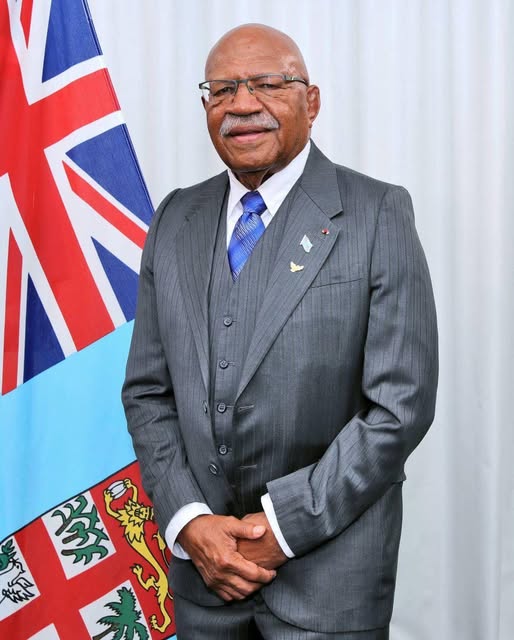
Fiji Prime Minister Sitiveni Rabuka has issued one of his strongest statements yet on the country’s gender-based violence crisis, warning that nearly two-thirds of women experiencing abuse is “a national tragedy” and demanding action across every sector of society.
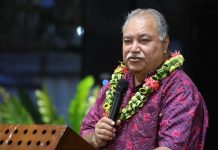
Speaking at the launch of the 16 Days of Activism Against Gender-Based Violence, Rabuka said the campaign is “a decisive call to concerted, lasting action,” not a symbolic observance.
“We cannot, and we must not, shy away from the truth that is captured in the stark statistics,” he said.
“The fact that nearly two in every three women in Fiji who have been in a relationship have suffered physical or sexual violence by a male partner is not a statistic—it is a national tragedy.”
Rabuka said violence is not confined to any single group and affects women and girls of all ages.
He highlighted alarming findings from Fiji’s first prevalence study: one in six women was sexually abused before turning 15, with 95 percent of offenders being male relatives or family friends.
He said early violence often continues into adulthood and carries lifelong harm for victims.
“Let me state this clearly: This is not a ‘private matter.’ It is not a ‘women’s issue.’ It is a national crisis that diminishes all of us,” Rabuka said.
He linked gender-based violence directly to national development, warning it undermines economic growth, health outcomes, children’s futures, and Fiji’s long-term stability.
“A violence-free Fiji is foundational to a prosperous Fiji,” he said.
Rabuka highlighted Fiji’s global leadership role, noting that the 16 Days campaign was conceived in 1991 by a group that included Fijian women leaders.
He paid tribute to civil society organisations that have carried the work for decades “often in the face of deep-seated resistance.”
He said the economic cost of violence—through health care, legal processes, and lost productivity—runs into the millions annually.
“Ending violence is thus one of our most potent economic development strategies,” he said, adding that the work is tied directly to Fiji’s commitments under the Sustainable Development Goals.
Rabuka highlighted Fiji’s National Action Plan to Prevent Violence Against All Women and Girls as a cornerstone of the Government’s response, describing it as a “non-negotiable,” evidence-based framework activated immediately after his government took office.
“This National Action Plan is not just a piece of paper. It is a plan of action. And we are already delivering on it,” he said.
He highlighted reforms already underway including training police and military officers, engaging provincial councils,strengthening the “No Drop” policy for domestic violence, and working with the judiciary to end the use of traditional reconciliation (bulubulu) in criminal cases.
“Violence is a crime, not a misunderstanding to be reconciled at home,” Rabuka said.
He said the Government is also addressing new forms of abuse, including online harassment and non-consensual sharing of images. This year’s theme, “Support the survivor, report the abuse, online and offline,” reflects those challenges.
The Prime Minister emphasised that men must be part of the solution, noting the revival of the Male Advocacy Programme within the RFMF and broader engagement across government, education, and community systems.
But he also stressed that government alone cannot end gender-based violence.
“We particularly acknowledge and thank our Civil Society Organisation partners… Their commitment and expertise have been, and remain, absolutely central to the success of this national strategy,” he said.
He also urged faith leaders and sporting bodies to use their influence to support the message of respect and equality with a national call to action.
“This National Action Plan is our promise to all women and girls of Fiji. It is our commitment to the nation that we will build a Fiji where all citizens are safe, valued, and can live free from violence,” he said.
“This 16 Days, and every day, let us all commit to this creed: Support the survivor. Report the abuse. And end impunity, for good, said Rabuka.