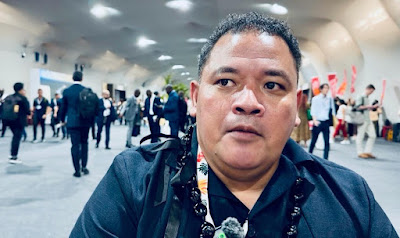
U.S needed in the Paris Agreement implementation work, because it takes a a collective effort, says Pacific COP champ Dr Maina Vakafua Talia.
Last week’s comments from Tuvalu on the U.S withdrawal from the Paris Agreement provided a moment of frank, no-filter feedback on the impact of the decision.
While California Governor Gavin Newsom has led a US-delegation of supporters to the COP30, and openly cited U.S withdrawal from the Paris Agreement as a ‘disgrace’, the rebuke from the Pacific stood out for its sole voice in the global plenary — and were shared by media for their standout value.
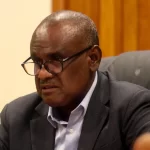
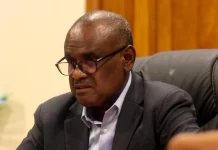
While no formal response has been received from the U.S, for head of the Tuvalu delegation to COP, Minister Dr Maina Vakafua Talia, his heart-felt comments fit the spirit of a COP of Truth led by the Brazil Presidency He says they show how important it is to ensure the inclusion of all nations of the world to achieving a truly global 1.5 warming cap and renewable energy future.
Q: There’s been quite a bit of media commentary over the mentions of U.S withdrawal from the Paris Agreement in your statement earlier at COP30. Did you want to respond to some of that?
A: In response to some of the media coverage (to the Tuvalu statement), when we talk about the Paris Agreement, it’s important because it gives us the road map for some of the work that we need to to do. But the U.S withdrawal from the Paris agreement sent a signal that they don’t want to to engage and collaborate. But for us in the Pacific, for Tuvalu in the Pacific, it’s a lifeline for us. We cannot address the 1.5 on our own. We need a collective effort by all countries, especially the most highly polluting countries.
Q: Do you feel that there’s enough leaders in the room as well who understand what 1.5 means for the Pacific?
A: Of course, they all understand what the 1.5 really means but for us in the Pacific you know it means a lot. To us, it’s not just a number. It really spells our demise, if we are not going to address the 1.5 (challenge).
Q: You’re actually here wearing many hats one of them the climate high level political champion– how has that role been going for you in terms of your scheduling and your advocacy?
A: Well it’s important– (as) the political champion for mitigation, it’s also important for us to talk about the 1.5 because we cannot just mitigate by cancelling out or deleting 1.5° on its own. It’s important that when we talk about the 1.5, we should also talk about mitigation. And to talk about mitigation, you know, the more we mitigate, the less we have to adapt. For a country like Tuvalu, with very limited resources, our ability to mitigate is very low. I think it’s important that we take ownership of what we’re saying and especially when it comes to the 1.5° C — how best we can adapt in different scenarios given the very limited resources that we have.
My point to Trump or even to the United States, is this. I was not trying to point the finger at him. We need the U.S in the equation. We’ve always looked to the U.S for options, for alternatives. They have the power, they have the money, they have the resources, they have the technology. And we really need them in the equation. It’s not that we’re trying to criticize Trump. What we’re trying to say is that we need the U.S in these international forums.
Q: You are now getting ready to take the plenary floor again for the second half of the negotiations–the political high level negotiations, Can you give us a preview of what you will be covering?
A: Basically as the PIFs champion of mitigation and as PIFs chair, it is important that we look into Pacific priorities and these have been listed in my previous interventions. We cannot just talk about the 1.5 without a financial package. We cannot just talk about the Paris agreement without any financial support to ensure that we deliver on this. So to have this as a COP of Truth, we really need to have the 1.5 degrees Celsius mentioned –or not just mentioned but included– in the Outcome of this COP. In the main plenary I will speak to the whole package of our priorities for the Pacific, and Tuvalu will continue that advocacy on behalf of the Pacific Small Island Developing States.
Q: You’ve just met as well with the Australia minister for climate. How was that discussion?
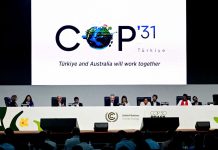
A: Well, we were supposed to hear a very fruitful update on what will be the outcome from here, for COP31. It’s still blurry at the moment. So we are very keen to hear what the outcome of the discussion between minister Bowen and the climate minister from Turkiye will be, in relation to how they are going to resolve the issue of hosting COP 31.
Q: Would the Pacific entertain or think about the possibility of an Australia-Turkiye bid?
A: No, I think we’re more or less not in favour of these co-presidency options because we want to host the COP as an Australia Pacific COP, and we have to take ownership of the Presidency role.
Q: We are now on the final few days. Is there time to achieve the ambition and the action for finance that the Pacific wants to leave this COP with?
A: We have to be very optimistic and forward thinking. You know, we always have that tendency of thinking that we will have time — despite that, we’re running out of time and the space to discuss is getting narrower –but of course we are pushing until the end to ensure that we achieve what we have, and why we are here. And especially — (because) our communities are waiting for us.