
The Federated States of Micronesia (FSM) has called on the international community to step up its climate action, warning that the window to prevent catastrophic warming is rapidly closing.
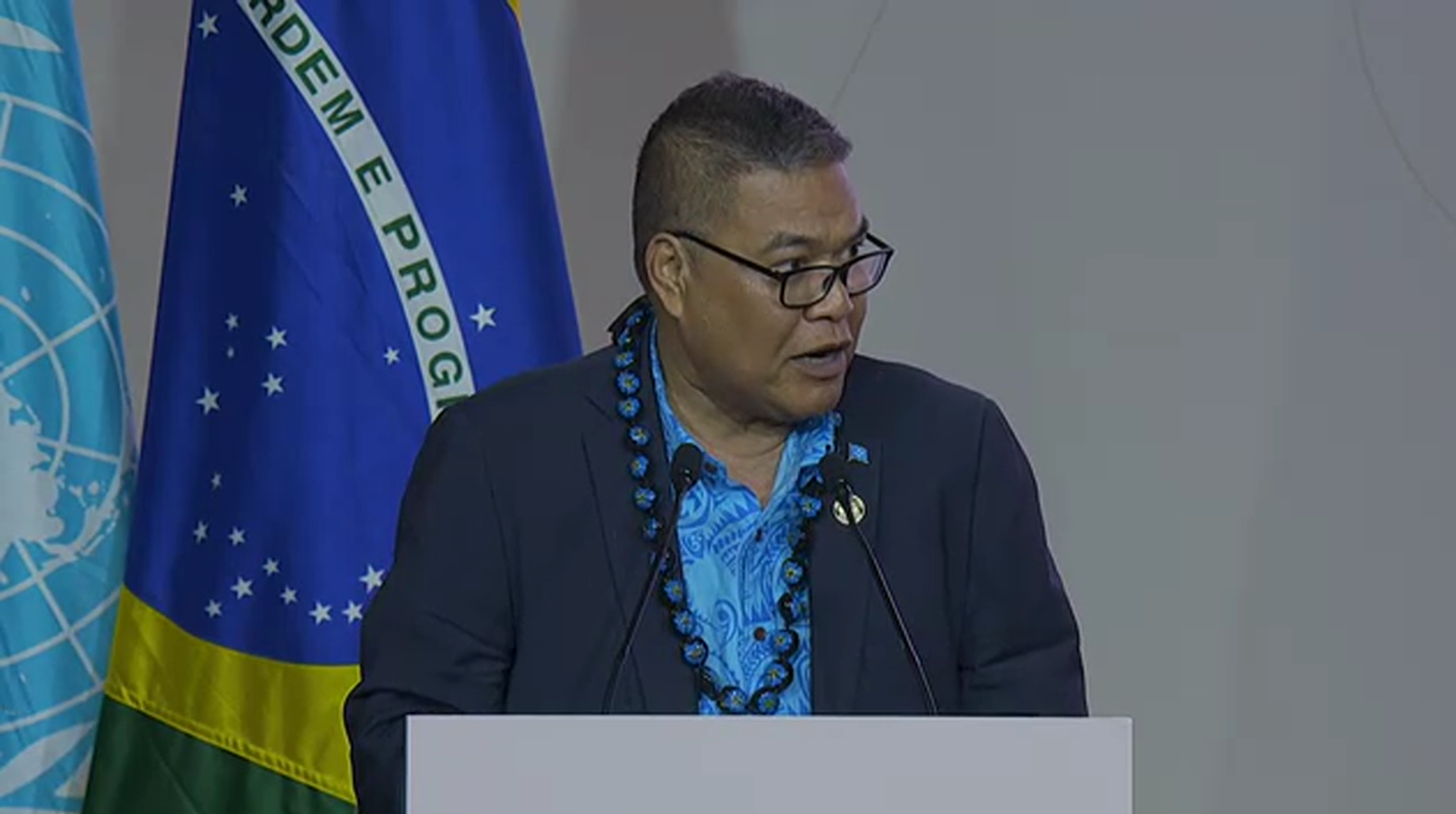
Speaking at the high-level segment of the 30th session of the Conference of the Parties (COP30), Jeem Lippwe, Ambassador and Permanent Representative to the United Nations for Micronesia, highlighted the disproportionate impact of climate change on small island nations.
“I would like to start by extending Micronesia’s solidarity and condolences to all those around the world who have suffered from the impacts of climate change this year. Across the globe and in our islands, we are united in grief and purpose,” Lippwe said.
Island nations like Micronesia are already feeling the brunt of rising seas and changing weather patterns.
“Every year, island nations like Micronesia come to this forum with a growing list of loss and devastation,” Lippwe said.
“We who have enjoyed life and prosperity on our islands for generations contributed so little to the problem at hand. We must now raise our children and grandchildren in a world full of fear and uncertainty.”
Lippwe stressed the inequity of the climate crisis, describing it as both unfair and unconscionable.
“In Micronesia, entire islands are being swallowed by erosion, and our crops are failing under saltwater intrusion. Like many small island states, we are already using scarce domestic resources to cope, as support promised decades ago has yet to arrive at the scale or speed needed,” he said.
He emphasised that finance is crucial for climate action.
“Finance is the fuel. Without it, the engine of climate ambition cannot run. We must speak plainly.”
Beyond domestic coping, Lippwe also criticised major emitting countries and industries for failing to match their climate commitments with action.
“The world’s major emitting industries continue to fall dangerously short. The latest round of NDCs does not offer a viable pathway to 1.5 degrees. When we hear claims of ambition while emissions rise, what are small islands to conclude?” Lippwe asked.
“That our survival is negotiable? That promises to the most vulnerable can be endlessly deferred? This is not a failure of policy. It is a failure of moral responsibility.”
Highlighting the central role of oceans, he warned of imminent tipping points.
“The ocean connects us all, and when it changes, everything changes. This year, scientists announced the onset of the first global tipping point. Our warm water coral reefs are now bleaching to skeletons. Reefs are critical ecosystems for islanders, sustaining our fisheries, our economy, and our culture. But because they are connected to the entire planet, the world will soon feel the effects of their collapse.”
Lippwe also called for urgent global action to address methane and other super pollutants.
“If we are serious about 1.5 degrees and preventing more tipping points, then we must be serious about methane and other super pollutants. Fast mitigation of methane is the only realistic way to slow near-term warming. Yet our global response remains fragmented, voluntary, and insufficient.”
He urged the Brazilian COP30 presidency to coordinate international efforts and hold major oil and gas producers accountable.
“We call on the Brazilian presidency to play a leadership role in coordinating the many desperate methane initiatives and turning them into a coherent, ambitious, and accountable global effort.
“We call on all oil and gas producing countries to do what science demands. Reduce production, eliminate methane leaks, and prioritise immediate cuts in super-pollutant emissions. The tool exists. The solutions are now. There is no excuse for further delay,” Lippwe said.